
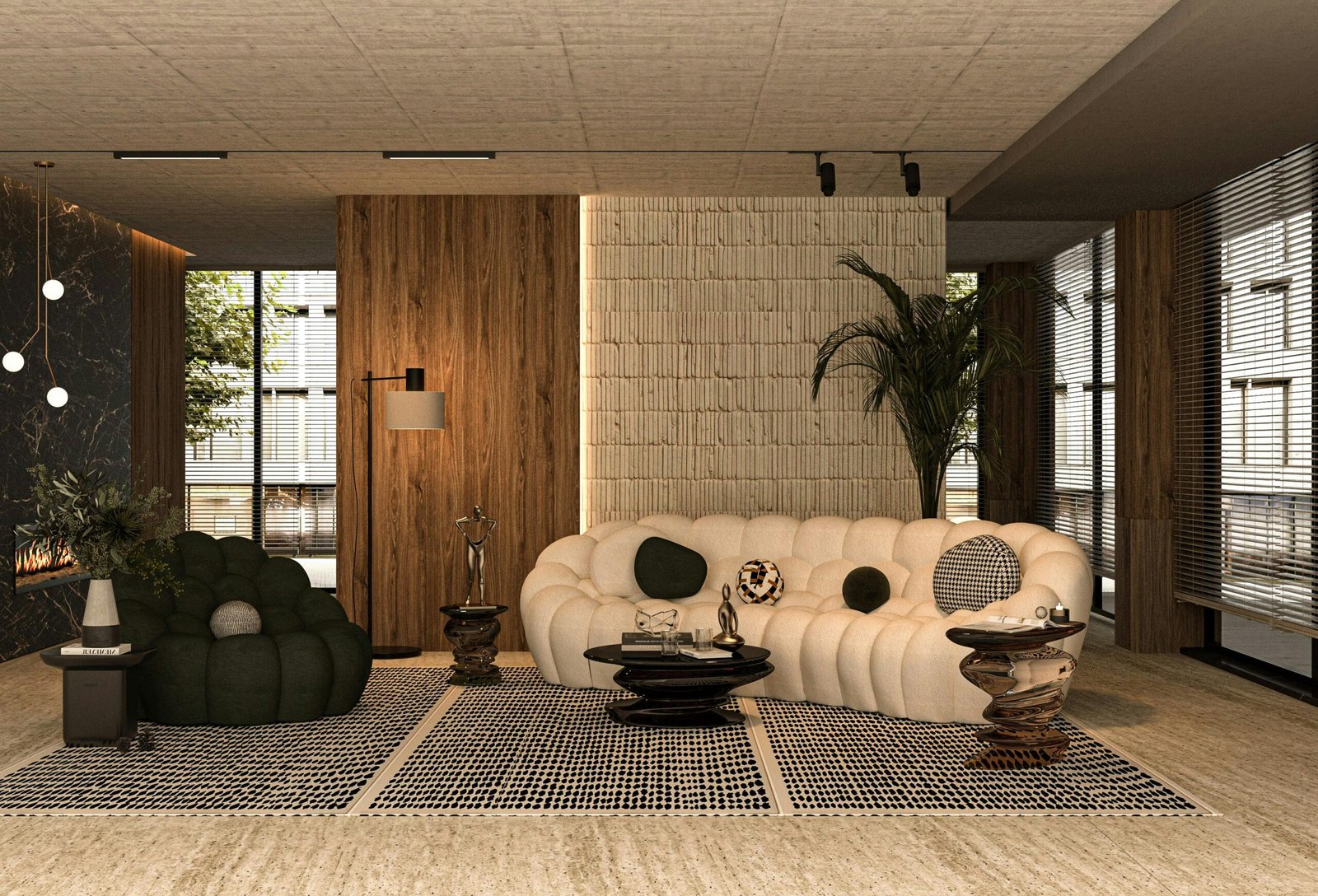
A rug can instantly make a room feel more finished, comfortable, and cohesive—but only if it’s the right size, in the right place, with the right materials for how you live. The biggest reason rugs “don’t work” isn’t color. It’s scale. A rug that’s too small makes a room feel chopped up, awkward, and cheaper than it needs to. A rug that’s placed incorrectly can make your furniture look like it’s floating. And the wrong rug material can turn daily life into a constant cleaning problem.
The good news is that rug choices become easy once you learn a few clear rules. This guide will walk you through how to size and place rugs in every major room—living room, bedroom, dining room, hallway, and entryway—plus how to choose materials, patterns, and maintenance-friendly options. You’ll leave with a system you can use again and again.
Why rugs matter more than people think
A rug does four important jobs:
- Defines the zone
In open layouts, rugs tell your eye where the living area ends and the dining area begins. - Anchors furniture
A properly sized rug “connects” the sofa, chairs, and coffee table into one planned seating area. - Adds comfort and warmth
Rugs soften hard floors and make a home feel more welcoming. - Supports the style and palette
A rug is often the biggest pattern or color moment in a room. Done well, it makes everything feel cohesive.
If a room feels unfinished, mismatched, or “off,” the rug is often one of the first things to check.
The #1 rug mistake: going too small
Most people buy a rug that’s too small because:
- smaller rugs are cheaper,
- they look “fine” in the store,
- and they’re easier to carry and place.
But in real rooms, undersized rugs create a “postage stamp” effect—your furniture looks disconnected and the room feels smaller.
The simple rule that prevents 90% of rug mistakes
Your rug should be big enough to touch your main furniture.
That doesn’t mean every piece must sit fully on the rug. But the rug should visually connect the seating or bed area, not sit alone in the center of the floor.
Before you shop: measure like a designer (fast and simple)
You don’t need fancy tools. You just need basic measurements.
For any room, measure:
- the main furniture width (sofa width, bed width, dining table width)
- the seating or bed “zone” size
- and the clear walking paths you need
Then use painter’s tape to mark potential rug sizes on the floor. This is one of the best ways to avoid regret because you’ll see scale immediately.
Living room rugs: sizing and placement that makes the room look “done”
The living room is where rug mistakes are most visible because the rug anchors the main seating zone.
The three best living room rug placements
1) Front legs on (most common and most forgiving)
- The rug goes under the front legs of the sofa and chairs.
- The coffee table sits on the rug.
- Back legs may be off the rug.
Why it works:
- It connects the seating area without requiring an enormous rug.
- It looks intentional in most rooms.
2) All legs on (most “luxury” look)
- All furniture legs (sofa and chairs) sit on the rug.
Why it works:
- It feels high-end and spacious.
- Best for larger rooms and open layouts.
3) Sofa off, chairs on (only in specific layouts)
- Sometimes the sofa sits off the rug, but chairs and coffee table are on.
This can work in narrow rooms, but it’s easier to get wrong. If you choose this, make sure the rug still visually connects the seating area.
Living room size guideline (practical approach)
Instead of memorizing exact dimensions, use the zone rule:
- your rug should span at least the width of the sofa area (and ideally wider if you have chairs)
If your sofa is long and your rug is shorter than the sofa, the room often looks unbalanced.
Common living room rug problems (and fixes)
Problem: Rug is centered in the room, not centered on the seating area
Fix: center the rug under the sofa/coffee table zone, not the room itself.
Problem: Rug doesn’t touch the sofa
Fix: slide rug under the sofa’s front legs.
Problem: Rug looks like a tiny island
Fix: size up or layer a smaller rug over a larger neutral base rug (more on layering later).
Rug choice for living rooms: pattern, color, and texture
If you want the room to feel bigger
- choose a rug with a lighter background or soft, low-contrast pattern
- avoid overly busy patterns that chop up the floor
If you want the room to feel grounded and cozy
- choose warmer tones
- choose texture: wool-like, subtle woven patterns, natural fiber blends
If you want to hide stains and daily mess
- choose medium-tone rugs
- choose rugs with gentle pattern variation (not stark white solid rugs)
Quick palette tip
A living room rug should either:
- echo the wall/sofa neutral (for calm cohesion), or
- introduce your secondary color (for personality), while still fitting your palette.
Bedroom rugs: how to make the room feel softer and larger
Bedroom rug placement depends on whether you want the rug to cover most of the floor or provide softness where your feet land.
The best bedroom rug placements
1) Rug under the bed (classic and best-looking)
- The rug starts under the bed and extends outward.
- You want enough rug on the sides and foot of the bed for soft landings.
Why it works:
- It looks polished and intentional.
- It visually expands the bed zone.
A helpful placement approach:
- let the rug extend beyond the bed on both sides and at the foot
2) Two runners on the sides (budget-friendly and practical)
- Use one runner on each side of the bed.
- Optional runner at the foot if desired.
Why it works:
- Great for tight budgets.
- Easy to clean and replace.
- Works well in narrow bedrooms.
3) Rug at the foot of the bed (accent option)
- A smaller rug placed at the foot can add texture and warmth.
This is more decorative than functional. It’s best when you already have a cohesive bedroom foundation.
Bedroom rug material priorities
Bedrooms often do well with softer textures:
- wool or wool-blend feel
- plush low-pile
- textured flatweaves with softness
If you’re sensitive to dust, choose a rug that’s easy to vacuum and doesn’t shed heavily.
Dining room rugs: sizing rules that prevent daily frustration
Dining room rugs look amazing—but only if they’re sized correctly. The key is to make sure chairs stay on the rug even when pulled out.
Dining room rug sizing rule (the most important one)
The rug must extend beyond the table on all sides so chairs stay on the rug when pulled out.
If chairs catch on the rug edge, the dining area becomes annoying to use—and the rug will shift constantly.
Best rug types for dining rooms
Dining rooms need rugs that handle crumbs and frequent chair movement.
Good choices:
- low pile rugs (easy to clean, chairs glide better)
- flatweaves
- performance rugs designed for durability
- rugs with subtle pattern variation (hide crumbs better)
Avoid:
- very thick shag rugs (chairs get stuck)
- high-shed rugs
- delicate materials if you eat frequently at the table
Dining room rug pattern tip
Dining rooms can handle a bit more pattern than bedrooms, because pattern hides mess and adds energy to the space.
Hallway rugs and runners: how to make narrow spaces feel longer (and less boring)
Hallways often feel like leftover space. A runner can make them feel intentional and visually longer.
Hallway runner placement rules
- Leave a small border of floor visible on both sides (it frames the runner).
- The runner should not hit the walls.
- If the hallway is long, choose a runner that feels proportionate rather than tiny.
Pattern and color tips for hallways
Hallways are high-traffic, so choose:
- durable materials
- patterns that hide wear
- medium tones that don’t show every speck
Hallways are also great places for bolder patterns if the rest of your home is neutral. It can become a fun design moment without overwhelming a main room.
Entryway rugs: the first impression (and the first line of defense)
Entryways need rugs that can handle:
- dirt,
- moisture,
- heavy foot traffic,
- and frequent cleaning.
Best entry rug types
- washable rugs (if possible)
- durable flatweaves
- low pile rugs that won’t catch on doors
Entryway placement
Make sure the rug:
- fits the entry zone without blocking the door
- sits in a way that feels centered and welcoming
- has a non-slip pad underneath (safety + stability)
If you have an entry that connects to a hallway, you can layer:
- one smaller mat near the door + a runner leading inward
Kitchen rugs: functional comfort without making cleaning harder
Kitchens benefit from rugs because they add comfort at the sink and help define space, but they also need to be easy to clean.
Good kitchen rug options:
- washable runners
- low pile rugs
- flatweave rugs
Placement ideas:
- runner along the sink and prep area
- small rug in front of the sink
- runner in a galley kitchen for warmth and softness
Avoid thick rugs that trap crumbs and become hard to vacuum.
Rug materials: what to choose for your lifestyle
Rug material matters as much as size. A gorgeous rug that’s impossible to maintain will become stressful.
Wool
Pros:
- durable
- naturally resilient
- looks rich
Cons: - can shed at first
- can be more expensive
Best for: living rooms and bedrooms when you want warmth and quality.
Flatweave (cotton blends, woven styles)
Pros:
- easy to vacuum
- good for high traffic
- often more affordable
Cons: - less plush
Best for: dining rooms, hallways, entryways.
Synthetic fibers (various blends)
Pros:
- often stain resistant
- affordable
- lower maintenance
Cons: - can feel less “luxury”
Best for: families, pets, high traffic areas.
Natural fibers (like jute and similar textures)
Pros:
- warm, organic, stylish
- great texture
Cons: - can be rough underfoot
- can stain and wear in messy areas
Best for: low-mess living areas, layered looks, calmer homes.
Rug pile height: how thickness changes function
- Low pile / flat: best for dining rooms, hallways, and easy cleaning
- Medium pile: comfortable but still practical in living rooms
- High pile / shag: cozy but harder to clean, not great for dining rooms
If you want the room to feel lighter and easier, low-to-medium pile is usually safest.
Don’t skip the rug pad (it’s a design upgrade)
A rug pad helps with:
- safety (less slipping)
- comfort (softer underfoot)
- longevity (reduces wear)
- a cleaner look (prevents curling edges)
Many people think rug pads are optional until they use one. They make a noticeable difference.
How to layer rugs (a smart trick when the perfect rug is too expensive)
Rug layering can solve two problems:
- you want a bigger rug, but it’s too expensive
- you want more texture and style without committing to a bold rug
A simple layering method:
- use a large neutral base rug (flat weave, natural fiber look, simple texture)
- layer a smaller patterned rug on top, centered in the seating zone
This looks intentional and can be budget-friendly.
Pattern and scale: how to choose what looks good in your room
Pattern isn’t just about personal taste. It affects how big a room feels.
- Large patterns can work in larger rooms and can make a space feel more designed.
- Small busy patterns can hide mess but may feel visually noisy in tiny rooms.
- Low-contrast patterns feel calm and can make spaces feel larger.
- High-contrast patterns create energy but can visually “chop” the floor.
A safe choice for most homes is a rug with:
- a neutral background,
- subtle variation,
- and one or two supporting colors that repeat elsewhere.
How to choose a rug when you already own furniture
If you already have a sofa, bed, or dining table, use those as your anchors.
- Match rug undertones to your largest neutral (warm vs. cool).
- Pull one supporting color from your existing pillows, art, or curtains.
- Decide whether you want the rug to be quiet (support) or bold (statement).
If your furniture is already bold, choose a calmer rug. If your furniture is neutral, the rug can carry more personality.
The “right rug” should reduce stress, not add it
A rug isn’t just decoration—it’s part of how you live in the space. The best rug choice is the one that:
- fits the zone properly,
- supports the room’s palette,
- feels good underfoot,
- and is realistic to maintain.
If you get size and placement right, almost any decent rug will look better. If you get size wrong, even an expensive rug won’t fix the room.
A simple rug decision checklist
Before you buy, ask:
- Is the rug big enough to touch key furniture?
- Does it fit the room’s walking paths?
- Is the pile height practical for this room?
- Does the color palette match my home’s undertones?
- Will the material work with my lifestyle (pets, kids, eating habits)?
- Do I have a rug pad planned?
If you can answer yes, you’re making a confident rug choice.

Isabella Garcia is the creator of a blog dedicated to crafts and home care, focused on making everyday life more creative, organized, and enjoyable. The blog shares practical tips, easy DIY projects, home organization ideas, and simple solutions to take better care of your living space. Whether you’re a beginner in crafting or someone looking for inspiration to improve your home routine, Isabella’s blog offers clear, useful, and hands-on content to help you create a cozy, beautiful, and well-cared-for home.