
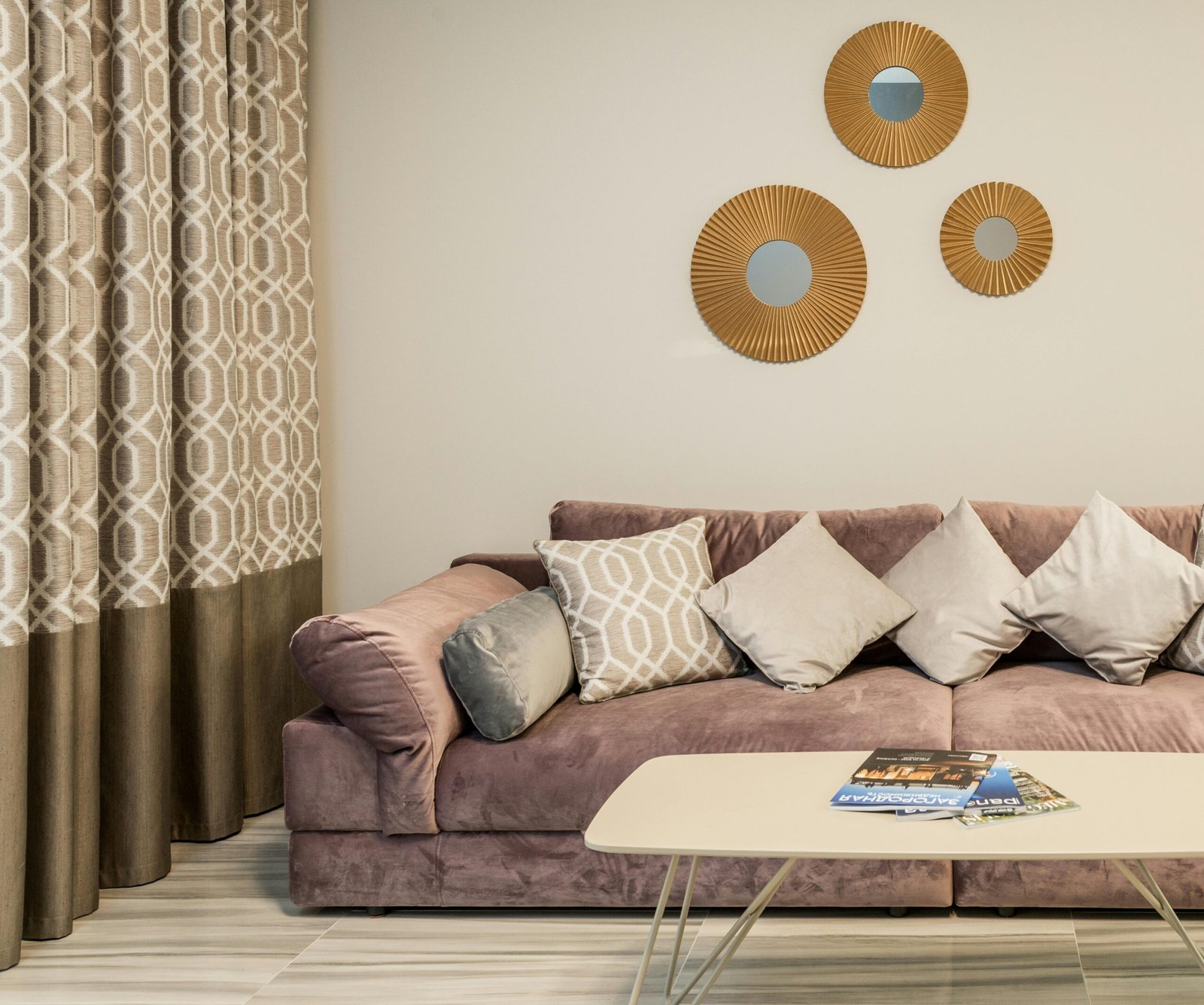
You don’t need a designer budget to make your home look more expensive. Most “high-end” interiors aren’t expensive because every item costs a lot—they look expensive because they feel intentional. The space feels calm, cohesive, and well-finished. The proportions make sense. The lighting is warm and layered. The surfaces aren’t cluttered. The materials repeat. And the room has a few strong focal moments instead of dozens of small random objects.
That’s great news, because it means the most effective upgrades aren’t about buying luxury furniture. They’re about using the same strategies designers use—strategies you can apply in any home, including rentals, small apartments, and builder-grade spaces.
This article will walk you through practical designer tricks that actually work to make your home look more expensive, step by step.
1) Make the room feel calm first (expensive homes are not visually loud)
The biggest “cheap” signal isn’t a budget sofa or a basic coffee table. It’s visual noise:
- crowded surfaces
- too many small decor items
- random colors and patterns
- mismatched finishes
- clutter without boundaries
Expensive rooms feel calm because the eye has places to rest.
The quickest calm upgrade
Pick your most visible surface (coffee table, console, kitchen counter, dresser) and:
- remove everything
- put back only essentials
- contain essentials on a tray
- leave breathing space
One calm surface can make an entire room feel more elevated.
2) Use fewer, larger statement pieces (small clutter looks cheaper than one strong focal moment)
A common budget mistake is buying lots of small decor items to “fill the room.” That usually makes the space look cluttered, not styled.
Designer spaces often use:
- one large art piece instead of many small frames
- one larger plant instead of several tiny plants
- one strong mirror instead of multiple small wall items
- one substantial lamp instead of lots of little accessories
Easy way to apply this
Choose one “hero” per room:
- living room: large art above sofa, or big mirror, or statement floor lamp
- bedroom: strong bed styling + one art piece above headboard
- entry: mirror above console + lamp
Then keep everything else supportive and minimal.
3) Upgrade lighting layers (lighting is the #1 “expensive” shortcut)
Most homes rely on one overhead light. That’s the fastest way to make a room feel flat and harsh.
Designer rooms use layered lighting:
- table lamps
- floor lamps
- soft accent lights
- warm bulbs
The simplest expensive-looking lighting setup
In a living room:
- one table lamp on a side table or console
- one floor lamp in a corner or by a chair
Then use overhead lighting less at night.
Even inexpensive lamps make a space look richer when the light is warm and well-placed.
4) Choose a cohesive palette (expensive rooms don’t look random)
Cohesion is what makes a home feel “designed.” A tight palette makes almost any furniture look more expensive because everything feels intentional.
A simple palette formula
- base neutral (warm white, cream, soft greige)
- one secondary color (olive, navy, charcoal, terracotta)
- one accent finish (black or brass)
- one wood tone direction (light or medium)
You don’t have to eliminate color. You just need a plan so colors repeat rather than scatter.
The repetition trick
Repeat your accent color 3 times in a room (small ways are enough):
- pillow + art detail + vase
Repetition creates designer-level cohesion.
5) Repeat finishes (too many metals makes a room look messy)
A room looks expensive when finishes feel consistent:
- hardware
- frames
- lamp bases
- mirror frames
- curtain rods
The easiest rule
Pick one main metal finish:
- matte black (modern, clean)
- brass (warm, elegant)
- nickel/chrome (classic, fresh)
Then repeat it across the room.
You can mix metals, but the cleanest “expensive” look usually has one finish leading clearly.
6) Fix scale and proportion (expensive rooms “fit” their furniture)
Scale is one of the biggest design signals. A room looks cheaper when:
- the rug is too small
- art is too small
- lamps are too small
- furniture feels crammed or floating
High-impact scale fixes
Rug:
A rug should connect the seating area. If it only sits under the coffee table, it often looks too small. A correctly sized rug makes the whole living room look more polished.
Art:
Small art floating on a big wall looks unfinished. One larger piece looks more expensive.
Lamps:
Tiny lamps often look like an afterthought. Lamps with presence elevate a room instantly.
You don’t always have to buy new—sometimes simply repositioning and resizing your key pieces over time makes the home feel dramatically more elevated.
7) Hang curtains the “designer way” (this makes ceilings look taller)
Curtains are a huge “cheap vs. expensive” detail.
Expensive rooms often have:
- curtains hung higher (closer to the ceiling)
- rods extended wider than the window
- panels long enough to look intentional
This makes the window look larger and the room look taller—two things that instantly feel more luxurious.
Even affordable curtains can look high-end when hung correctly.
8) Add texture, not clutter (texture reads as richness)
High-end spaces often use simple color palettes but look rich because of texture:
- linen curtains
- woven rugs
- knit throws
- matte ceramics
- wood grain
- layered textiles
Texture creates depth without visual noise.
Easy texture upgrades
- swap one throw for a knit or woven texture
- add linen-look curtains
- add a textured rug
- use a wood tray on a coffee table
- add a woven basket for storage
These changes feel “quiet luxury” because they’re subtle and tactile.
9) Style surfaces with “containment” (trays make things look intentional)
Containment is the difference between “stuff everywhere” and “styled.”
Examples:
- keys on a tray (not scattered)
- skincare in a tray (not spread across the counter)
- coffee items grouped on a tray (not floating)
Trays and bowls make everyday life look curated—without requiring you to own less.
10) Make storage look intentional (hidden clutter = luxury)
Luxury interiors hide the mess. Not because the owner doesn’t have stuff—but because the storage is planned.
The high-end storage approach
- closed storage for everyday clutter
- baskets and bins to categorize
- minimal open shelves styled lightly
If your home feels “cheap,” it might simply be that too much daily life is visible. Hiding 50–70% of visual clutter can make the space feel dramatically more expensive.
11) Upgrade the “touch points” (small details people notice up close)
Your home feels more expensive when the things you touch daily feel cohesive:
- soap dispensers
- towels
- cabinet hardware
- light switches and plates
- hangers and hooks
- door handles (in some spaces)
You don’t need to upgrade everything. Choose one or two high-visibility areas:
- the kitchen sink zone
- the bathroom vanity
- the entry key drop zone
Matching containers and a clean setup create a luxury impression fast.
12) Use symmetry where it makes sense (symmetry feels polished)
Symmetry isn’t required everywhere, but it signals calm and intention.
Easy symmetry wins:
- two lamps on nightstands
- two frames side by side above a console
- matching pillows on a sofa (even if the rest is relaxed)
Even partial symmetry can make a room feel more “finished.”
13) Add one “greenery moment” (plants make spaces feel alive and styled)
Plants and greenery add:
- softness
- life
- texture
- natural color
A home looks more expensive when it has one or two strong greenery moments rather than many tiny scattered plants.
Easy approach
- one medium/tall plant in a corner
- one small plant on a shelf or console
Keep planters simple and cohesive with your palette.
14) Keep countertops and floors as clear as possible (clean lines read as luxury)
This might be the most underrated tip: luxury homes have clear lines.
- Clear floors (no piles in corners)
- Clear counters (kitchen and bathroom especially)
- Clear pathways (good flow)
If you want your home to look more expensive immediately:
- clear the floor clutter,
- clear the counters,
- and define zones for daily items.
The room will feel cleaner and calmer even before you buy a thing.
A fast “make it look expensive” checklist (do this this week)
If you want quick wins, do these in order:
- Remove clutter from your most visible surfaces
- Use trays to contain essentials
- Add a table lamp and/or floor lamp (layered lighting)
- Tighten the palette (remove random colorful small decor)
- Add one textured element (throw, rug, curtains)
- Add one large focal moment (art or mirror)
- Repeat one metal finish and one wood tone direction
- Make one zone “hotel clean” (sink area or entry console)
These changes create the “designer” feeling: calm, cohesive, and intentional.
The real secret: expensive-looking homes are edited, not over-decorated
A home looks expensive when it feels like every choice was made on purpose:
- surfaces are calm,
- lighting is warm and layered,
- colors and finishes repeat,
- scale feels right,
- and decor is minimal but meaningful.
You don’t need luxury brands. You need clarity and structure. If you focus on the foundations—layout, lighting, palette, texture, and containment—your home will look more expensive even with budget pieces.

Isabella Garcia is the creator of a blog dedicated to crafts and home care, focused on making everyday life more creative, organized, and enjoyable. The blog shares practical tips, easy DIY projects, home organization ideas, and simple solutions to take better care of your living space. Whether you’re a beginner in crafting or someone looking for inspiration to improve your home routine, Isabella’s blog offers clear, useful, and hands-on content to help you create a cozy, beautiful, and well-cared-for home.