
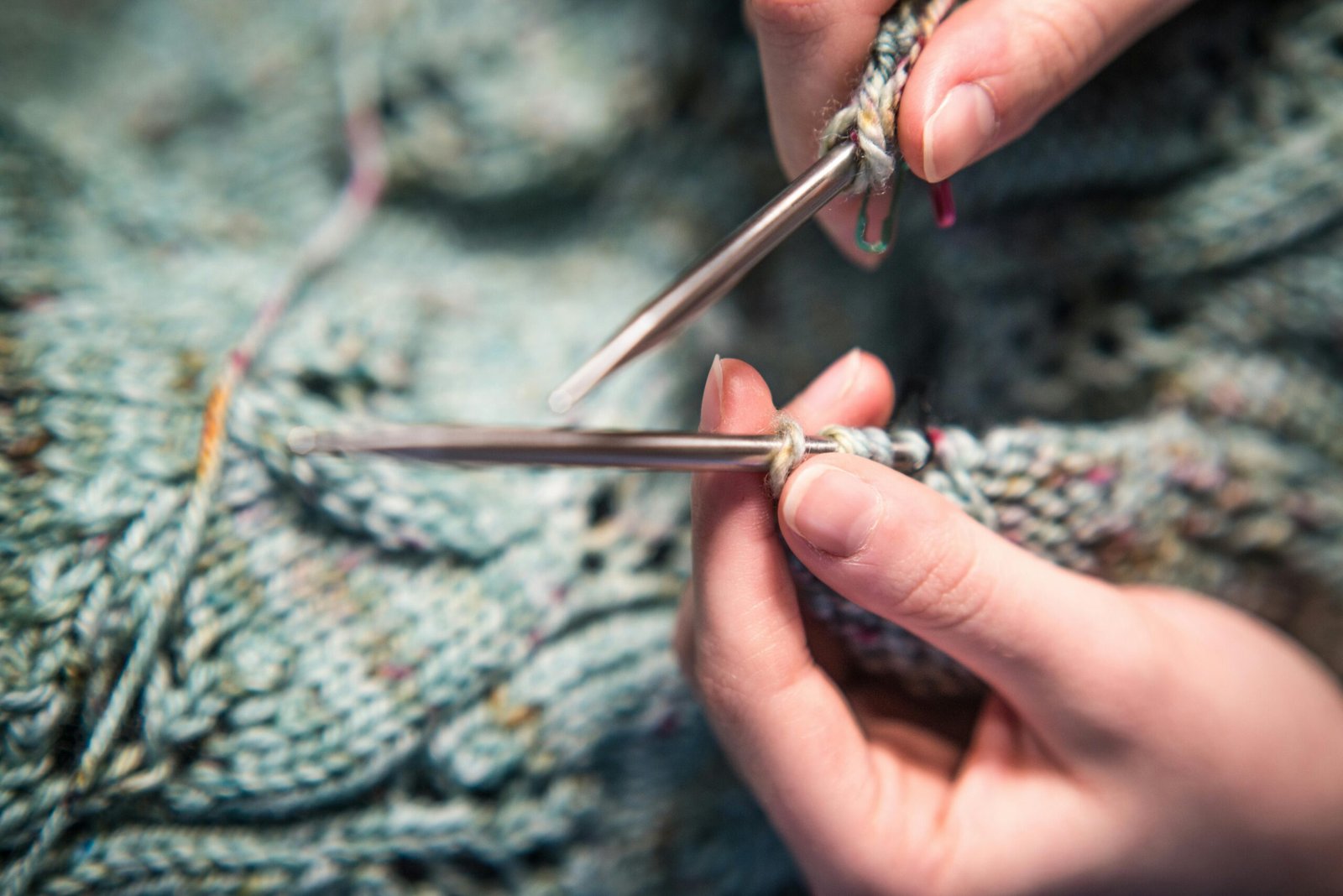
If you’re new to crochet or knitting, yarn can feel like the most confusing part of the whole craft. Hooks and needles are straightforward—one is bigger, one is smaller. Yarn, though? Yarn comes in different weights, fibers, textures, twists, and names that seem to change depending on the country, the brand, or the person explaining it.
The good news: you don’t need to memorize everything to choose yarn well. As a beginner, you just need a few reliable rules that help you pick yarn that’s easy to work with, easy to see, and appropriate for what you’re making. Once you understand the basics, buying yarn stops being stressful and starts being fun.
This guide will help you choose yarn confidently for beginner crochet and knitting projects—without wasting money or ending up with yarn that makes learning harder.
What “Type of Yarn” Really Means
When people say “type of yarn,” they might mean different things. Yarn is usually described using a combination of:
- Weight (thickness): how thick the yarn strand is
- Fiber content: what the yarn is made from (acrylic, cotton, wool, etc.)
- Texture: smooth, fuzzy, boucle, chenille, etc.
- Twist and ply: how the strands are spun together (affects splitting and durability)
- Structure: single-ply, plied, chainette, roving-style, and more
As a beginner, you don’t need to master all of these at once. The most important starting trio is:
- Weight
- Fiber
- Texture
Get those right, and the rest becomes much easier.
Yarn Weight: The Beginner-Friendly Starting Point
Yarn “weight” is about thickness, not how heavy the skein feels in your hand. Most labels include a weight category number (like #4) or a name (like “worsted”).
The easiest yarn weights for beginners
For crochet and knitting beginners, these are the most forgiving:
- Worsted / Medium (#4)
- DK / Light Worsted (#3) (also good, but slightly thinner)
Worsted weight is the sweet spot because:
- Stitches are large enough to see clearly
- Fabric builds up at a satisfying speed
- It works with common hook and needle sizes
- It’s widely available and affordable
Quick yarn weight cheat sheet
You’ll see these common categories:
- #0 Lace: very thin, delicate, not beginner-friendly
- #1 Fingering / Sock: thin, detailed, slow for beginners
- #2 Sport: lighter, still small stitches
- #3 DK / Light: good, but smaller than worsted
- #4 Worsted / Medium: best beginner choice
- #5 Bulky: fast, cozy, but can be harder for precision
- #6 Super Bulky: very fast and chunky; can hide stitch structure
- #7 Jumbo: very thick; special projects
Beginner recommendation: start with #4 unless you have a specific reason not to.
Fiber Content: How Yarn Material Changes Your Experience
The fiber determines how the yarn behaves: whether it stretches, how it feels, how it holds shape, and how it handles washing.
Acrylic: the easiest beginner “practice” fiber
Acrylic is one of the best fibers for beginners because it’s:
- Affordable and widely available
- Consistent from skein to skein
- Easy to care for (often machine washable)
- Smooth enough to see stitches clearly (in many brands)
Acrylic is great for:
- Practice swatches
- Scarves and hats
- Blankets
- Learning tension and stitch rhythm
Acrylic is not “cheap” in a bad way—it’s just practical. Many skilled makers still use acrylic for projects that need durability and easy care.
Cotton: crisp stitch definition and great for home items
Cotton is less stretchy than acrylic or wool, which can feel different in your hands. But it has amazing stitch definition.
Cotton is great for:
- Dishcloths and washcloths
- Coasters and potholder-style items (note: for heat-related items, always be cautious and choose appropriate materials and thickness)
- Summer tops (later on)
- Market bags (because it holds shape well)
Beginner note: cotton can be a little tiring if you crochet or knit very tightly because it doesn’t “give” much. If cotton feels hard on your hands, try a cotton blend or go up a hook/needle size.
Wool: elastic, grippy, and forgiving for tension
Wool is naturally springy and often easier to keep even tension with. It also has a slight “grab,” which helps stitches stay put on needles.
Wool is great for:
- Hats and mittens (later)
- Warm scarves
- Learning knitting tension (especially)
Beginner note: some people find wool itchy, and some wool needs gentle washing. For a beginner project, a wool blend can be a nice balance.
Blends: often the best of both worlds
Blended yarns can be fantastic for beginners because they combine strengths.
Common beginner-friendly blends:
- Acrylic + wool: soft, warm, easier care than pure wool
- Cotton + acrylic: better stitch definition than acrylic, softer and stretchier than cotton
- Wool + nylon: durable and elastic (often used for socks)
If you want a “safe bet,” a smooth acrylic or acrylic blend in worsted weight is hard to beat.
Texture: The #1 Thing That Can Make Learning Harder
A beginner can learn with almost any fiber, but texture is where problems happen fast.
Smooth yarn: best for learning
Smooth yarn makes stitches clear. You can see where to insert your hook or needle and learn faster.
Fuzzy yarn: beautiful later, frustrating now
Mohair-style, fluffy, or “halo” yarns blur stitch definition. That means:
- You can’t easily see the stitch tops
- It’s harder to count rows
- Mistakes are harder to fix
Save fuzzy yarn for later—after you’re confident.
Chenille/velvet yarn: soft, but tricky
Chenille yarn feels amazing, but it often:
- Hides stitch structure
- Sheds fibers
- Makes it hard to see where you are
- Can create uneven tension for beginners
It’s not impossible—just not ideal for learning.
Novelty yarns (boucle, eyelash, ribbon): skip for now
These yarns are designed for special textures, not for clear learning. If you’re new, they often feel like trying to learn to read in cursive while riding a bike.
If your goal is fast progress, choose smooth yarn.
Ply and Twist: Why Some Yarn Splits and Some Doesn’t
You might notice that some yarn “splits,” meaning your hook or needle catches only part of the yarn strand. That can make stitches messy and frustrating.
Why splitting happens
Splitting is more common when yarn is:
- Loosely twisted
- Made of multiple strands that separate easily
- Very soft or “roving-style”
What beginners should look for
Choose yarn that is:
- Firmly twisted
- Plied (multiple strands spun together)
- Not overly loose or airy
A yarn that doesn’t split makes it easier to insert your hook/needle cleanly, which makes your stitches look better faster.
How to Choose Yarn Based on Your Project
This is the most practical way to think about yarn. Start with the project goal, then pick yarn that matches what the item needs to do.
Coasters and dishcloths
Goal: absorbent, sturdy, washable, holds shape
Best yarn choices:
- Cotton (worsted cotton is ideal)
- Cotton blends (cotton-acrylic can also work)
Why: cotton handles water well and keeps its shape.
Beginner tip: choose a smooth cotton in a light color so you can see your stitches.
Scarves
Goal: soft, comfortable, drapey, easy care
Best yarn choices:
- Acrylic
- Acrylic blends
- Soft wool blends (if you like wool)
Why: scarves touch your skin, so softness matters. Acrylic is easy-care and forgiving.
Beginner tip: avoid fuzzy yarn at first, even if it looks scarf-perfect.
Hats
Goal: stretchy, warm, holds shape
Best yarn choices:
- Wool or wool blends
- Acrylic (soft and springy options)
Why: elasticity helps hats fit comfortably.
Beginner note: hats often require consistent sizing, so once you start hats, you’ll want to pay more attention to gauge. For learning, scarves are simpler.
Blankets
Goal: soft, durable, washable, budget-friendly
Best yarn choices:
- Acrylic (classic blanket fiber)
- Acrylic blends
- Some cotton blends (but cotton-only blankets can get heavy)
Why: blankets use a lot of yarn, so cost and easy care matter.
Beginner tip: choose a yarn you can afford in the quantity you need. Also, pick a color you won’t hate after seeing it for weeks.
Bags and totes
Goal: structure, durability, minimal stretching
Best yarn choices:
- Cotton
- Cotton-linen blends
- Sturdy acrylic (sometimes)
Why: cotton holds shape better than many stretchy fibers.
Beginner tip: use a slightly smaller hook to create a tighter fabric so the bag doesn’t stretch too much.
Amigurumi (crochet toys)
Goal: dense fabric, small holes, holds stuffing
Best yarn choices:
- Smooth cotton
- Cotton blends
- Smooth acrylic (some people love acrylic for amigurumi too)
Why: stitch definition and density are important.
Beginner tip: choose a yarn that doesn’t split and use a smaller hook than the label suggests to keep stitches tight and neat.
Choosing Yarn by Season and Comfort
Even if you’re not making “clothing,” season matters. A scarf for winter needs different yarn than a lightweight wrap.
Warm and cozy
Choose:
- Wool or wool blends
- Thicker acrylics
- Bulky yarn (once you’re comfortable)
Cool and breathable
Choose:
- Cotton
- Cotton blends
- Linen blends (later on)
If you’re sensitive to scratchy textures, prioritize softness. Yarn is meant to be enjoyable to use and wear.
The Best Beginner Yarn “Recipes” (Simple, Reliable Combos)
If you want quick combinations that almost always work:
Beginner crochet practice
- Smooth worsted acrylic
- 5.0 mm or 5.5 mm hook
- Light/medium color
Beginner knitting practice
- Smooth worsted wool blend or acrylic
- US 8 (5.0 mm) needles
- Light/medium color
Beginner dishcloth (crochet or knit)
- Worsted cotton
- 5.0 mm hook or US 7–8 needles (depending on your style)
These combos reduce struggle and help you focus on learning technique.
Yarn Labels: What to Look at First
A yarn label can look like a tiny instruction manual, but you only need a few pieces of information.
Focus on:
- Weight category (#3, #4, etc.)
- Recommended hook/needle size
- Fiber content (acrylic, cotton, wool, blends)
- Yardage/meters (how much yarn you’re getting)
- Care instructions (especially for gifts and wearables)
If you’re choosing between two similar yarns, yardage helps you understand which one gives more value.
How Much Yarn Do You Need? A Beginner-Friendly Approach
Exact yarn requirements depend on your stitch pattern, tension, and size. But you can still make smart estimates.
For learning and small items
- 1 skein is usually enough for swatches, coasters, and small practice projects.
For a scarf (beginner classic)
Often 2–4 skeins of worsted yarn, depending on:
- scarf width
- scarf length
- yardage per skein
Beginner tip: if you’re buying yarn for a project, buy enough from the same batch (often called the same dye lot) so colors match.
Avoid These Beginner Yarn Mistakes
These mistakes don’t mean you’re doing anything wrong—they’re just common traps.
Starting with fuzzy yarn
You can’t see stitches well, and it slows learning.
Choosing very dark yarn
Black and navy hide stitch structure. Learning becomes harder for no benefit.
Buying yarn that splits easily
Splitty yarn makes you catch only part of the strand, causing uneven stitches.
Buying too much yarn too soon
It’s tempting to stockpile, but you’ll learn your preferences quickly. Start with one or two skeins until you know what you love.
Picking yarn based only on how it looks in the skein
Some yarn looks incredible wound up but feels rough or behaves oddly when worked. If possible, feel the yarn, stretch it lightly, and consider what you’re making.
A Simple Yarn Decision Checklist
Use this checklist anytime you’re choosing yarn as a beginner:
- Is it worsted (#4) or DK (#3)? (Beginner-friendly)
- Is it smooth and easy to see?
- Is the color light/medium (not too dark)?
- Does it feel comfortable to touch?
- Does it match the project goal (soft for scarves, sturdy for bags, absorbent for dishcloths)?
- Can you afford enough of it to finish the project?
If you answer “yes” to most of these, you’re in great shape.
Final Thoughts: The Best Beginner Yarn Is the Yarn That Helps You Learn
The perfect beginner yarn is not the fanciest yarn or the most expensive yarn. It’s the yarn that:
- lets you see your stitches clearly
- feels good in your hands
- matches your project goal
- doesn’t fight you while you learn
Start with smooth worsted yarn in a light color, finish a couple of small projects, and you’ll quickly understand what you enjoy. After that, exploring different fibers and textures becomes a fun part of the craft instead of a confusing obstacle.
Isabella Garcia is the creator of a blog dedicated to crafts and home care, focused on making everyday life more creative, organized, and enjoyable. The blog shares practical tips, easy DIY projects, home organization ideas, and simple solutions to take better care of your living space. Whether you’re a beginner in crafting or someone looking for inspiration to improve your home routine, Isabella’s blog offers clear, useful, and hands-on content to help you create a cozy, beautiful, and well-cared-for home.