
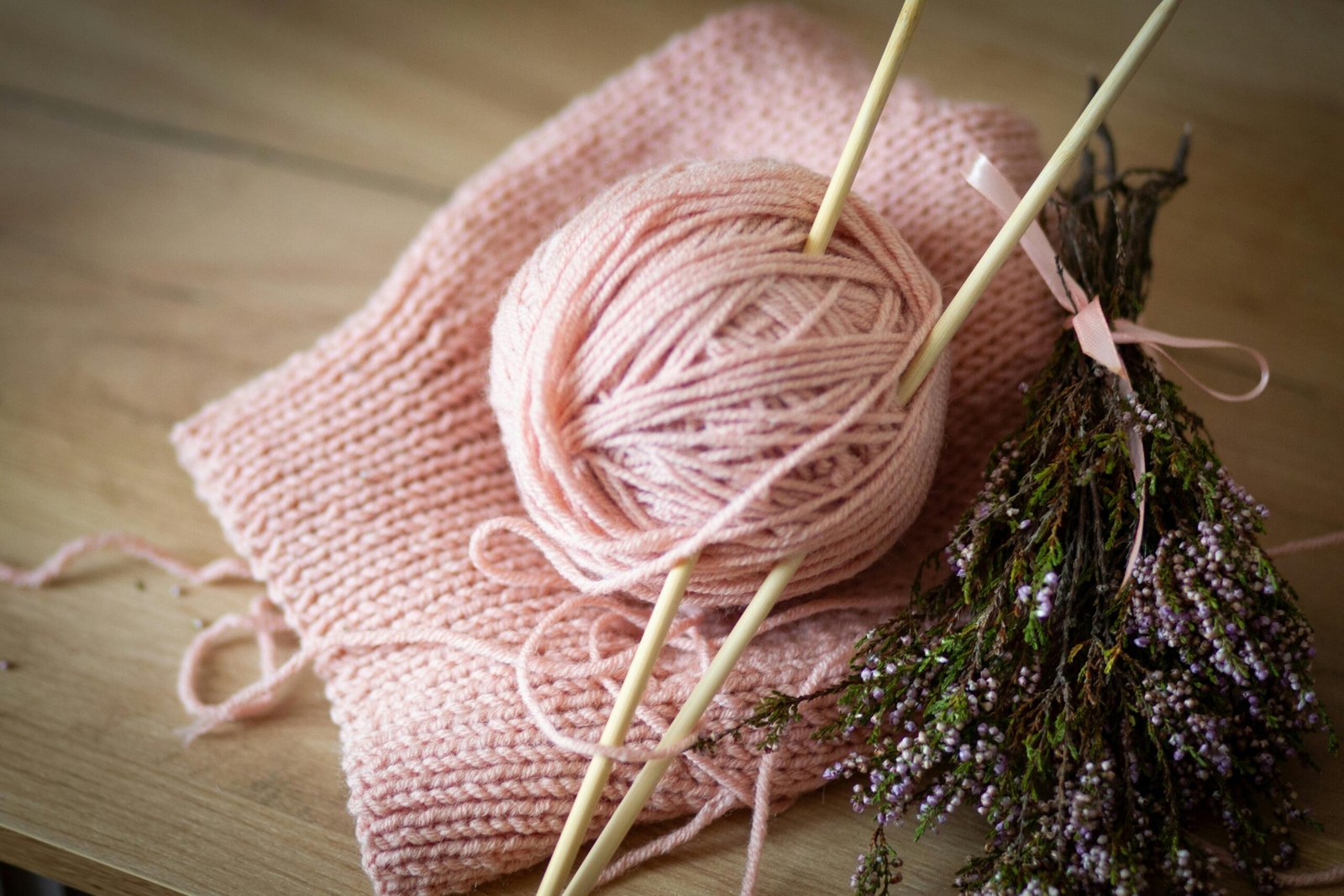
Uneven edges are one of the most common beginner frustrations in crochet. You start with a nice-looking rectangle… and a few rows later, the sides are bumpy, slanted, or wavy. It can feel like you’re doing everything right, but your project still looks “messy.”
Here’s the good news: uneven edges are rarely about “bad crochet.” They’re almost always caused by a small set of fixable issues—mostly around row ends, stitch counting, turning chains, and tension changes. Once you know what to look for and how to build a consistent edge routine, your edges improve quickly.
This article will teach you exactly why crochet edges get uneven, how to diagnose the cause, and several beginner-friendly methods to keep your sides straight—without complicated techniques.
Why Crochet Edges Get Uneven
A crochet row has two “danger zones”:
- The first stitch of the row (right after turning)
- The last stitch of the row (right before turning)
Most edge problems happen because:
- You miss the last stitch
- You accidentally add a stitch at the end
- Your turning chain height isn’t consistent
- Your tension changes at the start/end of rows
- You’re crocheting into the turning chain differently each time
Even tiny inconsistencies add up across many rows, which is why edges can look fine at first and then slowly drift.
Step One: Identify the Type of Edge Problem You Have
Before fixing anything, it helps to name what you’re seeing.
A) Your piece gets wider or narrower
That’s usually a stitch count problem (missing or adding stitches).
B) Your piece stays the same width but edges look bumpy
That’s often a turning chain + tension problem, or inconsistent placement of the first/last stitch.
C) Your edges look slanted
That’s usually missing or adding at the same side repeatedly, or the turning chain is being treated inconsistently.
D) Your edges are wavy
That can be uneven tension, especially with looser stitches like double crochet, or you may be adding stitches.
Once you know which category you’re in, the fix becomes much clearer.
The #1 Fix for Crochet Edges: Count Your Stitches
If you do nothing else, do this: count your stitches at the end of every row until your edges improve.
Counting feels annoying at first, but it’s the fastest path to clean edges. Most “uneven edge” problems are actually “my stitch count is drifting.”
How to count properly
Look at the top of your row. Each stitch forms a V shape. Each V = one stitch.
Count each V across. Your number should stay the same every row.
A beginner truth
If your pattern says 20 stitches per row and you have 19 or 21, the edges will look uneven—even if your stitches are beautiful.
Use Stitch Markers on Row Ends (This Changes Everything)
Stitch markers are the simplest “cheat code” for clean edges.
What to mark
- Mark the first stitch of the row
- Mark the last stitch of the row
If you don’t have stitch markers:
- Use paper clips, safety pins, or a small loop of contrasting yarn
How to do it
At the start of a row, after you crochet the first real stitch, place a marker in it.
When you reach the end of the row, the last stitch should land exactly where it needs to because your stitch count will match.
This reduces guesswork and helps your eyes learn what edge stitches look like.
The Hidden Problem: The Last Stitch Likes to Hide
The last stitch of a row is often the one beginners miss. It may look smaller, tilted, or tucked close to the turning chain.
How to find it
When you reach the end of a row, pause and look at the top loops:
- You should see the final V sitting at the edge.
- If you see a “gap” or your edge looks like it ends early, you likely missed it.
A simple edge habit
Always check the last two stitches carefully. Many beginners crochet the second-to-last stitch and assume it’s the last.
Turning Chains: The Most Confusing Edge Variable
Turning chains are necessary, but they can also mess up your edges if you treat them differently each row.
Typical turning chains
- Single crochet: ch 1
- Half double crochet: ch 1 or ch 2
- Double crochet: ch 2 or ch 3
- Treble crochet: ch 3 or ch 4
The pattern should tell you. If you’re practicing without a pattern, choose one method and stay consistent.
Does the turning chain count as a stitch?
This is the big question. Different patterns do different things.
- If the turning chain counts as a stitch: you usually crochet the last stitch into the turning chain from the previous row.
- If the turning chain does not count as a stitch: you usually ignore it and crochet into the first real stitch.
Inconsistent treatment causes uneven edges.
Beginner-friendly method for practice rectangles:
Treat the turning chain as not a stitch and crochet into the first real stitch each row.
This can create neat, predictable edges while you’re learning.
How to Keep Tension Even at the Edges
Even when stitch count is perfect, edges can look rough if your tension changes at row starts and ends.
Why tension changes at edges
- You pull tighter when you turn
- You grip differently when you start a new row
- The turning chain feels unstable, so you compensate by tightening
Fixes that work fast
- Slow down for the first 3 stitches of each row
- Make sure your yarn isn’t getting pulled tighter when you turn
- Keep the loop on your hook the same height each stitch
- Try not to tug the yarn after finishing a stitch
A simple technique: after turning, take one breath and crochet the first stitch gently and deliberately. That first stitch sets the tone for the entire row.
4 Beginner-Friendly Methods for Cleaner Crochet Edges
Different methods suit different stitch types and personal preference. Try them and keep what works.
Method 1: The “Marker Method” (Best for Beginners)
- Mark first stitch
- Mark last stitch
- Count stitches every row
This is the most reliable. It teaches your eyes and builds consistency quickly.
Method 2: Slip the First Stitch (For a Neater Side Look)
Some crocheters create cleaner edges by slipping the first stitch.
A common approach:
- At the start of the row, slip stitch into the first stitch (instead of crocheting normally)
- Continue the row
Important: this changes the edge structure and can affect stitch count rules, so it’s best once you’re more comfortable following specific instructions.
For beginners, I recommend sticking with the marker method first.
Method 3: Use a Taller Turning Chain (If Your Edge Pulls)
If your edge looks like it’s pulling in or slanting, your turning chain might be too short.
Example:
- If you’re doing double crochet and using ch 2, try ch 3 (if it still looks tight).
This creates enough height so your edge doesn’t “lean” inward.
Note: this varies by pattern, so it’s best used for personal practice pieces or when you’re allowed to adjust.
Method 4: “Chainless Start” Techniques (Later)
There are advanced methods that replace turning chains with alternative stitches to create straighter edges. These can look amazing, but they require more control and consistency. They’re great later—just not necessary to fix beginner edges right now.
Edge Problems by Stitch Type (Quick Fixes)
Single crochet edges
Common issue: missing last stitch.
Fix:
- Mark row ends
- Slow down at last stitch
- Count every row
Half double crochet edges
Common issue: turning chain height inconsistency.
Fix:
- Choose ch 1 or ch 2 and stay consistent
- Don’t crochet into turning chain unless your method requires it
Double crochet edges
Common issue: turning chain confusion and accidental increases.
Fix:
- Decide whether turning chain counts
- Mark the turning chain if it counts as a stitch
- Count stitches
Double crochet is naturally looser and can look wavier, so stitch markers help a lot.
A Simple Troubleshooting Flowchart (In Words)
When your edges look uneven, ask:
- Did my stitch count change?
- Yes: you added/missed a stitch. Count and fix row ends.
- No: move to step 2.
- Am I treating the turning chain the same way each row?
- If not: choose a method and stick to it.
- Does my tension change at row starts/ends?
- If yes: slow down, relax grip, keep loop height consistent.
- Is the turning chain height appropriate for the stitch?
- If not: adjust turning chain height (for practice pieces).
This process solves most edge problems quickly.
A 10-Minute Practice Exercise for Perfecting Edges
If you want to improve edges fast, do this:
Practice Rectangle
- Use smooth worsted yarn and a 5.0–5.5 mm hook
- Chain 21
- Single crochet across (20 stitches)
- Ch 1, turn
- Single crochet across for 10 rows
Rules:
- Place markers in first and last stitch of each row
- Count stitches every row (always 20)
- Slow down on first and last 2 stitches
This trains your hands and eyes. After a few sessions, your edges will improve noticeably.
Finishing Touch: Weaving Ends Can Make Edges Look Cleaner
Even if your edges are slightly uneven, weaving in ends neatly and shaping the piece gently can improve the final look.
- Weave ends in a way that doesn’t pull the edge tighter
- Lightly flatten the piece with your hands
- For some items, gentle blocking (later) can smooth edges further
But remember: the biggest improvement comes from stitch count and consistent row ends, not finishing tricks.
The Takeaway: Straight Edges Come From Consistency, Not Perfection
Clean crochet edges are a skill, and it’s one you build quickly once you focus on the right habits:
- Count stitches until your edges stabilize
- Mark row ends so you stop guessing
- Treat turning chains consistently
- Keep tension calm at row starts and ends
If you do those four things, your rectangles will stop turning into mystery shapes—and your projects will start looking polished much sooner than you expect.
Isabella Garcia is the creator of a blog dedicated to crafts and home care, focused on making everyday life more creative, organized, and enjoyable. The blog shares practical tips, easy DIY projects, home organization ideas, and simple solutions to take better care of your living space. Whether you’re a beginner in crafting or someone looking for inspiration to improve your home routine, Isabella’s blog offers clear, useful, and hands-on content to help you create a cozy, beautiful, and well-cared-for home.