
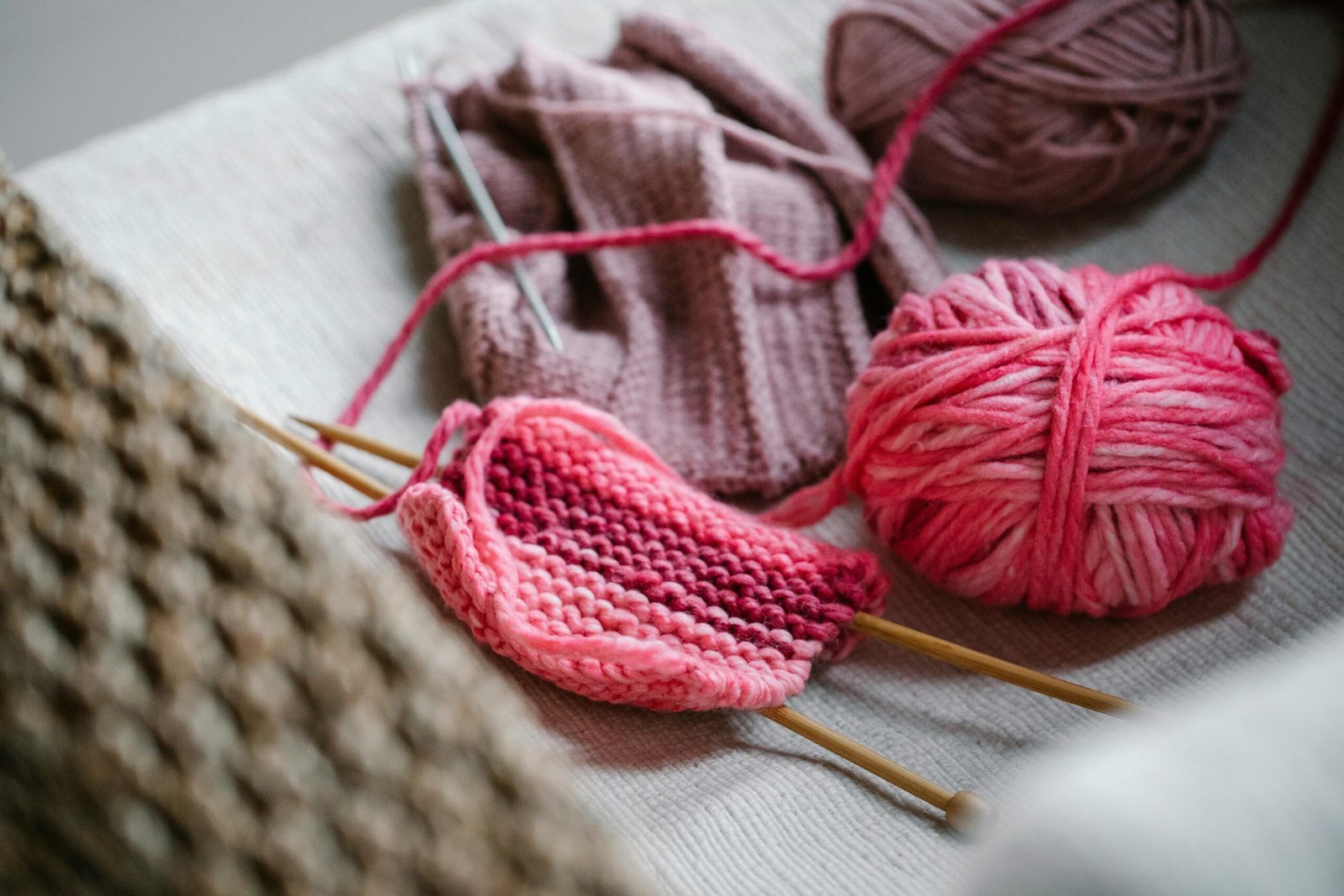
Sooner or later in crochet, you’ll make something that needs joining—maybe a headband, a bag, granny squares, or a simple pouch. And for beginners, joining can feel scarier than the crochet itself. You might worry that your seam will look bulky, crooked, or not hold up.
The truth is: joining is just another crochet skill, and you only need a few reliable methods to cover most projects. In this article, you’ll learn the most common ways to join crochet pieces, when to use each one, how to make seams look neat, and how to avoid the classic beginner mistakes (like twisting pieces or pulling seams too tight). By the end, you’ll know exactly what method to choose—and you’ll feel confident finishing projects cleanly.
The Big Decision: What Kind of Join Do You Want?
Before you join anything, decide what you want your seam to do.
Most crochet joins fall into one of three categories:
- Invisible or subtle seam
Best when you want the join to disappear or look smooth. - Flat, tidy seam
Best when you want strength without bulk. - Decorative seam
Best when you want the join to show as a design feature (like a raised ridge).
There’s no “best seam.” The best seam depends on your project.
Prep Step: How to Set Yourself Up for a Clean Join
Beginners often rush into joining and end up fighting the pieces. These prep steps prevent most problems.
1) Make sure your pieces match
- Count stitches on the edges you’re joining (if possible).
- Check that both pieces are the same length/width.
- If one is slightly larger, gently stretch the smaller piece to match or distribute stitches evenly.
Small differences happen in crochet. You can often “ease” them in as you seam by joining gradually and adjusting every few inches.
2) Line up right sides and wrong sides
Not all crochet has a clear right/wrong side, but many textures do.
Decide:
- Do you want the seam on the inside? (common)
- Or do you want it visible on the outside as decoration?
Then stack pieces accordingly.
3) Use stitch markers to prevent shifting
Place stitch markers (or safety pins) at:
- both ends of the seam
- the midpoint (optional but helpful)
- any corners
This keeps edges aligned and prevents accidental stretching.
4) Leave a long tail if you plan to sew
If you’ll use a yarn needle seam, leave a tail about:
- 3–4 times the length of the edge you plan to seam
If you’re not sure, longer is safer.
Method 1: Whip Stitch Seam (The Easiest Sewing Join)
Whip stitch is one of the simplest ways to join pieces with a yarn needle. It’s beginner-friendly and works on many projects.
What it’s best for
- Simple seams on scarves, pouches, and panels
- Joining edges where a little seam is okay
- Projects where speed matters
How it looks
Whip stitch creates a visible “wrap” seam. On some projects it looks neat; on others it can look a bit like a laced edge. It’s not invisible, but it can be very clean if done evenly.
How to do whip stitch
- Thread yarn tail onto a yarn needle.
- Hold the two pieces together (aligned).
- Insert the needle through both edges from back to front.
- Pull yarn through gently (snug, not tight).
- Repeat in a consistent rhythm, using the same part of each stitch on both sides.
Beginner tips
- Don’t pull tight—tight whip stitches can pucker the fabric.
- Keep your stitch spacing consistent: stitch-to-stitch or row-to-row, depending on edge structure.
- If joining row ends (the side of a piece), join in a steady pattern (for example: one seam stitch per row, or one per “ridge,” depending on the texture).
Method 2: Mattress Stitch (The Best “Invisible” Crochet Seam)
Mattress stitch is the go-to seam when you want a join that looks smooth and almost invisible on the right side. It’s common in knitting, but it also works beautifully in crochet for certain edges.
What it’s best for
- Seaming panels for garments
- Joining pieces where you want a clean edge
- Projects where the join should disappear
How it looks
On the right side, the seam pulls together so the pieces look like one continuous fabric. It’s one of the most professional-looking methods when done correctly.
How to do mattress stitch (crochet-friendly version)
- Place pieces side by side (right side facing up).
- Thread yarn onto a yarn needle.
- Identify the “bars” or loops along the edge of each piece (often just inside the edge).
- Pick up one bar from the left piece, then one bar from the right piece, alternating.
- Pull yarn through gently as you go.
- Every few stitches, pull the seam yarn slightly to “zip” the seam closed.
Beginner tips
- Use the same “bar” on each side consistently—don’t switch positions randomly.
- Pull to tighten occasionally, not after every stitch (this avoids puckering).
- Practice on two small swatches first. Mattress stitch clicks quickly with a little repetition.
Method 3: Slip Stitch Join (Fast and Fairly Flat)
You can also join pieces using your crochet hook. A slip stitch seam is simple and strong.
What it’s best for
- Joining panels for bags or simple pouches
- Projects where a slightly raised seam is okay
- Quick joining without a needle
How it looks
Slip stitch join creates a neat ridge. It’s not fully invisible, but it can look clean and intentional.
How to do a slip stitch join
- Place pieces together, aligned.
- Insert hook through both pieces at the first stitch.
- Yarn over and pull through both layers and the loop on the hook.
- Repeat across.
Beginner tips
- Keep slip stitches relaxed. Slip stitches naturally tighten, so consciously loosen.
- Insert the hook into the same part of each stitch on both pieces for consistent edges.
- Use stitch markers to keep ends aligned.
Method 4: Single Crochet Join (Strong and Decorative)
Single crochet joins create a thicker seam—very strong and slightly raised. Many bags and blankets use this join on purpose.
What it’s best for
- Joining granny squares
- Bag seams
- Projects where strength matters
- Decorative seams that stand out
How it looks
A firm, textured ridge along the seam—often used as a design feature.
How to do a single crochet join
- Place pieces together (or side by side, depending on the look you want).
- Insert hook through both layers.
- Yarn over, pull up a loop.
- Yarn over, pull through both loops (single crochet).
- Repeat across.
Beginner tips
- Don’t over-tighten. A too-tight join makes fabric pucker.
- Match stitch placement evenly.
- For granny squares, join corner spaces carefully and consistently.
Method 5: Join-As-You-Go (For Granny Squares and Motifs)
Join-as-you-go (often abbreviated in patterns as “JAYG”) is a technique where you join motifs (like granny squares) while crocheting the final round of the motif.
What it’s best for
- Granny squares blankets
- Motif-based projects (flowers, hexagons, squares)
- Avoiding lots of sewing later
Why beginners like it
You don’t end up with a huge pile of squares to join at the end. You join as you create.
Beginner note
JAYG requires paying attention to where you join (usually in chain spaces). It’s not hard, but it’s easier after you’re comfortable with basic stitch placement.
If you’re new, you can start with a simpler method first (like single crochet join), then try join-as-you-go later.
Joining in the Round: Slip Stitch Join vs Continuous Spiral
Some projects are worked in rounds, and “joining” can mean closing a round.
Joined rounds
You complete a round, then join with a slip stitch to the first stitch.
Pros:
- Clear round endings
- Easier to follow patterns with round counts
Cons:
- Can create a visible seam line
Continuous rounds (spiral)
You keep crocheting without joining. Common in amigurumi.
Pros:
- No visible join seam
- Smooth look
Cons:
- Harder to track rounds (use a stitch marker)
Beginner tip: if you’re making toys or round shapes, use a stitch marker to track the first stitch of each round.
How to Join Row Ends Cleanly (The Side Edge Problem)
Joining the side edges of crochet (row ends) can look messy because the side edge doesn’t have neat “V” loops like the top.
Two beginner-friendly solutions
- Use mattress stitch along the inner bars (cleanest look).
- Use single crochet join for strength and structure (especially for bags).
If you’re sewing side edges, look for consistent “entry points”:
- One seam stitch per row
- Or one per ridge (for textured patterns)
Consistency matters more than perfection.
How Tight Should a Seam Be?
A seam should be:
- snug enough to hold pieces together
- not so tight it puckers or pulls the fabric
A good test:
- Lay the joined piece flat.
- If the seam makes the fabric ruffle or bunch, it’s too tight.
- If gaps show between stitches, it’s too loose.
Aim for “flat and secure.”
Choosing the Right Join for Common Beginner Projects
Here are practical recommendations:
Granny squares blanket
- Single crochet join (strong and easy)
- Slip stitch join (a bit flatter)
- Mattress stitch (subtle, neat)
Headband (rectangle seam)
- Mattress stitch (clean and comfortable)
- Whip stitch (quick and simple)
Simple pouch or bag panels
- Single crochet join (very strong)
- Slip stitch join (strong, slightly flatter)
Crochet clothing panels
- Mattress stitch (best finish)
- Slip stitch join (if you want a defined seam)
Joining two edges of a scarf to make an infinity scarf
- Mattress stitch for a smoother look
- Whip stitch if you want a slightly decorative seam
Common Joining Mistakes (and How to Avoid Them)
Mistake 1: Joining pieces that don’t match
Fix:
- Count stitches
- Use markers
- Ease in minor differences gradually
Mistake 2: Pulling the seam too tight
Fix:
- Pull yarn snug, then stop
- Check seam flatness every few inches
- Remember: slip stitches tighten naturally, so loosen deliberately
Mistake 3: Twisting pieces before joining
Fix:
- Lay pieces flat first
- Mark corners and ends
- Double-check orientation before seaming
Mistake 4: Inconsistent stitch placement
Fix:
- Choose a specific loop/bar to use and stick to it
- Work slowly and evenly
- Use stitch markers to keep alignment
Mistake 5: Not weaving in ends securely
Fix:
- Weave ends in both directions
- Avoid cutting too close
- Lock ends in the seam area when possible for extra security
A Beginner Practice Exercise: Learn Joining Without Pressure
Before you join a “real” project, practice on two small swatches.
Quick practice plan
- Crochet two small 4×4 inch squares in single crochet.
- Try whip stitch on one edge.
- Try slip stitch join on another edge.
- Try mattress stitch on the final edge.
- Compare:
- Which looks neatest?
- Which feels strongest?
- Which was easiest to do?
This teaches you more in one hour than reading 10 descriptions online.
The Takeaway: Joining Is a Skill—And It Levels Up Your Projects Fast
Crochet joins are what turn swatches into real objects. Once you can join pieces cleanly, you unlock bags, wearables, blankets, and structured projects that look polished.
If you’re a beginner, start with:
- whip stitch (easy)
- slip stitch join (fast)
- mattress stitch (cleanest seam)
Then build from there. Practice on swatches first, keep tension relaxed, and use stitch markers to keep everything aligned. Joining gets easier quickly—and once it does, your projects will look dramatically more “finished.”
Isabella Garcia is the creator of a blog dedicated to crafts and home care, focused on making everyday life more creative, organized, and enjoyable. The blog shares practical tips, easy DIY projects, home organization ideas, and simple solutions to take better care of your living space. Whether you’re a beginner in crafting or someone looking for inspiration to improve your home routine, Isabella’s blog offers clear, useful, and hands-on content to help you create a cozy, beautiful, and well-cared-for home.