
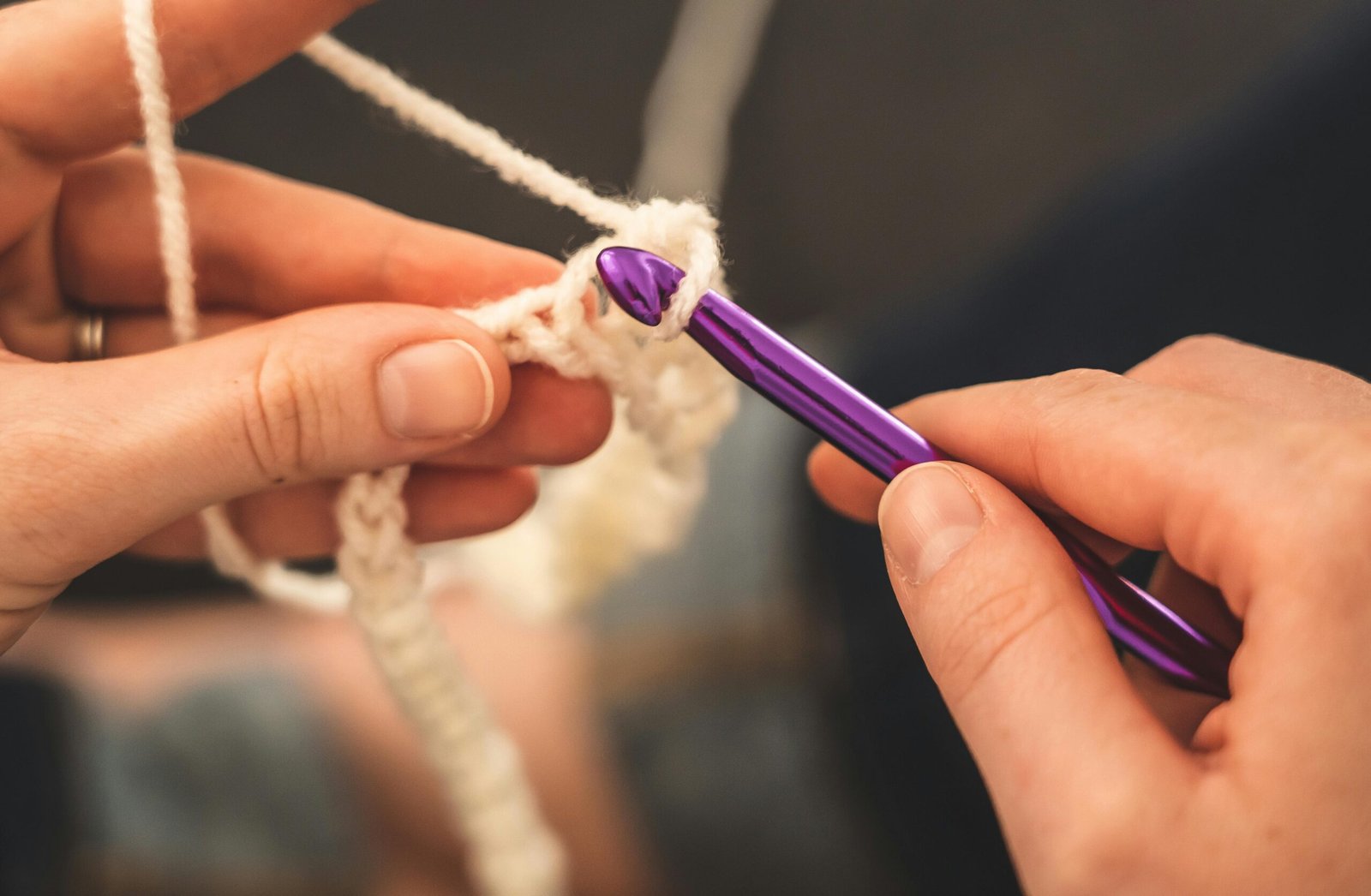
Stitch markers look like tiny, simple accessories—but for beginners, they’re one of the biggest “skill accelerators” you can buy (or improvise). They don’t just mark stitches. They prevent the most common beginner problems: crooked edges, miscounted rounds, drifting increases, uneven repeats, and that awful moment when you put your project down and can’t remember what you were doing.
If you’ve ever said any of these, stitch markers are for you:
- “My crochet circle looks lopsided and I don’t know why.”
- “I keep losing the beginning of the round.”
- “My stitch count keeps changing and I can’t find the mistake.”
- “I can’t tell where the pattern repeat starts.”
- “I’m knitting in the round and my decreases ended up in the wrong spot.”
This guide will teach you exactly how to use stitch markers in crochet and knitting as a beginner. You’ll learn the different marker types, what to mark (and why), how to track rounds and repeats, how markers prevent mistakes, and how to set up an easy marker system you’ll actually use.
What Stitch Markers Do (In One Sentence)
A stitch marker is a visual placeholder that tells you, “This is an important spot—don’t lose it.”
That’s it. Once you start using them, your projects feel calmer because you stop relying on memory.
Types of Stitch Markers (And Which Beginners Should Use)
There are two main types, and they’re used differently.
Locking stitch markers (best for crochet beginners)
These open and close like a tiny safety pin. They can attach to individual stitches and be moved easily.
Best for:
- crochet (especially rounds)
- marking row ends in crochet
- marking a specific stitch you need to return to
- tracking increases and decreases in crochet
Beginner-friendly alternatives:
- safety pins
- paper clips (careful with snagging)
- small scraps of contrasting yarn (looped through)
Ring stitch markers (best for knitting)
These are closed rings that slide onto the knitting needle between stitches.
Best for:
- knitting in the round
- marking pattern sections
- marking decrease/increase points
- dividing the row into smaller counting sections
Beginner-friendly alternatives:
- small key rings
- jump rings
- looped scrap yarn tied into a small ring
Important note: Ring markers cannot be clipped onto a crochet stitch. They need to slide on a needle, so they’re mainly for knitting.
The #1 Beginner Crochet Use: Mark the Beginning of the Round
If you crochet in continuous rounds (spiral)—like amigurumi, baskets, or some hats—your round doesn’t naturally “end.” Without a marker, it’s incredibly easy to drift.
How to do it
- Place a locking marker in the first stitch of the round.
- Crochet around.
- When you reach the marker again, you’ve finished a round.
- Move the marker up into the first stitch of the next round.
This single habit solves:
- losing track of rounds
- uneven shaping
- accidental extra or missing stitches
- spiraling confusion
Beginner tip: Some people mark the last stitch of the round instead. That’s okay too—just be consistent. The “first stitch of the round” method is the most common.
Crochet: Marking Increases and Decreases So Shaping Stays Even
When shaping circles, hats, or amigurumi, increases and decreases must be placed correctly. Beginners often add an extra increase by mistake or forget one, and the shape changes dramatically.
A simple marker strategy:
- Mark the start of the round (always).
- If the pattern says “increase 6 times evenly,” place 6 markers to divide the round into 6 sections.
- Do one increase in each section.
This makes the pattern feel obvious because the marker reminds you: “Increase happens here.”
Same idea for decreases:
- Use markers to show where each decrease should happen.
- You’ll catch mistakes immediately instead of discovering them three rounds later.
Crochet: Marking Row Ends to Keep Edges Straight
The most common crochet beginner mistake is missing the last stitch of the row. That makes projects slowly get narrower, creating the classic trapezoid.
The row-end marker method
- Place a marker in the first stitch of the row.
- Place a marker in the last stitch of the row.
- Crochet your next row and make sure you work into both marked stitches.
This works especially well for:
- single crochet rectangles
- dishcloths and scarves
- any pattern where edges must stay straight
Beginner tip: If you don’t want to use two markers, use just one—on the last stitch. The last stitch is the one most people miss.
Crochet: Marking Pattern Repeats Without Counting Forever
Many crochet patterns repeat a chunk across a row:
- shells
- clusters
- “skip 1, work 1” patterns
If you lose count, your repeat gets misaligned and the pattern looks off.
Marker strategy:
- After you complete one full repeat, place a marker in the stitch that begins the next repeat.
- Or place a marker every 10–20 stitches so you can count smaller sections.
The goal is to reduce mental load. You shouldn’t have to count 120 stitches to know where you are.
Knitting: The #1 Use—Mark the Beginning of the Round
When knitting in the round, you need to know where the round begins (BOR). Even though the knitting is continuous, patterns usually say things like:
- “At BOR, place marker”
- “Decrease at BOR”
- “Work until 3 stitches before marker”
How to do it
- After you join to knit in the round, slide a ring marker onto the needle between stitches.
- That marker stays at the BOR location.
- Each time you reach it again, you’ve completed a round.
Beginner tip: Use one marker that looks different (a different color or shape) for BOR. That prevents confusion if you use other markers for repeats.
Knitting: Using Markers to Divide Stitch Counts (So You Stop Losing Count)
Counting 80+ stitches over and over is tiring. Markers let you split the needle into “mini sections.”
Example:
- If you cast on 80 stitches, place a marker every 10 stitches.
- Now you have eight sections.
- If you lose track, you only recount a small section.
This helps with:
- staying sane while learning
- catching accidental yarn overs or missed decreases
- keeping ribbing and repeats consistent
It also makes it easier to follow patterns that say “repeat across” because you can see if the repeat lines up in each section.
Knitting: Marking Increase/Decrease Points (The “Shaping Control” Trick)
In hats, sleeves, and other shaped items, increases and decreases must occur in specific locations to look balanced.
Marker strategy:
- Place markers to divide the work into sections (often 4, 6, or 8 sections).
- Perform your increases/decreases near markers consistently.
For example, a beginner hat crown often decreases at multiple evenly spaced points. If you have markers dividing sections, you always know exactly where to decrease.
This is one of the biggest reasons knitting becomes less intimidating with markers: you stop guessing where shaping should happen.
Knitting: Marking Pattern Repeats (Ribbing, Lace, Texture)
If a pattern repeat is 4 stitches (k2, p2), you can place markers every repeat block. This makes it obvious when you accidentally do k3 or forget a purl.
For more complex repeats:
- Place a marker at the beginning and end of the repeat.
- If you make a mistake, you’ll locate it inside the repeat section rather than scanning the entire row.
Beginner note: In lace, markers are helpful but must be used carefully because yarn overs and decreases shift stitch patterns. Still, for beginner-level lace or textured repeats, markers can be a lifesaver.
How to Move Markers Correctly (Beginners Often Overthink This)
Crochet marker movement
In continuous rounds:
- move the marker up every round into the first stitch of the new round
In rows:
- move the marker to the new last stitch each row (if you’re marking row ends)
Knitting marker movement
You usually do not remove and reattach ring markers constantly. Instead:
- markers sit on the needle
- as you knit, you slip the marker from left needle to right needle when you reach it (that’s what “sm” means: slip marker)
So in knitting, the marker travels with your stitches. In crochet, the marker usually moves up into a new stitch.
That difference confuses beginners at first, but once you see it, it’s simple.
How Many Markers Do You Need?
You can start with very few:
- Crochet: 5–10 locking markers is enough.
- Knitting: 10–20 ring markers is enough (because dividing sections helps a lot).
If you don’t have markers, safety pins and scrap yarn loops work surprisingly well.
Common Beginner Mistakes With Stitch Markers (And Quick Fixes)
Mistake 1: Marking the wrong stitch
Fix: If you feel uncertain, count back to confirm. In crochet, make sure you place the marker in an actual stitch, not just a chain space (unless the pattern says so).
Mistake 2: Forgetting to move the crochet marker
Fix: Build a habit: when you reach the marker, stop, move it, then continue. Don’t “just do one more stitch.”
Mistake 3: Knitting past the BOR without noticing
Fix: Use a unique BOR marker (a different color). It stands out.
Mistake 4: Using markers that snag yarn
Fix: If a marker has a sharp edge or rough seam, it can catch yarn. Switch to smoother markers or use scrap yarn loops.
Mistake 5: Too many markers feels overwhelming
Fix: Use markers only for the most important points first:
- crochet: beginning of round and row ends
- knitting: beginning of round and section divisions
Add more only when you feel comfortable.
A Beginner Marker System You Can Use Immediately
If you want a simple system to apply to almost any project, do this:
Crochet:
- Always mark the beginning of the round (for rounds).
- Mark first and last stitch of rows until edges are consistent.
- For shaping, divide the round into equal sections with markers.
Knitting:
- Always mark BOR for in-the-round projects.
- Divide stitch counts into sections (every 10 or every repeat block).
- Put markers at increase/decrease points.
This system reduces mistakes dramatically without requiring advanced knowledge.
The Takeaway: Stitch Markers Make You Look More Skilled Faster
Stitch markers don’t make you “less of a real crafter.” They make you efficient, accurate, and calm—exactly how skilled crafters work. As a beginner, markers help you learn faster because they:
- keep your stitch counts stable
- make shaping predictable
- prevent drifting in the round
- help you follow repeats without constant recounting
- reduce the number of times you have to frog or tink
If you haven’t used markers yet, try this on your next project: mark the beginning of the round (or row ends). You’ll feel the difference immediately.
Isabella Garcia is the creator of a blog dedicated to crafts and home care, focused on making everyday life more creative, organized, and enjoyable. The blog shares practical tips, easy DIY projects, home organization ideas, and simple solutions to take better care of your living space. Whether you’re a beginner in crafting or someone looking for inspiration to improve your home routine, Isabella’s blog offers clear, useful, and hands-on content to help you create a cozy, beautiful, and well-cared-for home.