
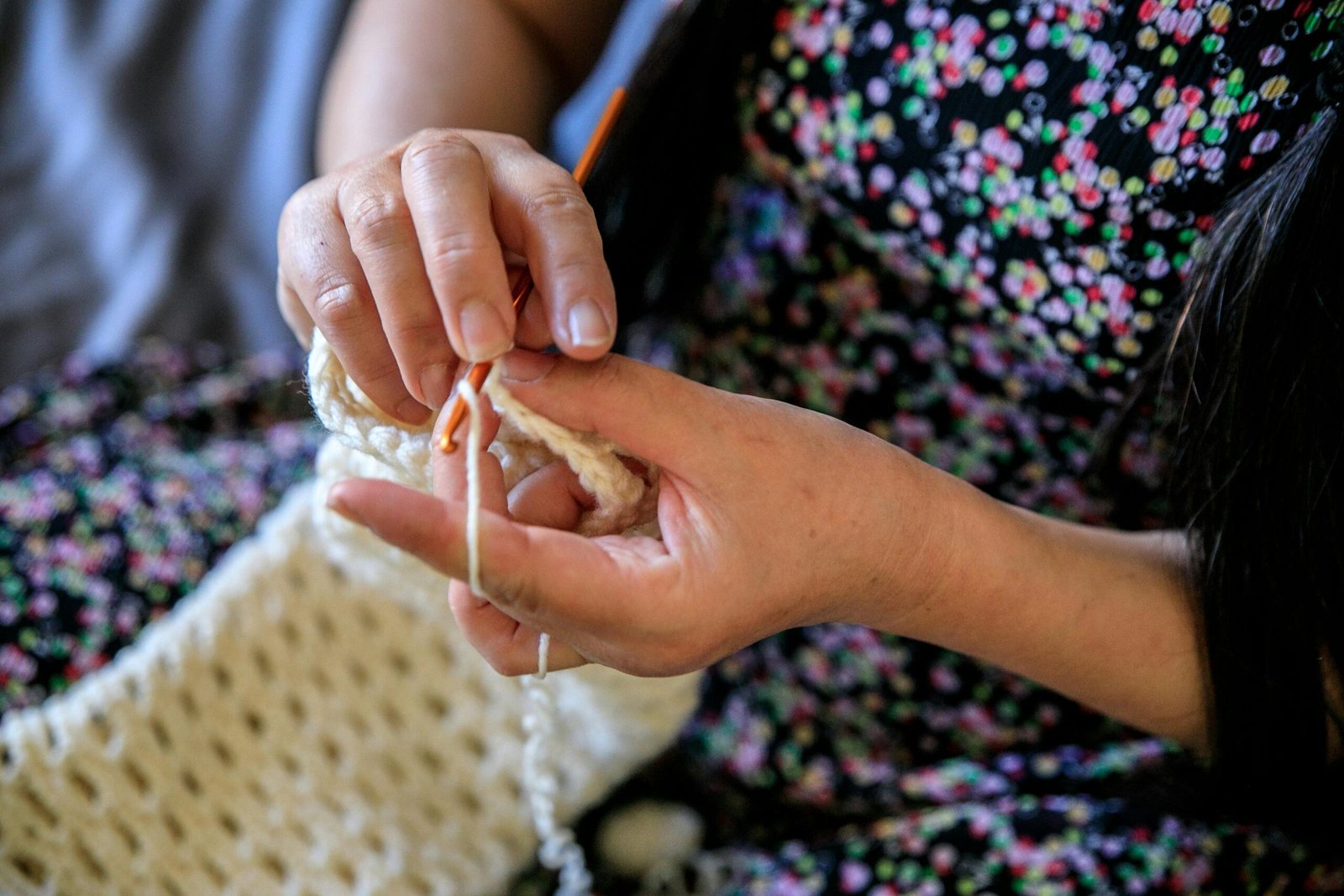
One of the biggest beginner challenges in crochet and knitting isn’t learning a stitch—it’s learning consistently. You can watch tutorials for hours, buy beautiful yarn, and still feel stuck if you don’t have a simple routine. The good news is that you don’t need long sessions or “perfect” practice. You need a plan that makes progress predictable, keeps frustration low, and helps your hands build muscle memory.
This 4-week practice routine is designed for real life. It’s short, repeatable, and structured so you improve the most important beginner skills: tension, counting, edges, reading your fabric, finishing, and confidence. You can follow it for crochet, knitting, or both (with a smart way to avoid overwhelm). Each week includes what to practice, what to make, how long to practice, and how to measure progress without obsessing.
The Beginner Routine Rules That Make Everything Easier
Before the plan, here are the rules that make the plan work.
Rule 1: Practice in short sessions
Beginner hands tighten when you go too long. Short sessions keep your movements calm.
A great beginner rhythm:
- 15–25 minutes per session
- 4–5 days per week
- one longer session on the weekend only if you feel good
If you can only do 10 minutes, do 10 minutes. Consistency beats duration.
Rule 2: Use beginner-friendly yarn
To make practice easier, use:
- smooth yarn
- light to medium solid color
- worsted weight (#4)
When you can see stitches clearly, you learn faster.
Rule 3: Focus on one improvement per week
If you try to improve tension, edges, speed, and pattern reading all at once, you’ll feel overwhelmed. Each week, pick one “main skill.”
Rule 4: Finish small things
Finishing projects is confidence. Confidence creates momentum. Momentum builds skill.
Rule 5: Keep a tiny practice log
Write down:
- date
- what you practiced
- what felt hard
- what improved
This turns progress into something you can actually see.
Should You Practice Crochet, Knitting, or Both?
If you’re learning both:
- alternate days (crochet one day, knit the next)
- keep sessions short
- choose very simple projects for each
If you’re learning only one craft:
- follow the plan exactly and you’ll progress faster
You do not need to “master” one before starting the other, but you do need to avoid learning too many new techniques in the same week.
Your Core Beginner Skill Checklist
By the end of 4 weeks, the goal is to feel comfortable with:
Crochet:
- chain, single crochet, one taller stitch (hdc or dc)
- counting stitches
- straight edges
- working in the round (basic)
- weaving ends cleanly
Knitting:
- cast on, knit stitch, bind off
- purl stitch (by week 2–3)
- counting rows
- basic ribbing
- weaving ends cleanly
Finishing:
- weaving ends in two directions
- shaping/flattening your work gently
- neat edges or borders when needed
You’re not aiming for perfection—just comfortable competence.
Week 1: Foundations and Calm Hands
Main goal: learn the “feel” of stitches and begin consistent tension.
Time goal:
- 15–20 minutes per session
- 4–5 sessions this week
Crochet Week 1 plan
Day 1–2: Chains + single crochet basics
- Make 3 short chain strips (15–25 chains)
- Single crochet across each strip
- Focus on finding the last stitch (the edge skill)
Day 3–4: Single crochet square practice
- Make a small square (about 12–15 stitches wide, 10–12 rows)
- Put a marker in the first and last stitch of every row
Day 5 (optional): Finish practice
- Weave in ends on one square using a two-direction weave
- Smooth it flat and take a photo
What to watch for:
- Are your stitches getting easier to insert into?
- Are the row edges straighter by the last few rows?
Knitting Week 1 plan
Day 1: Cast on + knit stitch
- Cast on 20–30 stitches
- Knit 5–10 rows (garter stitch)
- Focus on forming stitches on the needle shaft (not tightening on the tip)
Day 2–3: Garter stitch swatch
- Knit until you have a small square-ish swatch
- Count rows every few rows so you learn what a “row” looks like
Day 4–5: Bind off + weave ends
- Practice binding off without tightening too much
- Weave in tails on the wrong side
What to watch for:
- Do stitches slide smoothly along the needle?
- Do your rows look more even than the first two?
Week 2: Counting and Edges (The Confidence Builders)
Main goal: reduce beginner mistakes (missing stitches, losing your place).
Time goal:
- 15–25 minutes per session
- 4–5 sessions this week
Crochet Week 2 plan
Day 1–2: Edge control drill
- Make a rectangle: 20 stitches wide, 12–15 rows
- Slow down for the first 3 and last 3 stitches of every row
- Keep markers at row ends
Day 3: Learn one taller stitch (hdc or dc)
- Practice it on a small swatch
- Keep the stitch type consistent across the row
Day 4–5: First finished mini project
Choose one:
- coaster (square or simple circle)
- cotton dishcloth (single crochet or half double crochet)
Finishing task:
- weave ends neatly
- consider a simple single crochet border if edges look uneven
Knitting Week 2 plan
Day 1: Purl introduction (if you haven’t already)
- Practice: knit 1 row, purl 1 row (basic stockinette) on a small swatch
- Notice that stockinette curls—this is normal
Day 2–3: Counting + edge neatness
- Make a small garter stitch dishcloth swatch
- Count rows every few rows
- Keep edges relaxed—don’t pull the first stitch too tight
Day 4–5: First finished mini project
Choose one:
- garter stitch dishcloth
- garter stitch mini scarf for practice
Finishing task:
- bind off with relaxed tension
- weave ends neatly
What you’re learning in Week 2:
- stitch counting habits
- noticing mistakes sooner
- building the “finish what I start” mindset
Week 3: The Round Basics (Or the Next Step If You Prefer Flat)
Main goal: learn either round work or a simple texture pattern.
Time goal:
- 20–25 minutes per session
- 4–5 sessions this week
Crochet Week 3 option A: In the round (recommended)
Day 1: Flat circle practice
- Start with 6 single crochet in a ring
- Increase evenly for a few rounds
- Use a stitch marker at round start
- Count each round
Day 2: Troubleshooting shapes
- If it ripples: too many increases
- If it cups: too few increases or too tight
- Frog and redo one round until it lies flatter
Day 3–5: Round mini project
Choose one:
- set of 2–4 round coasters
- simple granny square coaster
- small basket base (just the base circle)
Crochet Week 3 option B: Texture (if you want to stay flat)
- Learn a simple pattern repeat (like a basic ribbing method using back loops only)
- Make a small textured scarf panel
Knitting Week 3 option A: In the round (recommended)
Day 1: Practice joining in the round
- Cast on for a simple cowl
- Check for twists carefully
- Place BOR marker
Day 2–4: Knit the tube
- If stockinette: knit every round
- Track rounds with a tally mark
Day 5: Simple bind off
- Bind off loosely so the edge doesn’t squeeze
Knitting Week 3 option B: Texture (if you want to stay flat)
- Practice ribbing (k2, p2) on a small headband panel
- Or practice seed stitch for a non-curl scarf texture
Week 3 is about learning the “next environment” for stitches: rounds or texture. Either is a real level-up.
Week 4: Finishing Skills and a Real Beginner Project
Main goal: combine skills into one project you’re proud to keep or gift.
Time goal:
- 20–30 minutes per session
- 4–6 sessions this week (if you’re motivated)
Crochet Week 4 project choices
Pick one beginner-success project:
- simple scarf in half double crochet
- granny square tote (start small: 4–8 squares)
- a slightly larger dishcloth set (make 2–3)
- basic beanie (if you’re comfortable in the round)
Finishing focus:
- weave ends with confidence
- add a simple border if it improves the look
- smooth/shape the final item (light block if needed)
Knitting Week 4 project choices
Pick one beginner-success project:
- simple cowl in the round
- garter stitch scarf
- seed stitch scarf (doesn’t curl)
- ribbed headband
Finishing focus:
- bind off relaxed
- weave ends neatly and invisibly
- lightly block or smooth to shape
Week 4 isn’t about learning lots of new techniques. It’s about completing something cleanly. This is the “confidence week.”
How to Measure Progress (Without Getting Discouraged)
Instead of judging your work by perfection, look for these signs:
- You recognize stitches faster
- You fix mistakes earlier
- Your edges are straighter
- Your tension feels calmer
- You can stop and restart without confusion
- You finish projects more often
A great beginner habit:
- keep your first swatch
- compare it to your Week 4 work
The difference will be obvious, and that’s motivating.
The “Beginner Plateaus” That Are Normal
You might hit moments where progress feels slow. That’s normal. Common plateaus:
- Purling feels awkward (then suddenly it clicks)
- Crochet edges keep drifting (then markers fix it)
- Round counting feels annoying (then it becomes automatic)
- Tension seems inconsistent (then it steadies with repetition)
Plateaus are often a sign your hands are learning. Keep sessions short and consistent.
The Best Routine If You’re Busy (10-Minute Version)
If you only have 10 minutes a day, do this:
- 2 minutes warm-up (slow stitches)
- 6 minutes main practice (one small goal)
- 2 minutes tidy finish (write down where you stopped)
This is enough to improve if you do it consistently.
The Takeaway: A Routine Makes Crochet and Knitting Feel Simple
Beginners don’t need more information—they need a plan they can actually follow. With short practice sessions, one main focus per week, beginner-friendly yarn, and small finishable projects, your skills will build naturally. By the end of four weeks, you won’t just “know stitches.” You’ll know how to practice, how to fix mistakes, and how to finish projects with confidence.
Isabella Garcia is the creator of a blog dedicated to crafts and home care, focused on making everyday life more creative, organized, and enjoyable. The blog shares practical tips, easy DIY projects, home organization ideas, and simple solutions to take better care of your living space. Whether you’re a beginner in crafting or someone looking for inspiration to improve your home routine, Isabella’s blog offers clear, useful, and hands-on content to help you create a cozy, beautiful, and well-cared-for home.