
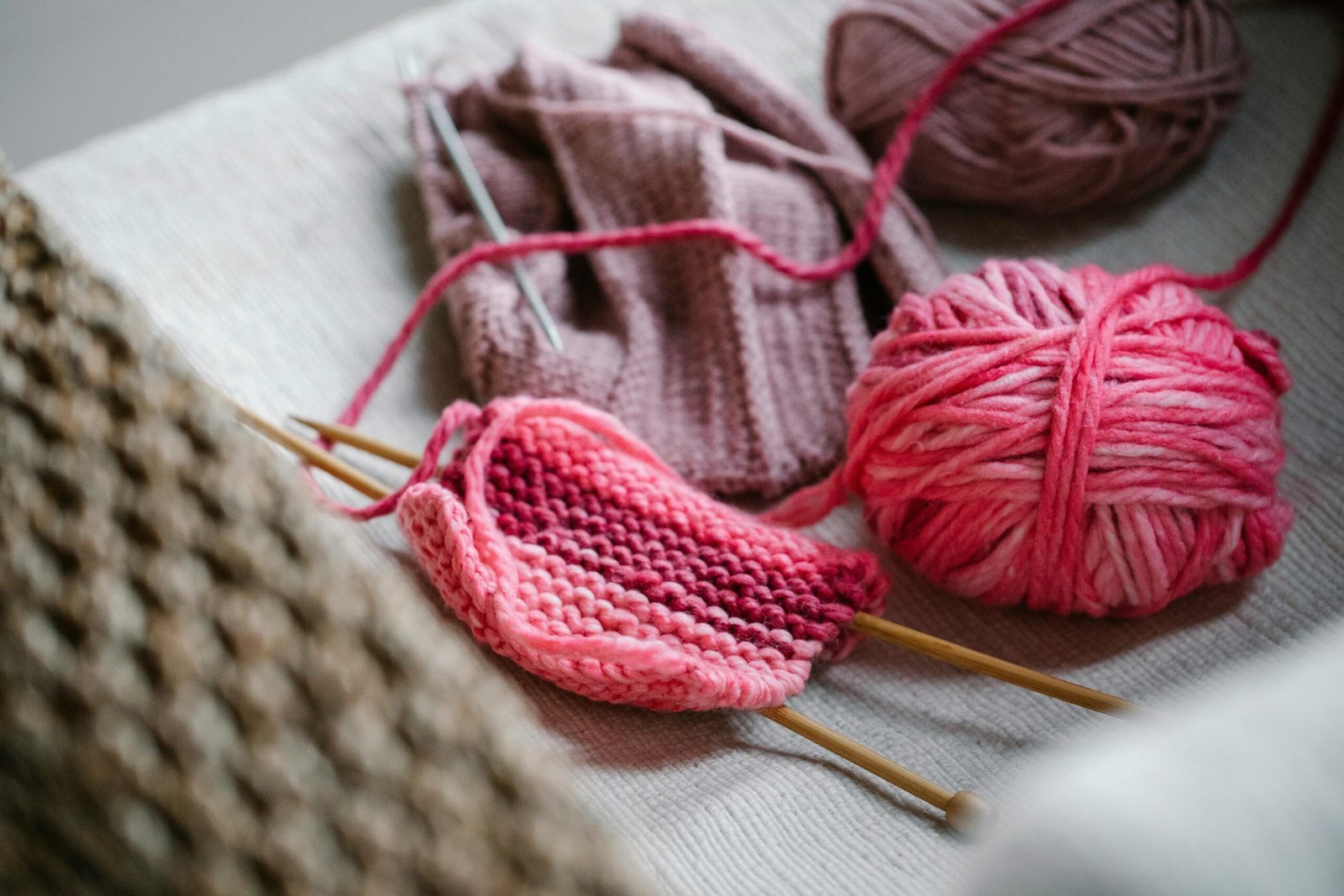
When you’re new to crochet or knitting, the internet can make it feel like you have two choices: either make a perfect sweater immediately or practice endless random swatches forever. Neither path is very satisfying. Beginners need something different—a project roadmap that builds skills in a smart order, gives you quick wins, and slowly adds new techniques without overwhelming you.
This article is that roadmap. You’ll learn which projects are best for your first week, what each project teaches, how to choose the right yarn and tools so your “first makes” don’t feel miserable, and the next-step projects that move you from beginner to confident maker. You can follow this roadmap whether you’re focusing on crochet, knitting, or learning both.
How to Use This Roadmap Without Getting Overwhelmed
Here’s the simple way to follow the plan:
- Pick one craft to focus on for your first two projects (crochet or knitting).
- Choose one yarn weight (worsted/medium #4 is ideal).
- Choose one “first project” that takes 1–3 practice sessions.
- Finish it properly (weave ends, tidy edges).
- Move to the next project that adds only one new skill.
Your success comes from finishing, not from doing “hard” projects early.
The Best Beginner Yarn and Tools for This Roadmap
To make the roadmap work smoothly, start with beginner-friendly basics:
- Yarn: smooth, solid or lightly heathered, worsted weight (#4)
- Color: light to medium (easier to see stitches than black/navy)
- Crochet hook: around 5.0 mm (plus 5.5 mm if you crochet tight)
- Knitting needles: around 5.0 mm / US 8 (wood or bamboo if you want more grip)
- Extras: yarn needle, scissors, a few stitch markers (or safety pins)
This setup is intentionally simple so your first projects are about skill—not fighting your materials.
Project Roadmap Philosophy: Each Project Should Teach One Main Skill
A beginner project should do at least one of these things:
- teach you to count stitches or rows
- build tension consistency
- teach you clean edges (crochet row ends, knitting selvages)
- teach you working in the round (crochet circles or knit cowls)
- teach you a clean finish (weaving ends, borders, blocking)
If a project teaches five new techniques at once, it’s not beginner-friendly—even if someone calls it “easy.”
Crochet Roadmap: What to Make First and Why
Crochet is fantastic for beginner confidence because it’s easy to pause, easy to undo, and quick projects look cute even while your tension is developing.
Crochet Project 1: A Simple Square Coaster (Single Crochet)
Why this is the best first project:
- it teaches stitch placement and “where the next stitch lives”
- it teaches counting without being overwhelming
- it trains straight edges (the classic beginner challenge)
- it finishes fast, which builds momentum
Skills you’ll practice:
- chaining
- single crochet
- turning and finding the first/last stitch
- weaving ends
How to make it beginner-proof:
- use stitch markers in the first and last stitch of each row
- make it small (10–14 stitches wide, 10–14 rows)
- don’t worry about perfection—aim for consistent shape
When you can move on:
- you can complete a square that doesn’t accidentally shrink or grow
Crochet Project 2: A Dishcloth (Half Double Crochet or Double Crochet)
Why this comes second:
- it introduces a taller stitch that works up faster
- it teaches you how stitch height affects turning
- it helps you practice even tension over a larger surface
Skills you’ll practice:
- one taller stitch (hdc or dc)
- consistent loop height
- controlling edges with turning chains (or chainless turns if you learn them later)
- simple finishing
Beginner tip:
- cotton yarn is great for dishcloths, but it can feel less stretchy. If your hands get tired, use a soft acrylic for practice first, then switch to cotton.
When you can move on:
- you can make a rectangle that stays roughly the same width from top to bottom
Crochet Project 3: A Round Coaster (Flat Circle)
This is where crochet starts to feel “magical” because you’re shaping fabric on purpose.
Why this is a perfect early project:
- it teaches the logic of increases
- it builds confidence with stitch markers
- it trains you to count rounds and stitches
- it helps you diagnose problems (rippling vs cupping)
Skills you’ll practice:
- working in the round
- marking the first stitch of each round
- increasing evenly (the foundation for hats and amigurumi)
Beginner success rule:
- count each round until your brain starts recognizing the pattern
When you can move on:
- you can create a circle that lies mostly flat without dramatic ripples or bowls
Crochet Project 4: A Granny Square (and Then a Granny Square Set)
Granny squares are beginner favorites for a reason:
- corners guide you
- the pattern repeats predictably
- they teach color changes and joining options naturally
Skills you’ll practice:
- working in the round with corner structure
- chain spaces
- simple color changes (optional)
- weaving many ends neatly (great finishing practice)
How to keep it beginner-friendly:
- make 2–4 squares first, not 30
- weave ends as you go so you don’t hate your life later
When you can move on:
- your squares look square after gentle shaping
- you can find corners reliably
Crochet Project 5: A Simple Scarf (One Stitch Pattern)
Once you’ve done small projects, a scarf builds endurance and rhythm.
Best beginner scarf stitches:
- half double crochet (simple, soft)
- double crochet (fast and airy)
- single crochet (dense and warm, but slower)
Skills you’ll practice:
- consistent tension over time
- keeping edges neat without constant markers
- finishing confidence
Beginner tip:
- scarves are long. Keep the stitch pattern simple so you can finish.
When you can move on:
- you can crochet for 20 minutes without your edges drifting dramatically
Crochet Project 6: A Basic Beanie (In the Round)
This is the first “wearable milestone” for many crocheters.
Beginner-friendly beanie path:
- work the hat in the round
- learn increases (if top-down) or learn ribbing method (if bottom-up)
- keep the stitch pattern simple
Skills you’ll practice:
- round tracking with a marker
- consistent tension in rounds
- simple shaping
Don’t rush this project. Do it after you’re comfortable counting rounds and adjusting tension.
Optional Crochet Branch: Amigurumi Ball (Best “Toy Beginner” Project)
If your goal is plushies, don’t start with a complicated character. Start with a ball.
Skills you’ll practice:
- single crochet in continuous rounds
- increases and decreases
- tight tension for dense fabric
- counting discipline
That one ball teaches almost everything you need for beginner amigurumi.
Knitting Roadmap: What to Make First and Why
Knitting can feel slower at first, but it becomes incredibly rhythmic. The best beginner knitting projects build confidence through repetition and predictable structure.
Knitting Project 1: A Garter Stitch Dishcloth (or Small Square)
This is the classic beginner win.
Why it’s perfect first:
- garter stitch is forgiving and flat (doesn’t curl like stockinette)
- it teaches knit stitch rhythm
- it teaches how to recognize rows and “read” your fabric
- it finishes fast
Skills you’ll practice:
- casting on
- knit stitch
- binding off
- weaving ends
Beginner tip:
- if your cast-on feels tight or messy, that’s normal. Your second cast-on will be better.
When you can move on:
- you can knit a square that doesn’t accidentally widen or narrow a lot
Knitting Project 2: A Garter Stitch Scarf (or Mini Scarf)
Why this comes early:
- it builds endurance
- it teaches consistent tension over longer length
- it trains your hands to relax into rhythm
Skills you’ll practice:
- even knit stitch
- edge consistency
- basic measuring (how long you want it)
If a full scarf feels too long, do a “mini scarf” first and treat it as practice.
When you can move on:
- your knitting becomes smoother and less tight as you go
Knitting Project 3: Seed Stitch Scarf (Stops Curling, Looks Polished)
Seed stitch is an ideal “level 2” texture because it looks fancy while using only knit and purl.
Why it’s a great beginner upgrade:
- it teaches purling in a low-stress way
- it creates a fabric that doesn’t curl
- it builds pattern attention (but still simple)
Skills you’ll practice:
- knit and purl alternation
- recognizing mistakes early (seed stitch errors stand out)
- maintaining a repeat
When you can move on:
- you can knit a simple repeat without constantly checking instructions
Knitting Project 4: Ribbed Headband (Stretchy and Useful)
This is often a beginner’s first “wearable” because it’s small but feels legit.
Why it’s perfect now:
- ribbing teaches stretch control
- it improves your purl tension quickly
- it introduces the idea of fit without being overwhelming
Skills you’ll practice:
- ribbing (k1p1 or k2p2)
- consistent edge tension
- simple seaming (or knitting in the round later)
When you can move on:
- ribbing looks consistent and doesn’t flare wildly
Knitting Project 5: A Simple Cowl in the Round
This is the in-the-round milestone for beginners.
Why a cowl is ideal:
- it’s a tube—no shaping required
- stockinette in the round is “knit every stitch,” which feels easy
- it teaches BOR (beginning of round) markers and round tracking
Skills you’ll practice:
- joining in the round without twisting
- using a BOR marker
- tracking rounds
- maintaining even tension in a continuous project
Beginner tip:
- if twisting is your fear, knit one row flat first, then join.
When you can move on:
- you can knit a tube without losing track of rounds or twisting at the join
Knitting Project 6: A Basic Hat (Your First Real Shaping)
A hat adds decreases and sometimes a crown finish. It’s absolutely doable—but only after you feel calm in the round.
Skills you’ll practice:
- decrease techniques (often k2tog and maybe ssk)
- using markers to place decreases evenly
- finishing the crown neatly
- weaving ends securely
Beginner success trick:
- place markers to divide your stitches into equal sections and decrease at the same points each round.
When you can move on:
- you can follow decrease rounds without panic and your hat shape looks intentional
If You’re Learning Both Crochet and Knitting: A Simple Alternating Plan
Learning both works best when you keep it structured.
A beginner-friendly alternating plan:
- Week 1: Crochet coaster + knit garter square
- Week 2: Crochet dishcloth + knit garter dishcloth
- Week 3: Crochet round coaster + knit seed stitch mini scarf
- Week 4: Crochet granny square set + knit ribbed headband
- Then choose one craft’s “round milestone” next: crochet beanie or knit cowl
This keeps you progressing without stacking too many new skills at once.
How to Choose Your “Next Project” Based on Your Goal
Different goals lead to different best next steps.
If you want wearables:
- Crochet: simple scarf → beanie → basic sweater later
- Knitting: ribbed headband → cowl → hat → simple sweater later
If you want home decor:
- Crochet: coasters → granny squares → small blanket → baskets
- Knitting: dishcloths → pillow covers → blankets (later)
If you want toys (amigurumi):
- Crochet: ball → simple shapes → beginner animals
(Knitting can do toys too, but crochet is usually the easier beginner route for plush shapes.)
If you want fast wins:
- Crochet: coasters, granny squares, dishcloths
- Knitting: garter dishcloths, headbands, cowls
Common Beginner Traps (and Better Alternatives)
Trap 1: Starting with a sweater
Better: start with a hat or cowl first. Sweaters involve fit, shaping, and lots of finishing.
Trap 2: Starting with very dark yarn
Better: use a lighter color until stitch recognition feels easy.
Trap 3: Starting with fuzzy yarn
Better: smooth yarn first so you can see where to insert the hook/needle.
Trap 4: Never finishing anything because you keep “practicing”
Better: finish small projects. Finishing teaches the skills that practicing doesn’t: weaving ends, shaping, confidence, and consistency.
Trap 5: Jumping to advanced patterns because the photos look inspiring
Better: choose patterns that add one new technique at a time.
The “Ready to Level Up” Checklist
Before moving to the next difficulty level, ask:
- Can I keep stitch count mostly stable?
- Can I find the first and last stitch reliably?
- Can I weave ends securely without bulky bumps?
- Can I spot a mistake within a few rows/rounds?
- Can I follow a simple repeat without losing my place?
If you can say “mostly yes,” you’re ready for the next project stage.
The Takeaway: Your First Projects Should Build Momentum, Not Stress
The best beginner roadmap is simple: start with small, finishable projects that teach core skills, then move toward round work and simple wearables once your hands feel calmer. Crochet beginners often thrive on quick wins like coasters, dishcloths, circles, and granny squares. Knitting beginners often thrive on rhythmic wins like garter stitch dishcloths, seed stitch scarves, ribbed headbands, and cowls in the round.
If you follow this roadmap, you’ll stop guessing what to make next—and you’ll start building skills on purpose.
Isabella Garcia is the creator of a blog dedicated to crafts and home care, focused on making everyday life more creative, organized, and enjoyable. The blog shares practical tips, easy DIY projects, home organization ideas, and simple solutions to take better care of your living space. Whether you’re a beginner in crafting or someone looking for inspiration to improve your home routine, Isabella’s blog offers clear, useful, and hands-on content to help you create a cozy, beautiful, and well-cared-for home.