
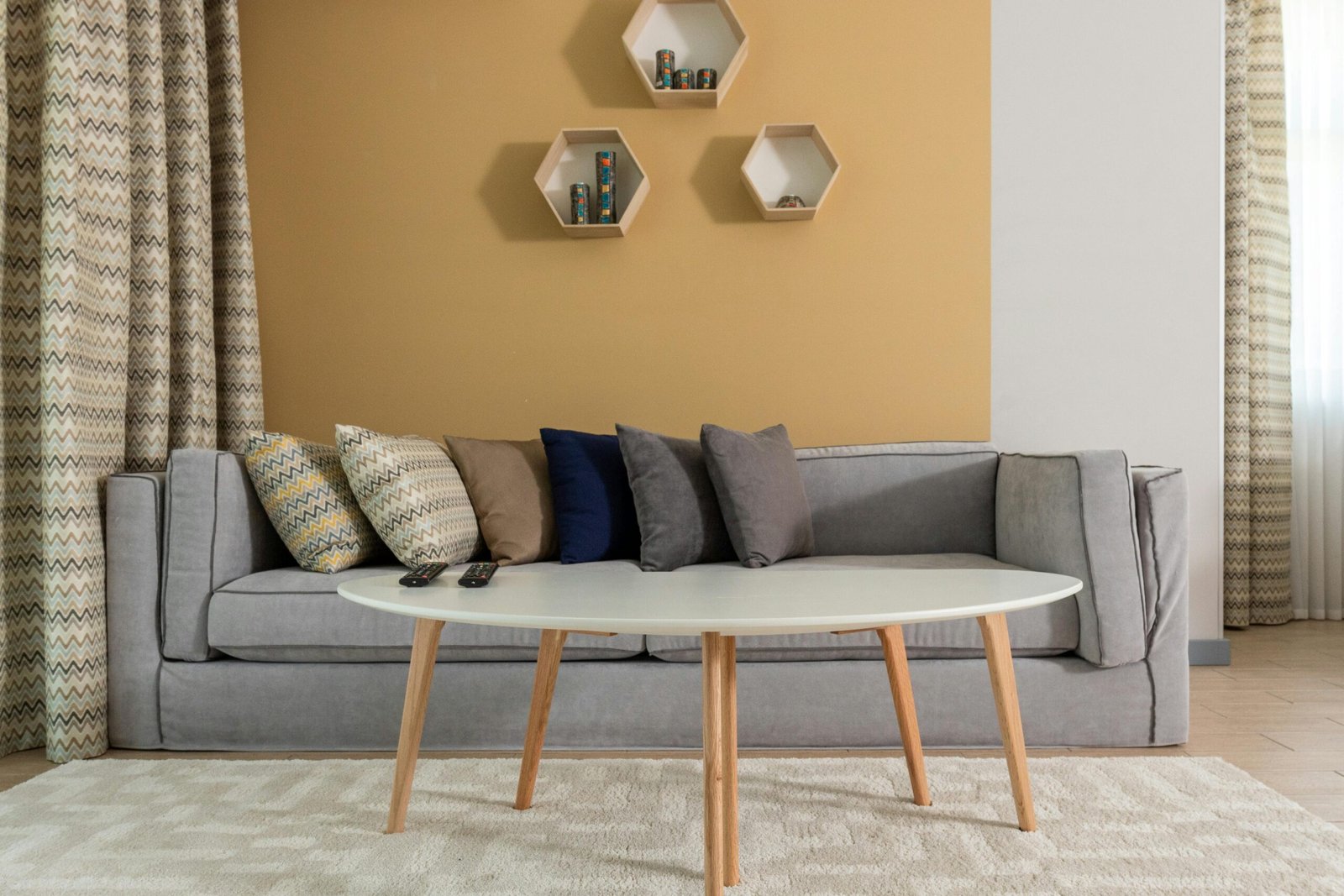
A room can have beautiful furniture and still look “wrong.” Not ugly—just off. The sofa feels too big for the space. The rug looks tiny. The coffee table floats awkwardly. The dining chairs feel cramped. The bed dominates the room so much there’s no breathing space. Or everything is so small that the room looks unfinished and temporary.
These problems almost always come down to scale and proportion.
Scale is about how big something is relative to the room. Proportion is about how parts relate to each other (like the height of a lamp compared to a side table, or the width of a mirror compared to a console). Designers think about scale and proportion constantly because getting them right makes even affordable furniture look polished—and getting them wrong can make expensive furniture look cheap.
This guide will teach you a practical method to choose furniture that fits. You’ll learn how to measure effectively, understand “visual weight,” choose the right sizes for rugs and tables, avoid common mistakes in living rooms, bedrooms, and dining rooms, and build a space that looks intentional—not crowded or under-furnished.
Why scale mistakes are so common
Most people shop furniture in one of these ways:
- buying what looks good online without measuring
- choosing pieces based on price or sales rather than fit
- trying to “fill” a room with too many items
- downsizing everything because the space is small
- buying a matching set without considering the room layout
The problem is that furniture is not “one size fits all.” The same sofa that looks perfect in a showroom can overwhelm a small living room. The same coffee table that looks fine alone can feel tiny next to a sectional. And the same dining table that seems reasonable can become a daily frustration when chairs don’t have enough room.
The fix is not becoming an expert. The fix is using a simple set of scale principles.
Step 1: Start with the room’s real function (scale supports daily life)
Before you measure, decide what the room must do.
Ask:
- How many people use this room daily?
- Do you host guests often?
- Do you need storage in this room?
- Do you need the room to feel open for kids/pets?
- Do you work or eat here sometimes?
Furniture should fit your life, not a picture. A “perfect” scaled room that doesn’t support your habits will feel wrong no matter how stylish it is.
Step 2: Measure the room, but focus on the right measurements
You don’t need complicated diagrams. You need a few key measurements that prevent regret.
Key measurements to take
- wall lengths (especially the wall where the largest piece will go)
- doorway and hallway widths (so the furniture can actually get in)
- window placement and height (so furniture doesn’t block light)
- ceiling height (helps with vertical balance like shelving and curtains)
- major clearance paths (where you walk)
The most important measurement concept
Clearance space matters as much as furniture size.
A piece can technically “fit” but still feel cramped if it steals walking room.
Step 3: Understand “visual weight” (a piece can look bigger than it measures)
Two sofas can have the same dimensions but feel completely different in a room.
Furniture looks heavier when it has:
- chunky arms
- deep, overstuffed shapes
- dark colors
- no legs (base sits on floor)
- bulky silhouettes
Furniture looks lighter when it has:
- visible legs (more floor visible)
- slim arms
- open bases
- lighter colors
- cleaner lines
Why this matters
In small rooms, “light” furniture often looks better than a bulky piece—even if the size is similar. Visual weight can make a room feel more open without reducing comfort.
Step 4: Choose the “anchor pieces” first
Anchor pieces are the big ones that define the room’s layout:
- living room: sofa/sectional
- bedroom: bed
- dining room: table
If you choose these right, the rest is easier. If you choose them wrong, everything else becomes a struggle.
Living room scale: how to choose furniture that fits
Living rooms are where scale mistakes show up the most because there are multiple pieces that need to relate: sofa, chairs, rug, coffee table, TV console, side tables.
Step 5: Sofa scale — the most important decision
How to know if a sofa is too big
- it blocks walking paths
- it covers windows or interferes with doors
- it makes the room feel like the furniture is “winning”
- it leaves no space for side tables or lamps
How to know if a sofa is too small
- it looks lost against a large wall
- it doesn’t seat the people who actually live there
- it makes the room feel temporary or unfinished
A practical sofa selection method
- Pick the wall or placement where the sofa will go.
- Measure that space.
- Leave room for breathing space (don’t push edge-to-edge unless it’s a deliberate built-in look).
- Consider visual weight: in small rooms, slimmer arms and visible legs often help.
If you have an open-plan space, remember that a sofa might need to “define” a zone. A slightly larger sofa can work if it creates structure—just don’t block flow.
Step 6: Sectionals — great, but easy to oversize
Sectionals feel cozy and practical, but they can overwhelm rooms quickly.
A sectional works best when:
- it fits the zone without blocking paths
- it doesn’t force the TV or focal point into an awkward corner
- the chaise doesn’t cut through the natural walking line
The sectional mistake
Buying a large sectional because it’s comfortable, then realizing the room has no space for a coffee table, side tables, or movement.
If your room is medium or small, consider:
- a smaller sectional
- or a sofa + chaise ottoman setup
- or a sofa + one chair for flexibility
Step 7: Coffee table size — the “floating island” problem
Coffee tables often look wrong when they’re too small. A tiny coffee table in front of a large sofa or sectional looks like it’s floating alone, not anchored.
Coffee table fit principles
A coffee table should:
- feel proportional to the sofa
- leave enough clearance so you can move around it comfortably
- be close enough that people can reach it easily
A simple shape rule
- Small rooms: round or oval tables often improve flow.
- Long sofas: rectangular tables often look more balanced.
- Flexible spaces: nesting tables are great.
If your room feels cramped, the coffee table might be too large or too sharp-edged for the walking path.
Step 8: Rug size — the scale detail that changes everything
Rug sizing is one of the biggest “cheap vs. expensive” signals.
Signs a rug is too small
- only the coffee table fits on it
- it doesn’t touch the sofa or chairs
- furniture looks like it’s floating around the rug
Better rug placement
A rug should connect the seating area:
- at least the front legs of the sofa and chairs sit on it
- it defines the zone clearly
A properly sized rug makes the room look more intentional and often makes it feel larger because it creates one cohesive area.
Step 9: Side tables and lamps — proportion makes it look designed
Side tables should be:
- close enough to seating to be functional
- high enough to feel comfortable
- not so large they block movement
Lamps should not look tiny next to furniture. A good lamp has presence and provides soft light at eye level, which makes the room feel more finished.
If your living room looks “off,” it might not need new furniture—it might need correctly scaled lamps and tables.
Bedroom scale: choosing bed and furniture that fits
Bedrooms look best when the bed feels like the anchor but not like it’s swallowing the room.
Step 10: Bed size — comfort vs. clearance
A bigger bed feels luxurious, but it also takes space. The best bed size is the one that allows comfortable movement.
Key question:
- Can you walk comfortably around the bed?
- Can you open drawers and closets easily?
- Is there room for nightstands?
Bedroom scale principle
A bedroom feels calm when there’s breathing room. If the bed leaves no clearance, the room will always feel cramped.
Step 11: Nightstands — don’t go too small
Tiny nightstands in a room with a large bed often look like an afterthought.
Nightstands should:
- feel proportional to the bed
- hold a lamp and essentials without crowding
- align visually with the bed height for balance
If space is tight, you can use:
- wall-mounted shelves
- slim nightstands
- narrow C-tables
But still aim for “intentional,” not “temporary.”
Step 12: Dresser scale and placement
Dressers can overwhelm bedrooms if they’re too bulky, but they can also be too small and look lost.
Choose a dresser that:
- fits the wall without blocking doors
- allows space for drawer opening
- relates to the bed’s visual weight
If the bed is visually heavy, a tiny lightweight dresser can look out of balance.
Dining room scale: making tables and chairs actually work
Dining rooms are where scale mistakes become daily annoyances: bumping into chairs, tight corners, awkward table sizes.
Step 13: Dining table size — the “clearance around chairs” issue
The most important dining measurement is not table size—it’s the space around it.
A dining setup works when:
- chairs can pull out comfortably
- people can walk around the table
- the room doesn’t feel blocked
If your dining area is tight, consider:
- a round table (often easier in small spaces)
- an extendable table (small daily footprint, expands for guests)
Step 14: Chair scale — comfort and visual balance
Chairs should:
- fit under the table properly
- feel comfortable and supportive
- match the table’s visual weight
A heavy table with tiny delicate chairs can feel unbalanced. A light modern table with oversized chairs can feel cramped. Balance matters.
Step 15: Lighting scale above tables (often overlooked)
Dining room lights are a major proportion signal. Too small, and the table looks unsupported. Too big, and the room feels heavy.
Even without changing the fixture, you can improve balance by:
- ensuring it’s centered over the table
- keeping the table as the anchor for the zone
- using consistent finishes (black, brass, etc.)
The “tape method” — the simplest way to avoid scale regret
Before buying anything big, use painter’s tape on the floor to mark:
- sofa footprint
- coffee table footprint
- rug footprint
- bed footprint
- dining table footprint
Then live with the tape for a day or two:
- walk through paths
- open doors
- imagine chairs pulled out
- visualize daily life
This method is powerful because it turns abstract measurements into real space.
The “one big, two medium” rule for balanced rooms
Rooms often look best when the furniture sizes feel structured:
- one big anchor (sofa/bed/table)
- two medium supporting pieces (chairs, dresser, sideboard)
- smaller accents (side tables, stools, decor)
When everything is medium, the room can feel flat. When everything is small, it feels unfinished. When one piece is huge and everything else tiny, it feels unbalanced.
Balance comes from a clear hierarchy.
Common scale and proportion mistakes (and how to fix them)
Mistake 1: Too many small pieces
Fix: reduce the number of items and choose fewer pieces with more presence.
Mistake 2: Rug too small
Fix: size up or reposition so it connects furniture.
Mistake 3: Lamps too small
Fix: choose lamps with more height and presence.
Mistake 4: Overstuffed bulky furniture in small rooms
Fix: choose lighter silhouettes or pieces with legs.
Mistake 5: Furniture blocking walking paths
Fix: prioritize flow and remove or replace one piece.
Mistake 6: Everything pushed against the walls
Fix: sometimes pulling furniture inward creates a more intentional layout and better proportions.
A practical furniture selection checklist
Before buying a piece, ask:
- Does it fit the room’s function and habits?
- Does it fit with clearance space for walking and use?
- Is the visual weight right for the space?
- Does it relate proportionally to nearby furniture?
- Will it still work if I add the supporting pieces (rug, tables, lamps)?
- Have I tested the footprint with tape or measured carefully?
If you answer “yes” to these, you’re far less likely to regret the purchase.
The real secret: furniture that fits makes the whole home look more expensive
Scale and proportion are what separate “random furniture in a room” from a room that feels designed. When the sofa, rug, tables, lighting, and storage pieces relate to each other, the room feels calm and intentional. It becomes easier to decorate because you’re not constantly trying to fix something that feels off.
If you want the biggest wins quickly:
- choose the right anchor piece,
- protect walking paths,
- size the rug correctly,
- and make sure lighting and tables are proportional.
Those moves create a room that feels comfortable, stylish, and finished—without needing a full makeover.

Isabella Garcia is the creator of a blog dedicated to crafts and home care, focused on making everyday life more creative, organized, and enjoyable. The blog shares practical tips, easy DIY projects, home organization ideas, and simple solutions to take better care of your living space. Whether you’re a beginner in crafting or someone looking for inspiration to improve your home routine, Isabella’s blog offers clear, useful, and hands-on content to help you create a cozy, beautiful, and well-cared-for home.