
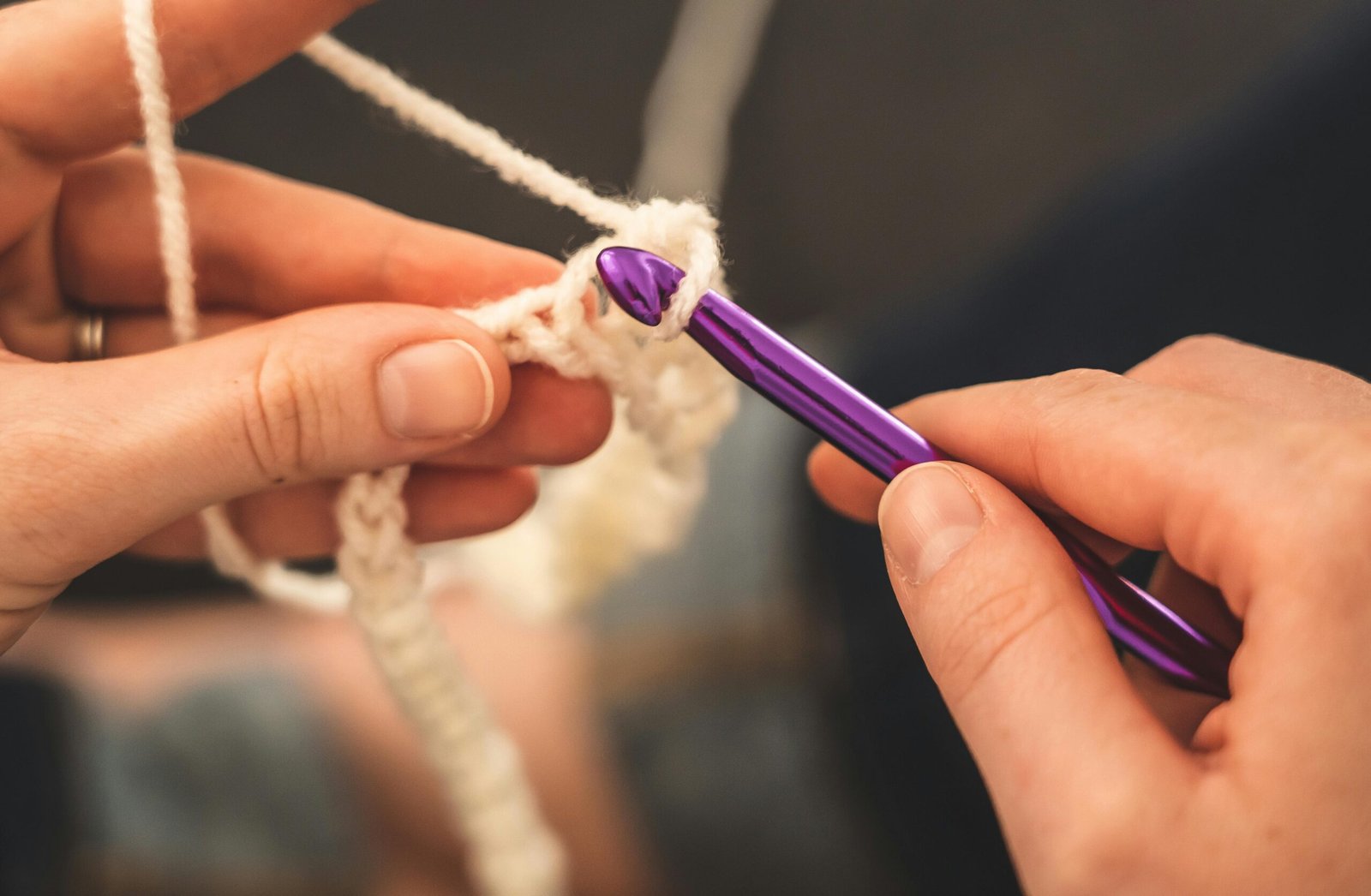
Starting crochet is exciting—until you open an online shop and see thousands of hooks, yarn types, and “must-have” accessories. The truth is: you can learn crochet with a very small set of tools, and buying the right beginner-friendly supplies will make learning faster, easier, and way less frustrating.
This article gives you a simple, practical buying guide. You’ll learn which yarns are easiest for beginners, which hook size to start with, what tools actually help, and what you can skip until you’re more confident. By the end, you’ll have a clear shopping list and a good understanding of why each item matters.
The Beginner Mindset: Buy for Learning, Not for “Someday”
It’s tempting to buy a huge set of hooks or a rainbow yarn bundle because it looks fun. But the best beginner strategy is to buy supplies that make stitches easy to see and handle.
When you’re new, your goals are:
- Learn basic movements (yarn over, pull through, insert hook)
- See your stitches clearly
- Keep your hands comfortable
- Finish small projects
So you want tools that are forgiving and predictable—not fancy, not complicated, and not “advanced mode.”
Yarn 101: The Easiest Yarn to Learn With
Yarn choice has a bigger impact on your beginner experience than most people realize. The wrong yarn can make crochet feel impossible. The right yarn makes it feel logical.
Best yarn weight for beginners
Start with medium / worsted weight yarn (often labeled #4).
Why it’s ideal:
- Not too thin (thin yarn makes tiny, hard-to-see stitches)
- Not too bulky (very bulky yarn can hide stitch structure)
- Works with common beginner hook sizes
- Widely available and affordable
If you see yarn labeled “DK” (#3) or “bulky” (#5), those can also work later, but #4 is the safest beginner zone.
Best fiber for beginners
Pick a fiber that’s easy to control and easy to see:
- Acrylic: affordable, smooth, beginner-friendly, widely available
- Cotton: great stitch definition, sturdy, excellent for dishcloths and coasters
- Cotton-acrylic blend: a nice middle ground (soft + defined)
Acrylic is often the easiest to learn with because it’s forgiving and glides smoothly. Cotton shows stitches really clearly, but it can feel a bit less stretchy, which some beginners notice.
Best yarn texture (this matters a lot)
Choose smooth yarn. Avoid these at first:
- Fuzzy or fluffy yarn (stitches disappear)
- “Eyelash” or novelty yarn (impossible to see structure)
- Very splitty yarn (where strands separate easily)
- Super slippery yarn (hard to control tension)
Smooth yarn lets your brain “see” what your hands are doing.
Best yarn color for beginners
Choose light or medium colors: cream, light gray, pastel, medium blue, sage, etc.
Avoid for your first few weeks:
- Black or navy (stitches are hard to see)
- Highly variegated yarn (multi-color changes can hide stitch shapes)
You can totally use dark yarn later. But for learning, visibility is everything.
How much yarn should you buy?
For learning and small projects:
- 1 skein (100g) is enough for practice swatches and small items like coasters
- For a scarf, you’ll need more (often 2–4 skeins depending on length and stitch)
If you’re starting from zero, buy one skein of smooth worsted yarn in a light color. That’s enough to get moving.
Crochet Hooks: Size, Material, and What Actually Matters
A crochet hook is your main tool. The right size and feel can remove a lot of beginner frustration.
Best hook size to start with
If you’re using worsted (#4) yarn, the best beginner sizes are:
- 5.0 mm (H/8)
- 5.5 mm (I/9)
These sizes:
- Create stitches large enough to see clearly
- Make it easier to insert the hook
- Help you avoid overly tight tension
If you can only pick one, pick 5.0 mm. It’s a classic beginner choice.
Hook material: aluminum vs plastic vs wood
Hooks come in different materials. Here’s what matters for beginners:
- Aluminum hooks: smooth, affordable, easy glide (great for most beginners)
- Wood/bamboo hooks: slightly more grip (good if stitches slide too easily)
- Plastic hooks: can be fine, but some feel less smooth and can snag depending on quality
If you want a simple recommendation:
- Start with aluminum or an ergonomic aluminum hook.
Standard hooks vs ergonomic hooks
Ergonomic hooks have a thicker handle (often rubber or silicone). They can reduce hand fatigue—especially if you crochet for longer sessions.
If your budget allows, an ergonomic hook is a nice upgrade. If not, a standard aluminum hook is totally fine.
Do you need a whole hook set?
Not at the beginning.
For learning:
- One hook size is enough (5.0 mm or 5.5 mm)
Once you start making different projects, you’ll naturally add sizes over time. Buying slowly helps you avoid spending money on tools you won’t use.
“Notions” (Small Tools): What’s Worth Buying and What’s Optional
Crochet has lots of little accessories. Some are genuinely helpful; others are nice-to-have later.
Must-have (or close to it)
These tools make beginner life much easier:
Stitch markers
- Help you mark the first and last stitch in a row
- Essential for counting and avoiding uneven edges
- Budget option: safety pins or paper clips
Yarn needle (tapestry needle)
- Used for weaving in ends
- Also used for sewing simple seams
- Choose a blunt tip needle made for yarn
Small scissors
- Any small, sharp scissors work
- Keep them in a safe place and use carefully
That’s enough for most beginner projects.
Helpful extras (nice, but not required)
Measuring tape
- Useful for checking project size
- Not necessary for early practice
Row counter
- Helps track rows, but you can also keep notes or use a phone
Project bag
- Keeps yarn clean and prevents tangles
- A simple tote bag works fine
Tools to skip at first
You can absolutely buy these later, but they’re not necessary for starting:
- Blocking mats and pins (useful later, not needed now)
- Fancy yarn bowls (cute, optional)
- Large hook sets (only worth it once you know what you’ll use)
- Complex stitch gadgets (unnecessary while learning basics)
How to Read Yarn Labels (So You Don’t Buy the Wrong Thing)
Yarn labels can look confusing, but beginners only need to understand a few key parts.
Yarn weight and recommended hook size
Look for the yarn weight symbol (often #4 for worsted) and the recommended hook size. The label might suggest something like 5.0 mm or 5.5 mm—perfect.
Fiber content
Common beginner-friendly options:
- 100% acrylic
- 100% cotton
- acrylic-cotton blends
Fiber affects:
- How stretchy the yarn feels
- How the final fabric drapes
- How the yarn handles washing
Yardage / meters
Two skeins can look the same size but have different yardage. Yardage tells you how much yarn you’re actually getting.
If you’re planning a project (like a scarf), yardage matters more than the number of skeins.
Care instructions
Labels show washing and drying info. This matters if you plan to gift or use the item often.
For beginner practice, don’t stress too much. Just avoid yarn that requires delicate special handling if you want an easy start.
Budget Tips: Start Cheap, Upgrade Later
You can learn crochet without spending much.
A realistic beginner budget list
- 1 smooth worsted yarn skein
- 1 hook (5.0 mm or 5.5 mm)
- 1 yarn needle
- 1 pack of stitch markers (or use safety pins)
- scissors (already at home, if possible)
This keeps your starting cost low while giving you everything you need.
Starter kits: good or bad?
Starter kits can be helpful if:
- They include a good hook size (5.0–5.5 mm)
- The yarn is smooth and medium weight
- The kit includes stitch markers and a yarn needle
Starter kits can be frustrating if:
- The yarn is fuzzy or very dark
- The hook is tiny or unusual
- The instructions assume you already know basics
If you buy a kit, pick one that looks simple and beginner-focused. Otherwise, build your own kit from the list above.
Common Beginner Purchasing Mistakes (and How to Avoid Them)
Beginners often struggle not because they lack talent, but because they accidentally bought supplies that make learning harder.
Buying fuzzy yarn first
Fuzzy yarn hides stitches. You can’t see where to insert your hook, and it feels like guessing.
Fix: start smooth, then go fuzzy later if you want.
Choosing very dark yarn
Dark yarn makes it hard to see stitch tops, edges, and mistakes.
Fix: start with a light or medium shade, then work up to dark colors.
Buying a hook that’s too small
A small hook with medium yarn makes tight stitches and frustration.
Fix: start with 5.0 mm or 5.5 mm for #4 yarn.
Buying too many supplies at once
Big hauls feel motivating, but often lead to waste.
Fix: buy the basics, then expand based on the projects you actually enjoy.
Your First Crochet Setup: The “Minimum That Works”
If you want the simplest answer, here it is:
- Smooth worsted weight (#4) yarn in a light color
- 5.0 mm (H/8) crochet hook
- Stitch markers (or safety pins)
- Yarn needle
- Scissors
With this, you can learn:
- chain stitch
- single crochet
- half double crochet
- double crochet
- weaving in ends
- basic rows and counting
And you can make:
- coasters
- washcloths
- simple scarves
- headbands
- basic granny squares (once you learn corners)
A Quick Guide to Picking Yarn for Common Beginner Projects
Once you finish a practice swatch or two, you’ll probably want to make something real. Here’s how to match yarn to easy projects.
Coasters and dishcloths
Best yarn: cotton
- Absorbs water
- Sturdy and washable
- Great stitch definition
Hook size: usually 5.0 mm with worsted cotton (check label)
Scarves and headbands
Best yarn: acrylic or soft blends
- Comfortable to wear
- Easy to care for
- Affordable
Hook size: often 5.0–6.0 mm depending on yarn and desired drape
Blankets (later, but still beginner-friendly)
Best yarn: acrylic
- Easy care
- Many color options
- Usually budget-friendly in bulk
Hook size depends on yarn thickness (often 5.5 mm–8.0 mm for larger blanket yarns)
The key idea: the “best” yarn depends on what you want the finished item to do.
When to Upgrade Your Supplies
You don’t need upgrades to crochet well, but a few upgrades can make crochet more comfortable once you know you’ll stick with it.
Consider upgrading when:
- Your hands get tired quickly (try ergonomic hooks)
- You want smoother glide or more grip (try different hook materials)
- You start working with different yarn weights (add a few hook sizes)
- You begin bigger projects (project bags, extra stitch markers)
A helpful approach is “upgrade one thing at a time,” so you can feel what actually improves your experience.
A Simple Shopping Checklist You Can Screenshot
Here’s a beginner-friendly checklist you can use in-store or online:
- 1 skein smooth worsted (#4) yarn, light/medium color
- Crochet hook 5.0 mm (H/8) or 5.5 mm (I/9)
- Stitch markers (or safety pins/paper clips)
- Yarn needle (tapestry needle)
- Small scissors
Optional:
- Measuring tape
- Small project bag or tote
If you buy only these basics, you’ll avoid most beginner headaches and set yourself up for fast progress.
Your Next Step: What to Do After You Buy Supplies
Once you have your yarn and hook, do this in order:
- Practice 20 chains (focus on not being too tight)
- Practice single crochet in a row
- Count stitches each row to keep edges straight
- Make a small coaster or washcloth to finish something
Finishing a tiny project is the fastest way to turn supplies into confidence.
The Takeaway: Keep It Simple and Beginner-Friendly
Crochet doesn’t require expensive tools. It requires the right starting choices: smooth yarn you can see, a hook size that feels comfortable, and a few small tools that prevent easy mistakes.
If you keep your first supply list simple, you’ll spend less money and learn faster—and that’s the perfect combination for a beginner.
Isabella Garcia is the creator of a blog dedicated to crafts and home care, focused on making everyday life more creative, organized, and enjoyable. The blog shares practical tips, easy DIY projects, home organization ideas, and simple solutions to take better care of your living space. Whether you’re a beginner in crafting or someone looking for inspiration to improve your home routine, Isabella’s blog offers clear, useful, and hands-on content to help you create a cozy, beautiful, and well-cared-for home.