
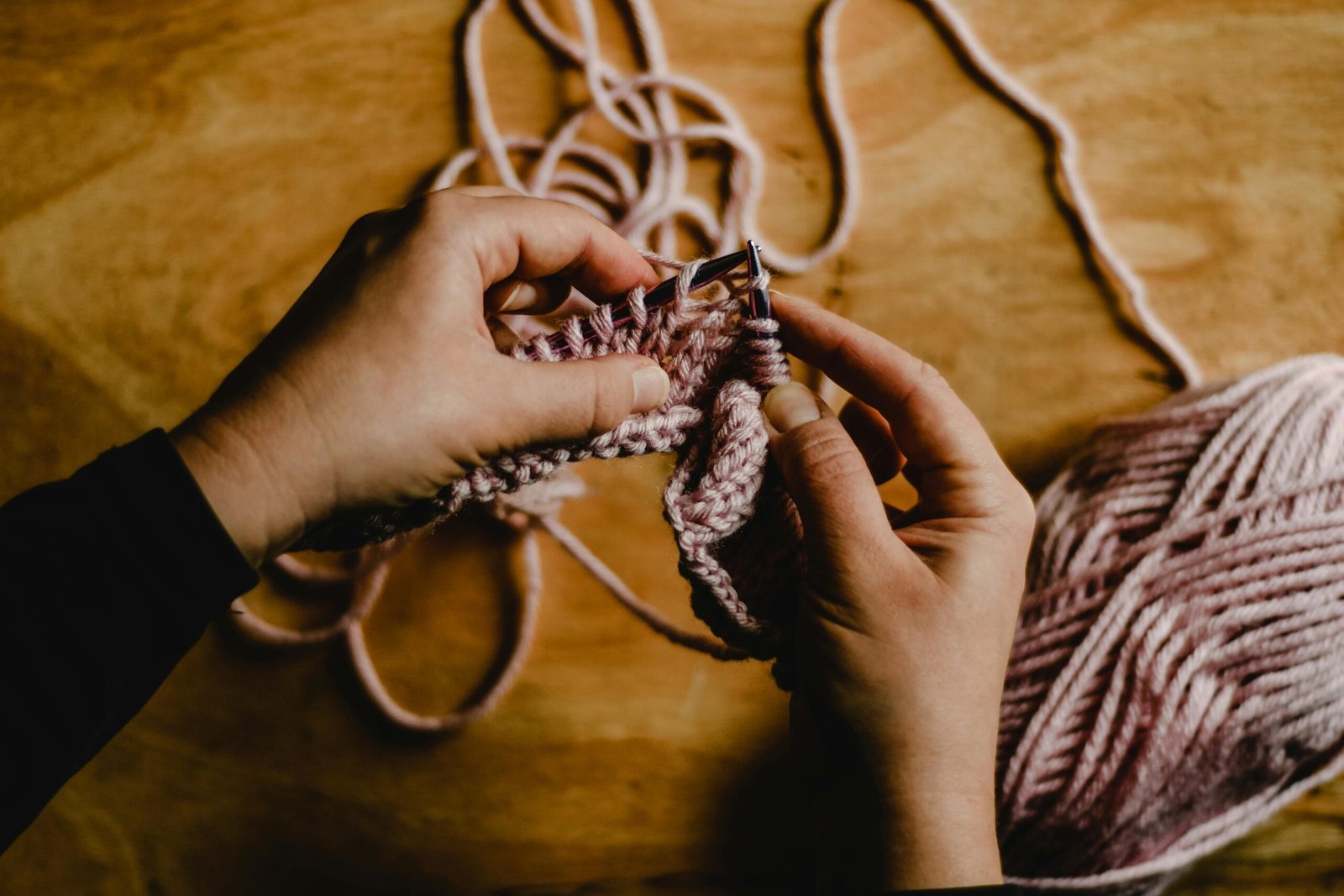
If you’re new to yarn crafts and stuck between crochet and knitting, you’re not alone. Both look beautiful, both have a learning curve, and both come with a world of tools, yarn types, and patterns. The confusing part is that people often give totally opposite opinions—one person swears crochet is easier, another says knitting is more relaxing, and someone else tells you to “just do both.”
Here’s a clearer way to decide: crochet and knitting are different skill experiences. One may feel easier for you based on how your hands like to move, how you prefer to learn, and what you want to make first (scarves, blankets, toys, wearables, home items).
This guide compares crochet and knitting in a beginner-friendly way, focusing on what actually matters when you’re starting: difficulty, speed, tools, mistake-fixing, project options, cost, and the most practical first steps.
The Core Difference (In One Minute)
Crochet
- Uses one hook
- You build fabric by making loops one at a time
- Usually only one active stitch is “live” on the hook at once
Knitting
- Uses two needles (or circular needles)
- Many stitches stay “live” on the needle
- Fabric grows by moving loops from one needle to the other
That difference affects everything: speed, how mistakes behave, how projects feel, and what you might enjoy most.
Which One Is Easier to Learn?
Crochet is often easier at the very beginning
Many beginners find crochet simpler at first because:
- You only manage one tool (one hook)
- You focus on one active loop at a time
- Mistakes often affect a smaller area right away
Crochet can feel like “I’m controlling the loop” rather than “I’m managing a whole row of live stitches.”
Knitting can feel smoother once knit/purl click
Knitting’s learning curve can feel awkward at first because:
- Two needles require coordination
- Stitches can slip off if you’re not used to holding them
- Purl stitch can feel clumsy early on
But once knit and purl are comfortable, knitting can become very rhythmic and relaxing.
Beginner truth: crochet often feels easier in the first few sessions, while knitting often feels easier after the basics click.
Which One Is Faster?
This depends on the stitch and the project, but here’s a helpful general rule:
Crochet is often faster for many beginners
Crochet stitches are generally taller than knitting stitches, especially in common patterns like double crochet. That means:
- Projects build up quickly
- You see progress sooner
- It can feel more motivating early on
Knitting can be fast, but it often builds fabric more gradually
Knitting creates smaller stitches. This can make fabric:
- smoother
- more drapey
- slower to grow, especially with thinner yarn
Once you gain experience, knitting speed can catch up or even surpass crochet for some people—especially with certain styles (like Continental). But for many beginners, crochet feels “faster” sooner.
Which One Is Easier to Fix Mistakes In?
Crochet is usually easier to fix as a beginner
Because you usually have one active stitch, you can often:
- undo stitches one by one (“frog” back)
- fix a small mistake without affecting a whole row
- see where you went wrong more clearly
If you accidentally drop a stitch in crochet, it’s often noticeable quickly and can usually be secured before it runs far.
Knitting mistakes can travel if you don’t notice quickly
In knitting, if you drop a stitch, it can “run” down rows. That sounds scary, but it’s fixable with practice. Still, beginners often find knitting mistakes more stressful early on because:
- many live stitches are on the needle
- a dropped stitch can create a vertical ladder
That said, knitting has its own strengths:
- You can “read” your fabric and correct patterns once you learn what knit vs purl looks like.
- Many issues are fixable without restarting.
Beginner-friendly takeaway: crochet tends to be more forgiving at the start.
Tools and Setup: Which One Needs More Stuff?
Crochet tools (minimal)
To start crochet, you typically need:
- one hook (like 5.0 mm)
- yarn
- yarn needle
- scissors
That’s it.
Knitting tools (still simple, but slightly more)
To start knitting, you typically need:
- two needles (or one circular needle)
- yarn
- yarn needle
- scissors
Still simple, but you’re buying and managing two needle tips instead of one hook.
Cost-wise, they’re both affordable to start. Crochet can feel slightly more “minimal” at the very beginning.
Which One Uses More Yarn?
This surprises many beginners.
Crochet usually uses more yarn than knitting
Crochet stitches generally use more yarn per square inch because:
- stitches are taller and bulkier
- fabric has more “structure” in the loops
Knitting often makes a thinner, smoother fabric with less yarn for the same area.
If you’re making large items like blankets, yarn use can matter. Crochet blankets can be incredibly cozy—but they often require more yarn than knitted blankets of the same size.
Fabric Feel: Which Looks and Feels Better?
This depends on what you want to make and how you like fabric to behave.
Knitting often creates a smoother, drapier fabric
Knitted stockinette is classic for wearables:
- sweaters
- hats
- scarves with a smooth look
- clothing that needs a softer drape
Knitting is often the go-to for garments because it can create fabric that feels more like store-bought knitwear.
Crochet often creates more texture and structure
Crochet naturally produces:
- thicker, more textured fabric
- beautiful stitch patterns with depth
- strong, structured pieces
That’s why crochet is often amazing for:
- bags
- baskets
- blankets with texture
- amigurumi (crochet toys)
- home décor items
Neither is “better.” They’re just different fabrics.
Which Is Better for the Projects You Want?
Here’s a practical project-based comparison.
Crochet is often best for:
- amigurumi (stuffed toys)
- granny squares
- coasters and dishcloths
- bags and structured items
- quick blankets (because it builds fast)
- textured scarves and accessories
Knitting is often best for:
- sweaters and cardigans
- hats with smooth ribbing and classic fit
- socks (later on)
- drapey scarves and shawls
- garments where fabric stretch and drape matter
If your dream is crochet toys or granny squares, crochet is the obvious first choice. If your dream is sweaters and classic knitwear, knitting might be worth focusing on earlier.
Which One Is Better for Beginners Who Get Frustrated Easily?
A big part of beginner success is motivation.
Crochet tends to be great for beginners who want:
- faster visual progress
- simpler “live stitch” management
- easier early mistake recovery
Knitting tends to be great for beginners who want:
- a calm, repetitive rhythm
- classic wearable fabrics
- long-term garment-making skills
If you’re worried you’ll quit if it feels slow, crochet might be the better first step. If you love repetition and want smooth fabric, knitting might feel more satisfying once it clicks.
Which One Is Better for Your Hands?
Comfort can vary based on:
- your grip style
- your tension habits
- your posture
- your tool choices (ergonomic hooks, circular needles, etc.)
Crochet can stress the wrist if you use big wrist motions
Some beginners swing the hook with the wrist a lot. If you keep movements small and use finger control, this improves.
Knitting can stress hands if you knit very tightly
Many beginners knit tight and strain their fingers. Using slightly larger needles and relaxing tension helps a lot.
If you notice discomfort with either craft:
- take breaks
- loosen tension
- support your arms
- consider ergonomic tools
Comfort is not fixed—you can improve it with technique adjustments.
So… Which One Should You Choose?
Here’s a clear decision guide.
Choose crochet first if you want:
- a faster learning start
- simpler tool handling
- easier early mistake fixes
- toys, granny squares, home items, textured projects
Choose knitting first if you want:
- classic wearable fabric
- smooth, drapey scarves and garments
- a rhythmic, meditative process
- long-term focus on sweaters/hats/socks
Choose both (in a smart way) if you’re curious
You can absolutely learn both, but beginners do best when they don’t juggle too many new skills at once.
A good approach:
- Spend 2–3 weeks focusing on one craft
- Finish one small project
- Then try the other with a beginner project too
That way you build confidence instead of switching every day and feeling stuck.
Best First Projects for Crochet Beginners
If you choose crochet first, start with:
- a simple coaster (single crochet or half double crochet)
- a dishcloth (cotton yarn)
- a beginner scarf (double crochet or half double crochet)
These teach you:
- consistent tension
- straight edges
- basic stitch anatomy
- finishing (weaving ends)
Best First Projects for Knitting Beginners
If you choose knitting first, start with:
- a garter stitch scarf (knit every row)
- a small garter stitch dishcloth
- a ribbed headband (k2, p2 once you learn purl)
These teach you:
- tension control
- neat edges
- rhythm
- finishing skills
The Takeaway: Crochet is Often Easier First, Knitting Often Feels Smoother Later
If you’re deciding purely on “easiest to start,” crochet often wins for many beginners because it’s more forgiving and progress feels fast. If you’re deciding on “best for wearables and classic fabric,” knitting often wins because the fabric drape and stretch are perfect for garments.
But the real secret is this: you can’t pick wrong. The best choice is the one that makes you want to pick up your yarn again tomorrow.
Isabella Garcia is the creator of a blog dedicated to crafts and home care, focused on making everyday life more creative, organized, and enjoyable. The blog shares practical tips, easy DIY projects, home organization ideas, and simple solutions to take better care of your living space. Whether you’re a beginner in crafting or someone looking for inspiration to improve your home routine, Isabella’s blog offers clear, useful, and hands-on content to help you create a cozy, beautiful, and well-cared-for home.