
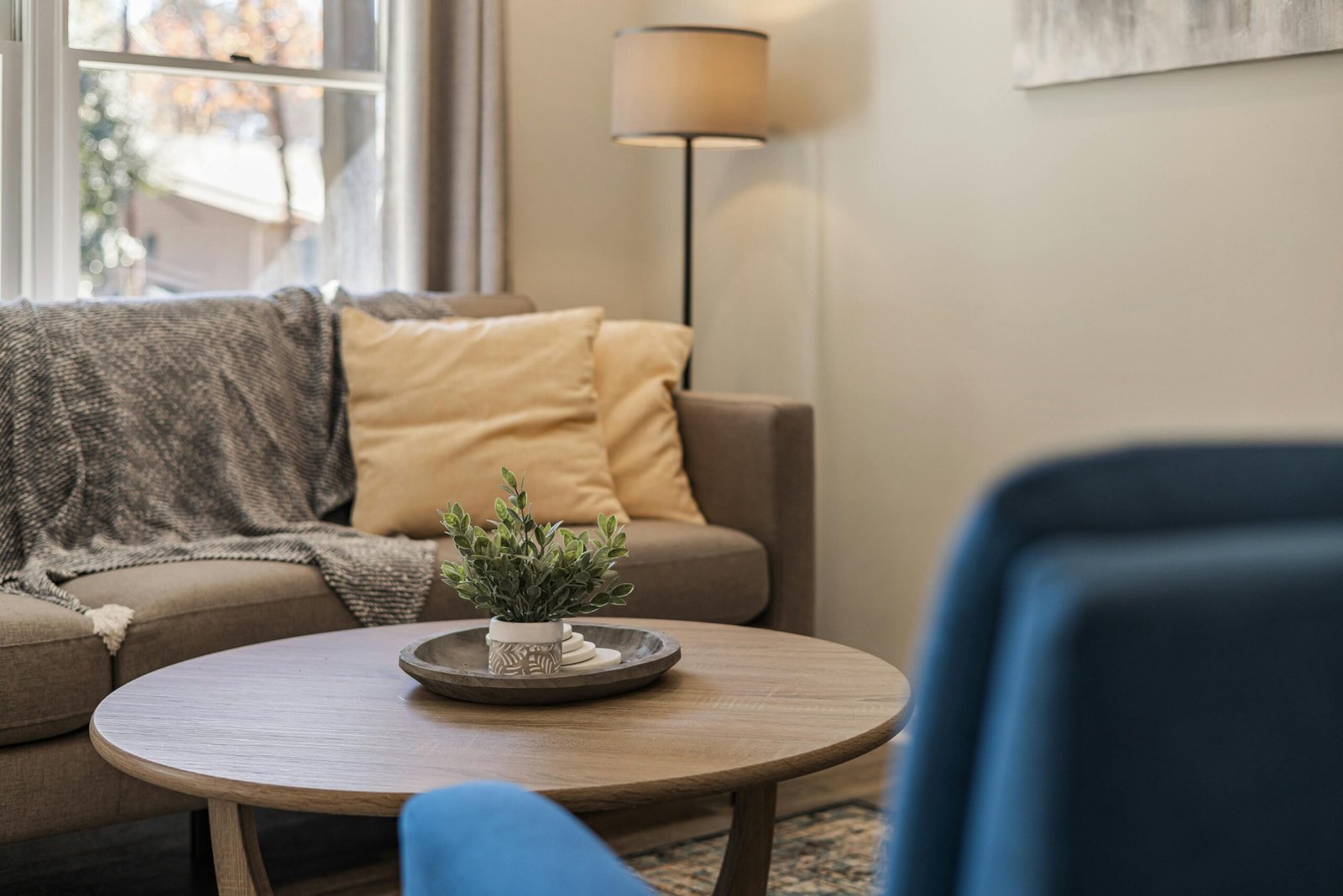
Mirrors are one of the most powerful “small change, big impact” tools in home decor. They’re not just functional. Used well, mirrors can make rooms feel brighter, larger, and more designed—without moving a single wall or buying new furniture. Used poorly, they can make a room feel awkward, reflect clutter, create strange proportions, or simply look like an afterthought.
If you’ve ever hung a mirror and thought, “Why does this look off?”—you’re not alone. Mirror styling is all about placement, scale, what the mirror reflects, and how it relates to nearby furniture. This article will teach you exactly how to decorate with mirrors like a designer: where to place them for maximum light and space, how to choose the right size and shape, how to avoid common mistakes, and how to use mirrors in every room—living room, bedroom, entryway, dining room, hallway, bathroom, and small apartments.
Why mirrors work so well in interior design
Mirrors upgrade rooms in three major ways:
- They bounce light
A mirror reflects natural light and lamp light, brightening a space without adding new fixtures. - They create depth
Mirrors add the illusion of distance. This makes tight rooms feel more open. - They improve composition
A well-placed mirror can balance a wall, create a focal point, and help a room feel finished.
That’s why mirrors show up in so many designer homes: they solve real problems elegantly.
The most important mirror rule: what it reflects matters more than the mirror itself
A mirror is basically a “duplicate machine.” It visually doubles whatever it faces.
If a mirror reflects:
- a window with beautiful light → the room looks brighter and bigger
- a clean styled console → the room looks polished
- a messy corner, laundry pile, or chaotic shelf → the mess looks twice as bad
So before you hang a mirror, stand where the mirror will go and look at what’s opposite. If you don’t love what you see, change the angle or change the location.
The designer question to ask
“Do I want to see this view twice?”
If the answer is no, keep moving.
Step 1: Decide your mirror’s job (light, space, function, or style)
Mirrors work best when they have a purpose. Most mirrors serve one or more of these jobs:
- Brightening (bouncing natural light)
- Expanding (making the room feel larger)
- Function (checking your look, bathroom use)
- Focal point (creating a styled wall moment)
When you know the job, the right placement becomes clearer.
Step 2: Choose the right mirror size (most people go too small)
One of the biggest mistakes in mirror decorating is choosing a mirror that’s too small for the wall or the furniture beneath it. Small mirrors often look random and underwhelming. Larger mirrors create impact and feel intentional.
The simple sizing rule
A mirror above a piece of furniture (console, dresser, vanity) should generally feel proportional to that piece.
A good guideline:
- the mirror width should relate to the furniture width (often around two-thirds or so, depending on style)
You don’t need to obsess over exact numbers. You just want the mirror to feel “connected” to the furniture beneath it, not like it’s floating alone.
Small mirror problem
If you already have a small mirror and it looks lost, you can:
- add wall sconces beside it for scale
- create a gallery-style grouping around it
- layer it above a larger piece of art (rare, but can work)
- or move it to a smaller area (powder room, tight hallway)
But in main rooms, bigger mirrors tend to look more elevated.
Step 3: Pick the right mirror shape for the room
Shape changes the mood.
Round mirrors
- soften hard lines
- feel modern, friendly, and balanced
- great for entryways, bathrooms, and above consoles
Rectangular mirrors
- feel classic and structured
- great for dressers, long vanities, and traditional spaces
Arched mirrors
- feel elegant and architectural
- great as a statement piece
- adds “designer” personality without needing extra decor
Organic / irregular mirrors
- feel modern and artistic
- best used sparingly as a statement
Choose a shape that supports your home’s style and what the room needs:
- If a room has lots of straight lines, round or arched can soften it.
- If a room feels too soft or chaotic, rectangular can add structure.
Step 4: Use mirrors to bring light deeper into the room
This is where mirrors shine.
Best placement for light
Place a mirror:
- opposite a window, or
- adjacent to a window (at a slight angle), or
- where it reflects a bright area (not a dark wall)
In small or dim rooms, this can make a dramatic difference.
The “window reflection” trick
If you place a mirror across from a window, the mirror will reflect the window’s light and view, making the room feel brighter and more open.
This is especially useful in:
- small living rooms
- narrow hallways
- apartments with limited windows
Step 5: Use mirrors to make ceilings look taller
Mirrors can lift the eye upward and make rooms feel more vertical.
Easy height tricks
- Use a tall vertical mirror on a wall.
- Lean a floor mirror against a wall (if safe and stable).
- Place a mirror above furniture with enough vertical space around it.
Tall mirrors create a “stretch” effect visually.
Step 6: Leaning mirrors vs. hanging mirrors (which is better?)
Both are great. It depends on your room and style.
Leaning mirrors
Pros:
- feel relaxed and modern
- add height and drama
- easy to move and test placement
Best for: - bedrooms (near dressers)
- living rooms (corners)
- entryways (if space allows)
Watch out for:
- safety and stability (especially in busy homes)
- the mirror looking too cramped in tight spaces
Hanging mirrors
Pros:
- looks more built-in and finished
- can be placed above furniture easily
Best for: - bathrooms
- entryways with consoles
- dining rooms above sideboards
- hallways
A hanging mirror is often the best choice when you want a classic, intentional look.
Room-by-room mirror placement ideas
Let’s make this super practical.
Entryway mirrors: first impression + function
Entryways are one of the best places for mirrors because:
- they’re functional (last look before leaving)
- they bounce light
- they make the entry feel larger
Best entry placements
- Above a console table
- Above a wall shelf
- Near the door on a clear wall
Entry mirror styling tip:
Pair the mirror with:
- a tray for keys
- a lamp for warm light
- one small plant or simple decor accent
That creates a complete “entry moment.”
Living room mirrors: light and visual balance
Living rooms benefit from mirrors when:
- the room feels dark
- you want depth
- you need a focal point
Best living room placements
- Above a fireplace (classic)
- Above a console table
- On a wall that reflects a window
- Behind a sofa (if it reflects something beautiful and not clutter)
Mirror above fireplace
This works when:
- the mirror is sized proportionally to the mantel
- the frame matches the style of the room
- the reflection isn’t just ceiling (try to reflect light or art instead)
If the fireplace wall feels heavy, a mirror can lighten it.
Bedroom mirrors: function + calm style
Bedrooms often need mirrors for daily use, and they also benefit from the extra light.
Best bedroom placements
- A full-length mirror near the closet or getting-ready area
- Above a dresser
- A leaning floor mirror in a corner (adds height and softness)
Bedroom tip:
Keep the mirror reflection calm. Bedrooms should feel restful, so avoid placing mirrors where they reflect messy surfaces or clutter zones.
Dining room mirrors: elegance and “bigger room” energy
Dining rooms can feel more formal and polished with mirrors—especially above a sideboard or buffet.
Best dining placements
- Above a sideboard
- On a wall that reflects a chandelier or pendant light
- On a wall that reflects windows or a bright view
Dining rooms often benefit from a mirror because it adds:
- sophistication
- light bounce
- and a sense of scale
Hallways mirrors: make narrow spaces feel wider
Hallways can feel like leftover space, but mirrors can transform them.
Best hallway placements
- a mirror on the long wall (if it won’t reflect clutter)
- a series of mirrors (carefully spaced)
- a mirror above a narrow console or shelf
In narrow hallways, a mirror adds depth and prevents the corridor from feeling tight.
Bathroom mirrors: the anchor of the room
Bathrooms almost always revolve around the mirror. It’s the main focal point.
Bathroom mirror upgrades that look designer
- choose a mirror shape that matches the style (round for softness, rectangular for classic)
- size it properly to the vanity
- upgrade lighting around the mirror (even just better bulbs can help)
- keep countertop clutter minimal so the mirror reflects calm
A beautiful bathroom mirror setup can make the whole bathroom feel more spa-like.
Mirrors in small apartments: a cheat code for space
In small apartments, mirrors are one of the best tools you have.
Small apartment mirror strategies
- place a mirror opposite a window to maximize light
- use a tall mirror to create vertical stretch
- use mirrors in the entry and hallway to add depth
- avoid reflecting clutter by improving the “mirror view” first
In tight spaces, one large mirror often works better than several small mirrors.
Step 7: Frame choices that make mirrors look expensive
The frame is the mirror’s “outfit.” It should relate to your home’s finishes.
Frame styles and what they communicate
- Thin black frame: modern, clean, structured
- Brass/gold frame: warm, elegant, classic or glam
- Wood frame: organic, cozy, natural
- Frameless: minimal, sleek, spa-like (especially in bathrooms)
The repetition trick
Repeat your mirror frame finish elsewhere:
- black frame + black lamp base or hardware
- brass frame + brass accents in lighting
- wood frame + wood tray or furniture tone
This creates cohesion and makes the room feel designed.
Step 8: Mirror placement height (how high should it go?)
There isn’t one perfect height for every mirror, but there is one principle:
Hang the mirror where it makes sense visually and functionally.
- In entryways, hang it at a height that works for checking your look.
- Above a dresser or console, keep it visually centered with that piece.
- In bathrooms, align it with the vanity and lighting.
If the mirror feels too high, it disconnects from furniture. If it’s too low, it can feel cramped. The goal is balance.
Common mirror mistakes (and how to fix them)
Mistake 1: Mirror reflects clutter
Fix: move the mirror, adjust the angle, or tidy the reflected area.
Mistake 2: Mirror is too small
Fix: size up, or add surrounding elements (sconces, art grouping) to give it scale.
Mistake 3: Mirror floats with no connection
Fix: place it above furniture, or create a deliberate wall arrangement.
Mistake 4: Too many mirrors everywhere
Fix: choose fewer mirrors with stronger placement. Mirrors are powerful; overuse can feel busy.
Mistake 5: Mirror in a spot that creates glare
Fix: adjust placement so it reflects light softly, not harshly.
A simple “designer mirror plan” you can follow
If you want a fast, reliable approach:
- Choose one room that feels dark or small.
- Find the best wall where a mirror can reflect a window or bright area.
- Choose a mirror that has enough size to create impact.
- Pick a frame finish that matches your home’s metals/woods.
- Hang it in a balanced relationship with nearby furniture.
- Style the area with minimal, contained decor so the reflection stays calm.
One well-placed mirror can improve an entire room more than five small decor items.
The real secret: mirrors are design tools, not just decoration
Mirrors are not just “pretty objects.” They shape how a space feels—lighter, larger, calmer, more finished. If you focus on the reflection, scale, and relationship to furniture, mirrors become one of the smartest decor investments you can make.
If you remember only three things:
- choose the reflection carefully,
- go bigger than you think,
- and connect the mirror to furniture or a clear wall plan.
That’s how mirrors stop looking random and start looking designed.

Isabella Garcia is the creator of a blog dedicated to crafts and home care, focused on making everyday life more creative, organized, and enjoyable. The blog shares practical tips, easy DIY projects, home organization ideas, and simple solutions to take better care of your living space. Whether you’re a beginner in crafting or someone looking for inspiration to improve your home routine, Isabella’s blog offers clear, useful, and hands-on content to help you create a cozy, beautiful, and well-cared-for home.