
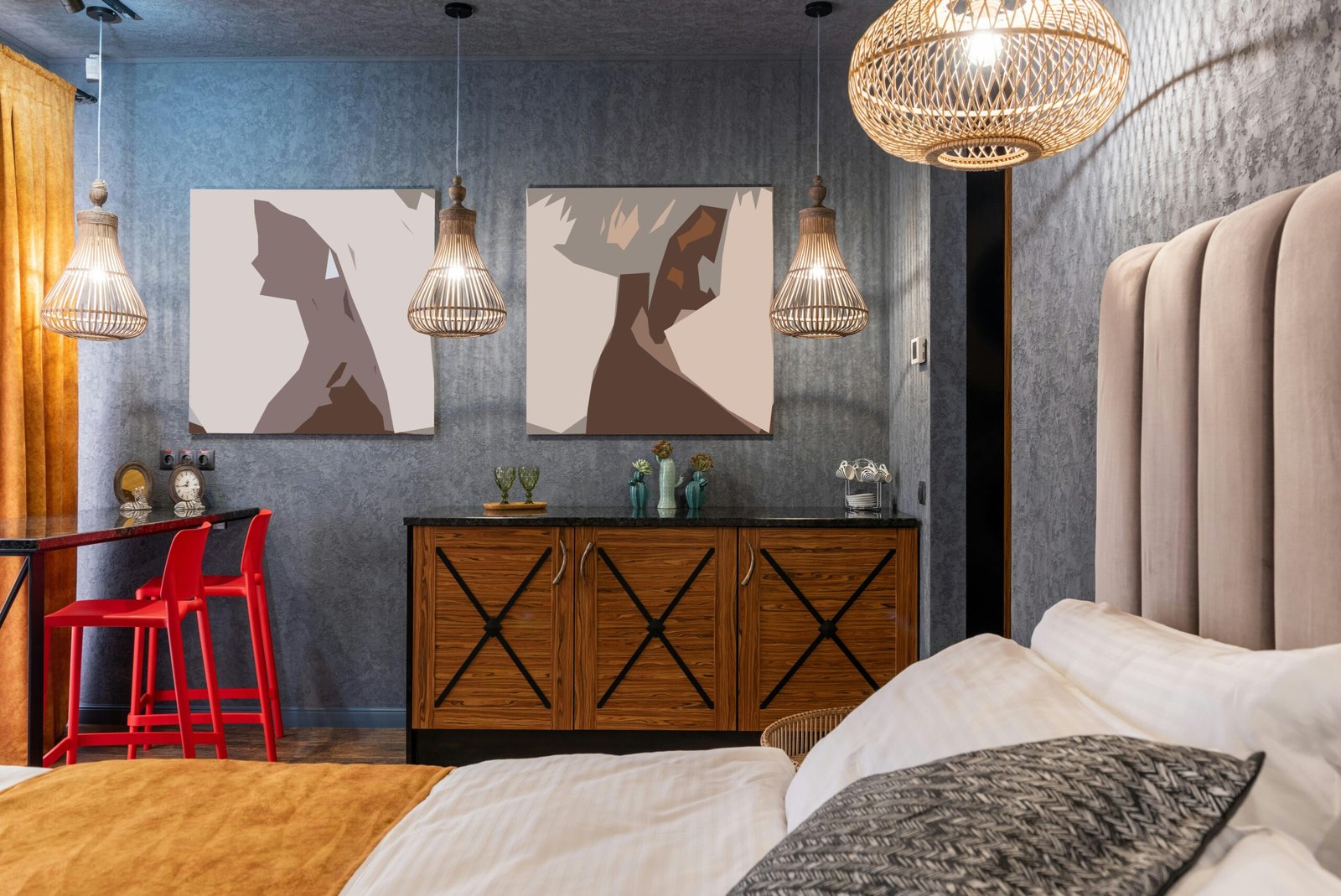
Decorating can be exciting in theory and exhausting in practice. You start with a clear idea—“I want my home to look nicer”—and suddenly you’re drowning in decisions: paint colors, sofa styles, rug sizes, lighting choices, storage, wall art, plants, curtains, hardware, textures… and that’s before you even consider budget and time.
If you’ve ever felt stuck between “I don’t know where to start” and “I keep buying things but the room still isn’t done,” this article is for you. The goal here isn’t to make decorating perfect. It’s to make it simple, cohesive, and doable, so you can build a home you love without constant stress.
You’ll learn a clear decorating system you can repeat in every room—one that prevents random shopping, reduces regret, and helps your space feel polished step by step.
Why decorating feels overwhelming (and how to fix that)
Decorating becomes overwhelming when:
- you try to make too many decisions at once,
- you shop without a plan,
- you don’t have a clear palette or style direction,
- you compare your home to staged photos,
- and you expect “done” to happen quickly.
The fix is to work in layers—starting with big foundations and moving toward smaller details. Designers don’t decorate by buying 30 accessories first. They build the room in a smart order.
The simple truth: cohesion comes from repetition
A cohesive home doesn’t need expensive items. It needs repeated signals:
- repeated colors,
- repeated materials,
- repeated shapes,
- and repeated “style logic.”
Once you choose your signals, decorating becomes easier because you stop guessing. You just check: does this item repeat the signals?
Step 1: Choose your “home direction” with 3 words
Before you buy anything else, choose 3 words that describe how you want your home to feel.
Examples:
- calm, warm, natural
- clean, modern, cozy
- bright, airy, minimal
- classic, comfortable, timeless
- bold, creative, layered
These words help you say no to things that don’t fit. If your words are “calm, warm, natural,” a neon sign and glossy chrome furniture probably won’t be the best match. If your words are “modern, clean, structured,” too many rustic distressed pieces may feel off.
Write your 3 words in your notes app. You’ll use them constantly.
Step 2: Pick a “style recipe” instead of a strict style label
Most real homes are blends. Trying to force yourself into one style label can create stress because you’ll reject things you love—or buy things that don’t feel like you.
Instead, build a simple style recipe:
- Base style (the main structure): modern, Scandinavian, transitional, minimalist
- Accent style (the personality): boho, industrial, glam, vintage
- Signature material (the repeating element): warm wood, black metal, brass, natural fibers
Example recipes:
- Base: Scandinavian | Accent: boho | Signature: light wood + woven textures
- Base: modern | Accent: vintage | Signature: warm oak + black accents
- Base: transitional | Accent: contemporary | Signature: brass + soft neutrals
This recipe guides your choices without trapping you.
Step 3: Create a palette you can repeat everywhere
Many people feel overwhelmed because every shopping choice becomes a color decision. A good palette removes that burden.
A simple palette for most homes:
- 1 base neutral (walls + biggest pieces)
- 1 secondary color (textiles or one major feature)
- 1 accent color (small decor and art)
- 1 wood tone
- 1 metal finish
That’s your “palette kit.”
Example palette kits
- warm white + olive + black accents + light oak + matte black metal
- greige + navy + brass accents + walnut wood + brass finish
- soft gray + charcoal + warm tan accents + medium wood + black metal
You can still have variety in your home. But when this kit repeats, everything feels connected.
Step 4: Stop trying to do the whole room at once — work in layers
Overwhelm comes from trying to solve every detail simultaneously. Instead, decorate in five layers:
- Layout
- Large anchors
- Lighting
- Textiles
- Finishing touches
You’re not “behind” if you’re missing layer 5. Most rooms feel good once layers 1–4 are right.
Layer 1: Layout (the foundation of calm)
Before buying decor, make sure the room flows.
Ask:
- Is there a clear walking path?
- Is the furniture placement functional?
- Does the seating support how we use the room?
- Is the focal point clear (TV, fireplace, window, or conversation)?
A room can’t feel cohesive if the layout is awkward.
Quick layout habit that reduces overwhelm
Remove anything that blocks flow. In small spaces, one extra chair or table can cause constant stress because the room feels tight.
Layer 2: Large anchors (buy these before accessories)
Large anchors define the room:
- sofa or bed
- rug
- dining table
- main storage piece (console, dresser, cabinet)
- curtains (often a major visual element)
If you buy random decor before anchors, you’ll constantly change your mind because the foundation isn’t set.
The “anchor test”
Before buying a big piece, ask:
- Does it match my 3 words?
- Does it fit my palette kit?
- Does it fit the room size and layout?
If yes, it’s a confident purchase.
Layer 3: Lighting (the fastest way to make a room feel finished)
Bad lighting makes good decor look worse. Good lighting makes average decor look better.
A simple lighting plan for most rooms:
- 1 floor lamp or strong light source near seating
- 1 table lamp (or wall sconce) for warmth and layering
- optional: small accent light for atmosphere
If your room feels “not done,” lighting is often the missing layer.
Layer 4: Textiles (where coziness and polish come from)
Textiles make a room feel soft and cohesive:
- curtains
- rugs
- pillows
- throws
- bedding
Textiles are also the easiest way to add color without commitment.
A simple textile formula for living rooms
- one rug (large enough)
- 4 pillows in two sizes, within your palette
- one throw blanket with texture
- curtains that support your base neutral
In bedrooms:
- bedding within your palette kit
- one textured throw
- curtains that match the room mood
Layer 5: Finishing touches (only after the room works)
This is where people often start first—and that’s why they feel overwhelmed.
Finishing touches include:
- wall art
- decor objects
- vases, candles, trays
- plants
- styling shelves
These pieces matter, but they should support the foundation, not replace it.
The “one decision at a time” method (how to avoid spiraling)
When you’re overwhelmed, it helps to reduce your choices intentionally.
Use this approach:
- Decide the room’s purpose
- Choose the layout
- Choose the palette kit
- Buy or arrange one anchor item
- Pause and reassess before buying more
This prevents you from decorating like a shopping spree and helps you build the room in a controlled way.
How to shop without regret: 7 rules that make decorating simpler
Rule 1: Don’t buy anything without knowing where it will live
If you can’t picture the item’s exact spot, wait.
Rule 2: One room at a time beats buying for the whole home
Focus on the room you use most. When one space feels finished, you gain clarity and confidence for the next.
Rule 3: Stick to your palette kit during shopping
If it doesn’t fit the kit, it’s not the item—no matter how cute it is.
Rule 4: Avoid impulse decor that has no function
Decor should either:
- add beauty,
- add function,
- or support the mood.
If it does none of these, it becomes clutter.
Rule 5: Choose fewer items with stronger impact
One large art piece beats five tiny random objects. One good lamp beats three weak ones.
Rule 6: Repeat materials to make the room feel “designed”
If you have black metal in your lamp, repeat it in a frame. If your wood tone is light oak, repeat it in a tray or shelf.
Rule 7: Give yourself permission to evolve slowly
A home looks best when it’s built over time. Rushing leads to regret.
Use “anchors” to guide every small decision
Once the anchors are in place, small decisions become easier.
Example: if your living room has:
- a warm neutral sofa,
- a rug with hints of olive,
- black metal accents…
Then every pillow, frame, and decor piece should either:
- repeat those colors,
- repeat those textures,
- or add a controlled accent.
This is how you get a cohesive look without being strict.
Declutter before you decorate (because clutter creates overwhelm)
It’s difficult to style a room that is visually crowded.
A practical decluttering approach:
- Clear surfaces first (coffee table, counters, dresser tops)
- Create “homes” for daily items (trays, baskets, drawers)
- Use closed storage for the not-pretty essentials (cables, paperwork)
- Keep only a few decor objects visible at a time
Often, the room looks better just by removing 30% of what’s out.
The “finished room” checklist (so you know when to stop)
A room doesn’t need endless accessories to be finished. It needs:
- a functional layout
- comfortable seating or sleeping arrangement
- layered lighting
- a rug (if needed) that anchors the space
- a cohesive palette
- some texture (textiles)
- one focal point (art, mirror, styled console, or statement light)
If you have those, you can stop. Anything else is optional.
What to do when you feel stuck
If you’re overwhelmed right now, try this simple reset:
- Choose one room to focus on
- Write your 3 vibe words
- Write your palette kit (base neutral, secondary, accent, wood, metal)
- Fix the layout (remove anything blocking flow)
- Add one lighting upgrade (lamp)
- Add one textile upgrade (bigger rug or better curtains)
- Style one surface with a tray + 3 items
That’s enough to create a noticeable improvement without spiraling.
Decorating should support your life, not stress you out
The most beautiful homes aren’t the ones with the most stuff. They’re the ones with clear decisions: a consistent palette, a functional layout, layered lighting, and a few meaningful details. When you decorate in layers and repeat your “signals,” your home becomes easier to maintain and more enjoyable to live in.
If you want your home to feel cohesive and simple, don’t aim for perfection. Aim for clarity. Choose your direction, set your palette kit, build your room from big anchors to small details, and let your home evolve naturally.

Isabella Garcia is the creator of a blog dedicated to crafts and home care, focused on making everyday life more creative, organized, and enjoyable. The blog shares practical tips, easy DIY projects, home organization ideas, and simple solutions to take better care of your living space. Whether you’re a beginner in crafting or someone looking for inspiration to improve your home routine, Isabella’s blog offers clear, useful, and hands-on content to help you create a cozy, beautiful, and well-cared-for home.