
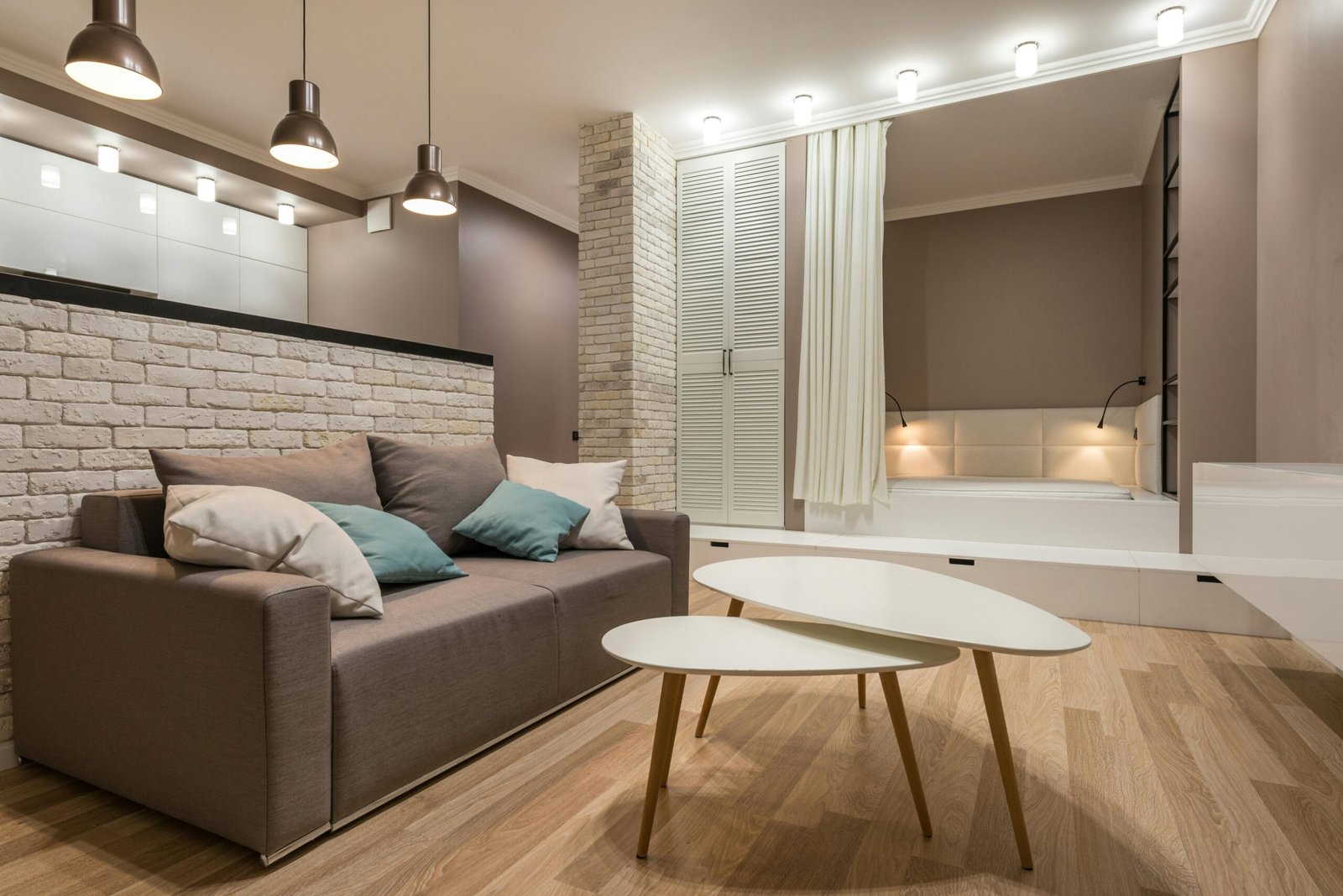
Most decorating “fails” aren’t about bad taste—they’re about a few predictable mistakes that almost everyone makes at some point. The good news is that these mistakes are fixable, often without buying anything new. In fact, the fastest improvements usually come from layout, scale, lighting, and editing what you already have.
This article will help you spot the most common decorating mistakes and show you exactly how to fix them. You’ll also learn a simple framework to make decisions with confidence, so your space feels cohesive, comfortable, and intentional.
Mistake 1: Buying Decor Before You Plan the Room
It’s easy to fall into “shopping mode.” You see a cute vase or a trendy lamp and think, “This will look great at home.” Then you get home and realize it doesn’t fit your style, your colors, or your space.
How to fix it
Start with a simple plan before buying anything:
- Decide the room’s purpose (relaxing, entertaining, working, etc.).
- Choose a color palette (base + secondary + accent).
- Measure the space (walls, windows, furniture zones).
- List what you already have that must stay.
- Identify what is missing (lighting, storage, seating, rug, art).
When you shop with a plan, your purchases start working together.
Mistake 2: Choosing a Rug That’s Too Small
A too-small rug is one of the quickest ways to make a room look unfinished. It creates the feeling that furniture is “floating” and can make the whole room look smaller than it is.
How to fix it
Use this simple rule: your rug should connect the seating area.
- Ideally, the front legs of your sofa and chairs should sit on the rug.
- If that’s not possible, at least make sure the rug is large enough to reach the front legs of the sofa.
Budget solution
If you can’t replace the rug yet:
- Layer a larger, affordable neutral rug underneath (like a flatwoven or natural-fiber style) and place your smaller rug on top.
- Pull furniture closer together so the rug feels more intentional within the seating zone.
Mistake 3: Pushing All Furniture Against the Walls
Many people line furniture up along the walls to “create space,” but it often has the opposite effect. The room can end up feeling awkward, empty in the center, and less inviting.
How to fix it
Try “floating” your furniture slightly:
- Pull the sofa forward a few inches.
- Add a console table behind it (if space allows).
- Create a clear conversation zone.
Even a small change in spacing can make the room feel more designed and cozy.
Mistake 4: Not Considering Scale and Proportion
Scale issues can make a room feel off even if every item is beautiful. Common examples:
- A tiny coffee table in front of a large sectional
- A small piece of art above a big sofa
- Very skinny curtains on a wide window
- A lamp that’s too short for the side table
How to fix it
Use “visual weight” rules:
- Over a sofa: artwork should be about two-thirds the sofa width (or use a gallery arrangement that fills that area).
- Curtains should look full, not stretched.
- Coffee tables should be proportional: not too tiny, not too bulky.
If something looks “cute but lost,” it’s usually too small.
Mistake 5: Using Only the Overhead Light
One ceiling light creates flat, harsh lighting. It can make a room look colder and less flattering—even with great furniture.
How to fix it
Layer your lighting:
- Ambient: overall light (ceiling fixture or a strong floor lamp)
- Task: focused light (reading lamp, desk lamp)
- Accent: mood light (small lamp on a console, subtle wall light effect)
A basic upgrade: add one floor lamp and one table lamp. Suddenly the room feels warmer and more expensive.
Mistake 6: Too Many Small Decor Items
A lot of small decor can look cluttered, even when the items are nice. This often happens when you keep adding things, hoping the room will feel “finished.”
How to fix it
Swap “many small things” for “a few larger things.”
- One large vase instead of five tiny ones
- One big art piece instead of several small random frames
- One statement plant instead of multiple tiny plants scattered everywhere
Design usually looks better when it has breathing room.
Mistake 7: Ignoring Negative Space
Negative space is the empty space around objects—walls, corners, tabletop areas. It’s not “wasted” space. It’s what makes your decor stand out.
How to fix it
Try this practical styling rule:
- Leave at least one-third of a surface empty.
- Let walls have calm areas too—every wall doesn’t need something.
A room looks expensive when it isn’t trying too hard.
Mistake 8: No Clear Color Palette
When a room has too many unrelated colors, it can feel chaotic, even if each item looks great on its own.
How to fix it
Pick a simple palette and repeat it:
- Base: neutral walls + large pieces
- Secondary: rug, curtains, a major furniture color
- Accent: 1–2 colors used in small ways (pillows, art, decor)
Repetition creates cohesion. It makes mixed budget items look like a curated collection.
Mistake 9: Matching Everything Too Perfectly
The opposite problem is when everything is too matched. A room can feel “showroom” instead of personal, or simply flat.
How to fix it
Aim for coordinated, not identical.
Mix:
- textures (linen, velvet, wood, ceramic)
- finishes (matte + shiny, but within the same “family”)
- shapes (round + square, tall + low)
A room looks more stylish when it has contrast.
Mistake 10: Hanging Curtains the Wrong Way
Curtains can instantly elevate a room—but only if they’re installed correctly. Curtains hung too low, too short, or too thin often make the space feel smaller.
How to fix it
Use the “high and wide” method:
- Hang the rod close to the ceiling (or at least above the window frame).
- Extend it wider than the window, so curtains frame the view.
- Let curtains reach near the floor for a finished look.
- Use enough fabric so they look full, not tight.
This one change can make your room feel taller and more luxurious.
Mistake 11: Art That’s Too Small or Too High
Art placement can quietly ruin a room’s proportions. If it’s too small, it feels awkward. If it’s too high, it disconnects from the furniture.
How to fix it
A simple guideline:
- The center of the artwork should be around eye level.
- Over furniture, art should feel connected to the piece beneath it.
If you have one small print above a big sofa, it often looks better to either:
- choose one large piece, or
- create a gallery wall that fills the space.
Mistake 12: Forgetting About Texture
If everything is smooth and flat, a room can feel sterile. Texture adds depth and warmth—especially in neutral spaces.
How to fix it
Add layers of texture:
- a woven basket
- a knit throw
- textured pillows (linen, boucle, woven fabrics)
- a ceramic vase
- a wood tray or cutting board style accent
Texture is an affordable way to make a room feel expensive.
Mistake 13: Too Much Furniture (Or the Wrong Furniture)
Sometimes a room feels cramped because there are too many pieces or because the pieces don’t fit the space.
How to fix it
Try the “remove one thing” test:
- Remove one chair, one side table, or one shelf item and see if the room feels better.
- If it does, you found your problem.
Also, consider furniture scale:
- In small rooms, use furniture with exposed legs (it feels lighter).
- Choose multi-functional pieces (ottoman with storage, slim console tables, nesting tables).
Mistake 14: Not Creating Zones
A room without zones can feel confusing. This is especially common in open-concept spaces.
How to fix it
Define zones using:
- rugs (seating zone, dining zone)
- lighting (lamp for reading corner)
- furniture placement (sofa as a divider)
- art (to anchor a wall)
Zones help the room feel organized and intentional.
Mistake 15: Decorating Without a Focal Point
A focal point is what your eye naturally lands on when you enter. Without one, the room can feel scattered.
How to fix it
Choose one focal point:
- a fireplace
- a large window
- a TV wall (yes, it can be)
- a large art piece
- a statement shelf or console
Then support it:
- balance both sides with lamps or decor
- keep surrounding colors calmer
- avoid competing statement items
Mistake 16: Too Many Competing Patterns
Patterns add personality, but if they clash, the room looks busy.
How to fix it
Use a pattern strategy:
- Choose one dominant pattern (rug or curtains).
- Add 1–2 smaller patterns that share a color with the dominant pattern.
- Mix pattern scales: one large pattern + one small pattern looks more balanced.
If the patterns feel overwhelming, add more solid neutrals to calm the space.
Mistake 17: Buying Trendy Items That Don’t Fit Your Life
Trends can be fun, but your home should support how you live. If something is beautiful but impractical, it may become annoying quickly.
How to fix it
Ask these questions before buying:
- Will I enjoy this in 6 months?
- Is it easy to clean?
- Does it solve a problem or create one?
- Does it fit my palette and style direction?
Timeless doesn’t mean boring. It means you won’t regret it.
Mistake 18: Skipping the Finishing Details
Sometimes the room is “almost there,” but it doesn’t feel complete. That usually means finishing details are missing.
How to fix it
Focus on these details:
- consistent metal finishes (choose 1–2)
- cord management (small clips can help a lot)
- pillow inserts that look full (a flatter pillow looks cheap)
- a cohesive scent (candle or diffuser)
- a few personal touches (photo, travel item, meaningful object)
A room feels finished when it feels cared for.
A Simple “Fix Any Room” Method You Can Use Today
If you’re overwhelmed, use this order:
- Edit: declutter and remove what doesn’t belong.
- Layout: move furniture for better flow.
- Anchor: choose a focal point and a rug zone.
- Light: add two lamps and warm bulbs.
- Balance: add height variety (tall plant + table lamp + low decor).
- Color + Texture: repeat your palette and add texture layers.
- Finish: art, curtains, small styling.
This order prevents wasted purchases and gives you visible results fast.
Quick Checks That Reveal What’s “Off”
When something doesn’t look right, ask:
- Is the rug too small?
- Is the lighting too harsh?
- Is there a focal point?
- Is the art too small or too high?
- Is the palette unclear?
- Is it cluttered with small items?
- Is furniture too big (or too small)?
Often, one issue is causing most of the discomfort.
Your Space, But Better
Decorating isn’t about perfection. It’s about making your space feel good to live in—comfortable, functional, and visually calm. When you fix the big-impact mistakes (rugs, layout, lighting, scale, and editing), the room starts to look “designed” almost immediately.
If you want the easiest next step, do this today: declutter surfaces, add one lamp, and move your seating closer together. Those three changes alone can make your living room feel warmer, more polished, and more like a home you actually want to spend time in.

Isabella Garcia is the creator of a blog dedicated to crafts and home care, focused on making everyday life more creative, organized, and enjoyable. The blog shares practical tips, easy DIY projects, home organization ideas, and simple solutions to take better care of your living space. Whether you’re a beginner in crafting or someone looking for inspiration to improve your home routine, Isabella’s blog offers clear, useful, and hands-on content to help you create a cozy, beautiful, and well-cared-for home.