
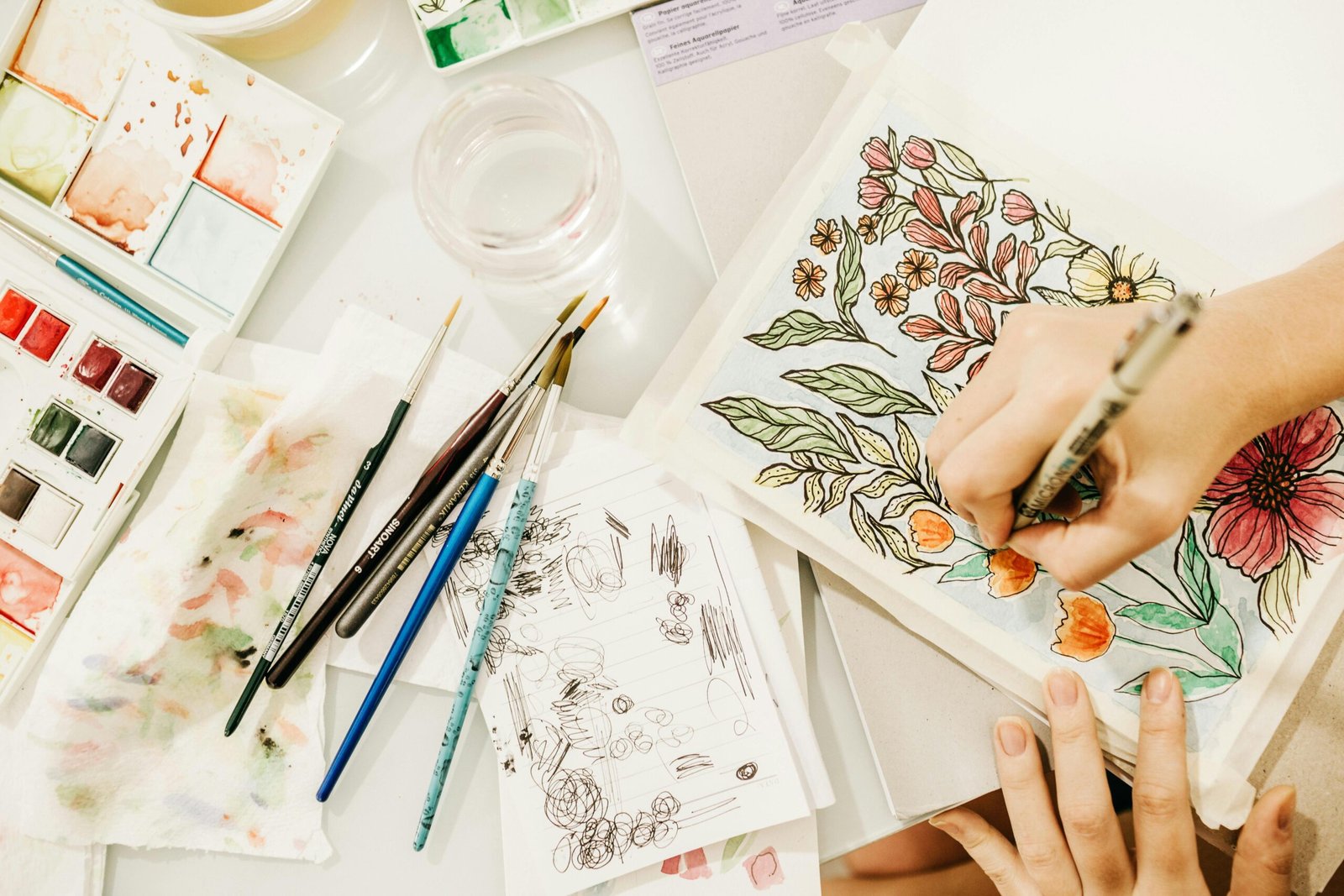
Why paper choice matters more than you think
In scrapbooking, paper isn’t just “background.” It sets the mood, supports your photos, and quietly determines whether your page feels calm, chaotic, elegant, playful, modern, or nostalgic. The right paper choices can make a beginner layout look polished. The wrong choices can make even great photos feel lost.
Paper also affects durability. If you care about keeping memories safe for years, you’ll want paper that won’t discolor, weaken, or damage photos over time.
This guide will help you choose paper with confidence—without needing a huge stash, expensive tools, or advanced design skills.
Start with the two main paper types
Before talking colors and patterns, it helps to understand the two main paper categories you’ll use most.
Cardstock: the foundation paper
Cardstock is thicker, sturdier, and usually solid-colored. It’s used for:
- page bases (the main sheet)
- photo mats (the layers behind photos)
- die-cuts, tags, labels, and journaling blocks
Cardstock is what makes a page feel stable and clean.
Patterned paper: the personality paper
Patterned paper includes prints like florals, stripes, dots, grids, maps, icons, and themed designs. It’s used for:
- panels, strips, banners, and borders
- background accents
- layering behind photos
- adding theme and visual interest
If cardstock is your “floor,” patterned paper is your “decor.”
Choose archival-friendly paper whenever possible
If you want your scrapbook to last, look for paper labeled:
- acid-free
- lignin-free
- archival or photo-safe
These labels reduce the risk of yellowing, brittleness, or chemical reactions that can affect photos over time.
You don’t need to obsess over it, but when you’re buying paper specifically for scrapbooking, choosing photo-safe options is a smart long-term move.
A simple rule for color that keeps layouts looking “right”
When you’re unsure what colors to use, follow this rule:
Pick 1 neutral + 2 supporting colors + 1 tiny accent (optional).
Here’s how that looks in real life:
- Neutral: white, cream, kraft, gray, black
- Supporting colors: pulled from your photo (like ocean blue + sandy beige)
- Accent: a small pop color (like coral or mustard) used sparingly
This formula prevents “rainbow chaos” and makes your page feel intentional.
How to pull colors directly from your photos
Photos already contain a color palette. The easiest way to choose paper is to “borrow” from what’s already in the picture.
Step-by-step color pulling
- Look at your photo and identify the dominant color (the one you notice first).
- Identify the secondary color (clothing, background, scenery).
- Identify a neutral already present (white wall, denim, skin tones, pavement, sand, etc.).
- Choose paper that matches those tones, not necessarily exact shades.
Example palettes
- Beach photo: cream + light blue + navy + tiny coral
- Autumn walk: kraft + rust + olive + tiny gold
- Birthday party: white + pink + teal + tiny yellow
- City travel: gray + black + brick red + tiny blue
Matching the photo’s mood is usually more important than matching exact shades.
Warm colors vs cool colors: when each works best
Color temperature affects the emotional feel of your page.
Warm palettes (cozy, cheerful, nostalgic)
Warm colors include reds, oranges, yellows, warm browns, and warm pinks.
Use warm palettes for:
- family moments
- holidays
- cozy indoor photos
- celebrations
- fall-themed pages
Cool palettes (calm, modern, clean)
Cool colors include blues, greens, purples, and cool grays.
Use cool palettes for:
- travel landscapes
- winter pages
- modern, clean layouts
- ocean/sky photos
- minimalist styles
If your photo already feels warm (sunset lighting, warm skin tones), warm paper usually enhances it. If your photo is bright and crisp, cool paper often looks cleaner.
How to choose patterned paper without overwhelming your page
Patterned paper is fun—but it can overpower photos fast. The trick is using it strategically.
The “pattern scale” concept
Patterns come in different “sizes”:
- Large-scale: big florals, bold graphics, big icons
- Medium-scale: repeated shapes, moderate designs
- Small-scale: tiny dots, thin stripes, subtle textures
A balanced page usually includes:
- one medium or large pattern (as a feature)
- one small pattern or subtle texture (as support)
- one solid cardstock (as breathing room)
If you use two large-scale patterns together, the page often feels busy unless they are extremely similar in color and style.
The easiest pattern combinations that always work
When you’re not sure what to pair, these combos are reliable.
Stripes + florals
Stripes add structure. Florals add softness. Together they look intentional.
Dots + solid + one statement pattern
Dots act like a “neutral pattern” and don’t fight with photos.
Grid + anything
Grids feel modern and calm. They pair well with icons, travel prints, and journaling-heavy pages.
Tone-on-tone patterns
Patterns in the same color family (like beige-on-cream) add interest without chaos.
One themed paper + one basic paper
Example: a travel map paper + a simple stripe. The theme shows clearly, but the page stays readable.
How to use patterned paper like a designer
You don’t need to cover the whole background with patterns. In fact, many layouts look better when patterns are “contained.”
Try these placement styles
- Panel style: one rectangle of patterned paper behind the photo cluster
- Band style: a horizontal strip across the page
- Corner style: a patterned paper block in one corner
- Frame style: thin strips around the edges
- Layer style: small patterned pieces stacked behind photos
This keeps patterns under control and makes your photos the star.
Understanding cardstock weight and finish
Not all cardstock is equal. Two cardstock sheets can look similar but behave very differently.
Weight (thickness)
Heavier cardstock is better for:
- base pages
- mixed media or heavier embellishments
- layouts with lots of layering
Lighter cardstock is fine for:
- mats
- die-cuts
- journaling blocks
Finish (texture)
- Smooth: best for stamping and clean writing
- Textured: adds dimension and feels “cozy,” but writing can be harder
- Vellum-like/translucent (specialty): great for layering, but needs careful adhesive hiding
If you journal a lot, smooth cardstock will be your best friend.
Photo mats: the secret to making photos pop
A photo mat is the paper layer behind your photo. It creates contrast and “frames” the picture.
Matting rules that look great
- Use a mat color that contrasts the photo (light photo + darker mat, dark photo + lighter mat).
- Keep mats consistent across the page (same color family).
- Use 1–3 mat layers maximum as a beginner.
A reliable mat formula
- Thin white mat (clean border)
- Patterned mat (adds theme)
- Solid mat (ties into palette)
Even simple matting makes a layout look more intentional.
Choosing paper for common scrapbooking themes
Sometimes the easiest way to choose paper is to start with the theme and work backward.
Travel pages
Great patterns: maps, grids, stripes, tickets, tiny icons.
Best colors: neutrals + one bold accent pulled from scenery.
Birthday pages
Great patterns: confetti dots, stars, stripes, party icons.
Best colors: two bright supports + lots of neutral breathing space.
Baby and family pages
Great patterns: soft florals, gingham, subtle textures, tiny hearts.
Best colors: warm neutrals, gentle pastels, muted tones.
Holiday pages
Great patterns: seasonal icons used sparingly.
Best colors: classic palette + neutral base (avoid using 5 holiday papers at once).
Everyday life pages
Great patterns: grids, dots, text prints, minimal icons.
Best colors: neutrals + one accent color so pages feel cohesive across an album.
Double-sided patterned paper: how to use it smartly
Double-sided paper is amazing because it gives you two coordinated designs. But beginners sometimes get stuck choosing a side.
A simple strategy
- Use the busier side in small amounts (layers, banners, tags).
- Use the calmer side as the main patterned panel.
This way you use both sides without overwhelming the page.
What to do when you love a paper but it doesn’t match your photo
This happens all the time. You find a gorgeous paper pad, but your photo colors clash. You don’t have to throw the idea away.
Fix options
- Use the paper as a tiny accent (small banner, thin strip).
- Mat the photo with neutrals to “buffer” the clash.
- Use black/white photos to reduce color conflict.
- Pull one small color from the paper and repeat it elsewhere (title sticker, enamel dot, journaling card).
Often, repeating one color from the “problem paper” across the page makes it feel like it belongs.
How to avoid the “busy background” problem
If your page looks messy, it’s usually not because you lack talent. It’s because too many elements have the same visual volume.
Common causes
- busy patterned paper as full background
- too many different patterns
- too many colors with similar intensity
- no neutral space to rest the eye
Quick fixes
- switch to a solid cardstock base
- reduce patterns to one main + one subtle
- add a white border around photos
- remove one patterned layer and replace with neutral
A little “quiet space” makes everything else look better.
Paper cutting ideas that instantly upgrade a layout
Sometimes it’s not about new paper—just new ways to cut it.
Easy cuts that look impressive
- Torn edge strip: adds texture and softness
- Scallop edge: playful for birthdays and baby pages
- Banner flags: quick and always cute
- Thin frames: use patterned paper as a photo frame
- Circle clusters: cut circles from scraps for repeating shape harmony
- Offset layering: stack rectangles slightly crooked for casual energy
These techniques use the paper you already own but make pages feel fresh.
How much paper do you really need?
Most beginners overbuy patterned paper and underbuy cardstock. Cardstock is what you’ll reach for constantly.
A practical ratio
For every 1 patterned paper pad, aim for:
- at least 20–40 sheets of cardstock (neutrals + a few colors)
Patterned paper is the spice. Cardstock is the meal.
Creating a cohesive album with paper choices
If your blog content later expands into “album-building,” this tip is gold: cohesion matters.
To make an album feel unified:
- use the same neutral base color across many pages (white or cream is easiest)
- repeat one “signature accent” color throughout an album
- limit yourself to 1–2 paper collections per album section
- use similar title styles (alphas, handwriting, or printed titles)
Cohesive albums look more professional and are easier to complete.
Budget-friendly paper strategies that still look premium
You don’t need expensive paper to make beautiful pages. You need consistent choices.
Smart budget moves
- buy paper pads with coordinated palettes
- use scraps deliberately (patchwork blocks, strip borders)
- choose neutrals that work with everything
- use “neutral patterns” (dots, grids) that match many themes
- save busy themed paper for accents instead of backgrounds
A beginner who uses fewer papers thoughtfully often gets better results than someone with a massive stash used randomly.
A quick paper-picking checklist before you glue anything
Before committing, do this fast check:
- Does the photo stand out clearly?
- Are there more than two “loud” patterns? (If yes, reduce.)
- Do you have at least one neutral space?
- Do the paper colors match the photo mood (warm/cool)?
- Can you repeat one accent color in 2–3 places?
If you can say yes to most of these, your paper choices will look cohesive.
Your next page will feel easier now
Choosing paper becomes simple when you rely on structure, not guesswork:
- pull colors from photos
- use 1 neutral + 2 supports + optional accent
- limit patterns (one main, one subtle)
- let cardstock create breathing room
- use mats to make photos pop
Once you practice this a few times, you’ll stop feeling stuck. Paper selection will go from “overwhelming” to “fun.”

Isabella Garcia is the creator of a blog dedicated to crafts and home care, focused on making everyday life more creative, organized, and enjoyable. The blog shares practical tips, easy DIY projects, home organization ideas, and simple solutions to take better care of your living space. Whether you’re a beginner in crafting or someone looking for inspiration to improve your home routine, Isabella’s blog offers clear, useful, and hands-on content to help you create a cozy, beautiful, and well-cared-for home.