
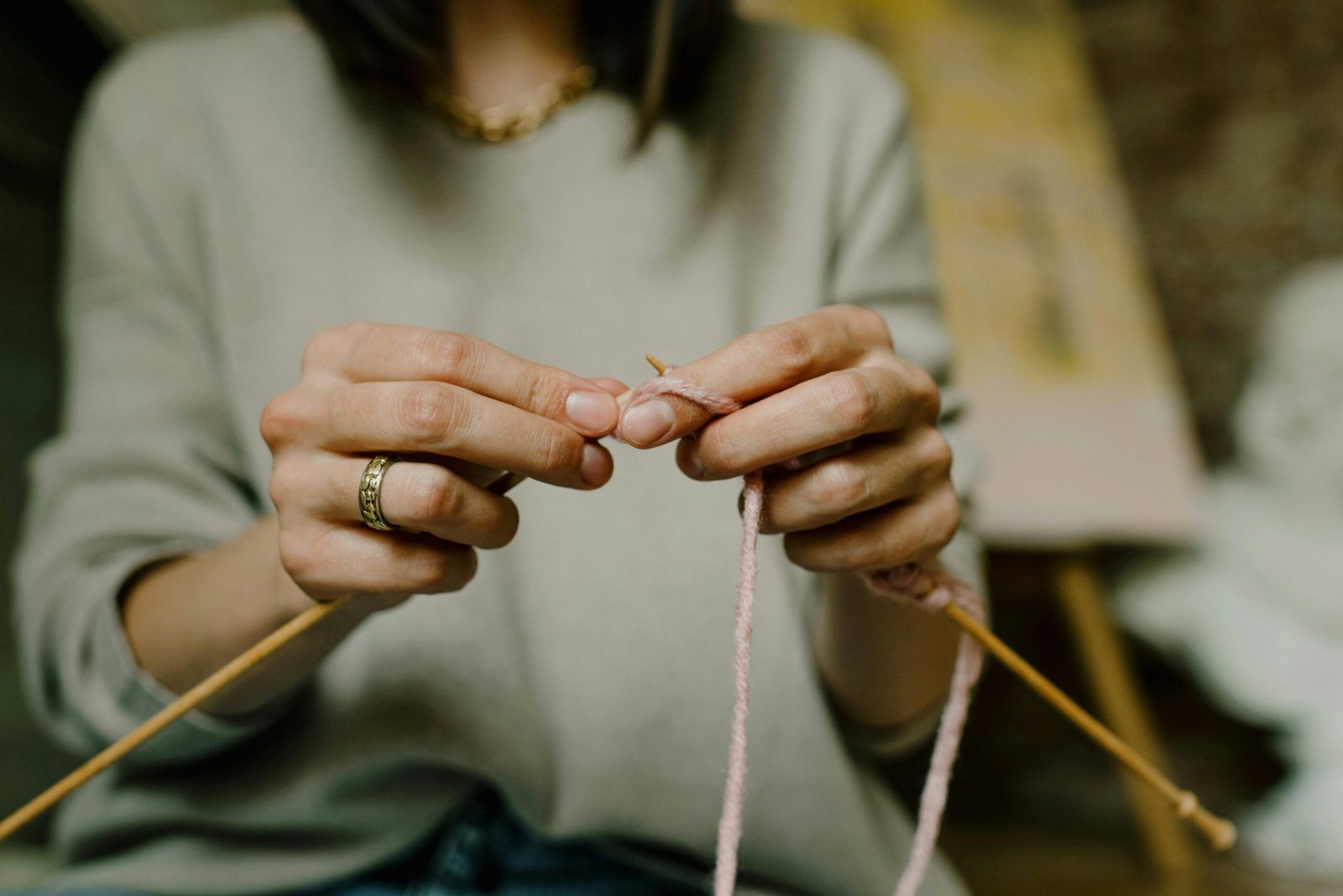
Choosing a crochet hook size sounds simple—until you’re standing in front of a wall of hooks labeled with millimeters, letters, numbers, and brand-specific quirks. Then you pick one, start a project, and suddenly your stitches are either so tight you can’t insert the hook… or so loose the fabric looks like a fishing net.
Here’s the truth: hook size isn’t about “the correct hook” as much as it’s about the hook that creates the fabric you want with the yarn you’re using and the way you naturally crochet. Once you understand a few key ideas—yarn weight, stitch definition, drape, tension, and gauge—you’ll be able to choose hook sizes confidently instead of guessing.
This guide will walk you through hook sizing in a practical, beginner-friendly way, including simple rules you can use right away, how to read yarn labels, how to adjust when something feels off, and how to get the look you want in real projects.
What Crochet Hook Size Actually Means
Crochet hooks are sized by the diameter of the hook shaft (the part that holds the loop). A larger diameter hook makes larger loops, which usually creates a looser fabric. A smaller diameter hook makes smaller loops, which usually creates a tighter fabric.
In general:
- Bigger hook = bigger stitches = looser fabric
- Smaller hook = smaller stitches = tighter fabric
But “bigger” and “smaller” don’t exist in a vacuum. The yarn matters. Your tension matters. The stitch pattern matters. And the final goal (coaster vs scarf vs bag) matters a lot.
Hook Size Systems: Millimeters vs Letters vs Numbers
This part confuses beginners because there are multiple systems.
Millimeter sizing (the most straightforward)
Most hooks have a size like 4.0 mm, 5.0 mm, 6.5 mm, etc. This is the simplest and most universal measurement: it’s the hook diameter in millimeters.
When possible, use millimeters as your main reference.
US letter/number sizing
In the US, hooks often use letters and numbers like:
- G/6, H/8, I/9, J/10, etc.
These correspond to approximate millimeter sizes, but the mapping can vary slightly by brand. That’s why the millimeter label is the safest.
UK sizing (less common now, but you might see it)
Some older patterns or UK sources reference different naming. If you’re following a pattern from a specific region, double-check the mm size so you’re not accidentally using the wrong hook.
Beginner takeaway: when in doubt, follow the mm size.
The Three Factors That Decide Your Hook Size
Most hook decisions come down to these three:
1) Yarn weight (thickness)
Thicker yarn generally needs a larger hook. Thinner yarn generally needs a smaller hook.
2) Desired fabric (dense vs drapey)
- Dense fabric (bags, coasters, amigurumi) often uses a smaller hook than the yarn label suggests.
- Drapey fabric (scarves, shawls) often uses a larger hook than the label suggests.
3) Your natural tension
Some people crochet tight. Others crochet loose.
- Tight crocheters often benefit from going up a hook size.
- Loose crocheters often benefit from going down a hook size.
You don’t need to “fix” your tension immediately. You can adjust hook size to work with your hands.
How to Read Yarn Labels to Choose a Hook
Most yarn labels provide a recommended hook size range. It might show an icon of a hook and say something like 5.0 mm or 5.0–5.5 mm.
That recommendation is a starting point, not a rule.
Use it as:
- A baseline for learning
- A quick match for general projects
- A first guess before swatching
But remember: the label’s hook suggestion is designed for an average tension and a general-purpose fabric. Your project may need something different.
Quick Beginner Rule: Start Here
If you’re brand new and using worsted weight (#4 / Medium) yarn, these are the most beginner-friendly hooks:
- 5.0 mm (H/8)
- 5.5 mm (I/9)
They create stitches that are big enough to see, making learning easier. If you can only pick one, 5.0 mm is a classic first hook.
Common Yarn Weights and Typical Hook Ranges
These are typical starting ranges (not strict laws), but they help you choose quickly:
Lace / very fine yarn
- Often around 1.5–2.5 mm
- Used for delicate lacework and very fine detail
Fingering / sock yarn
- Often around 2.25–3.5 mm
- Used for lightweight garments, socks, shawls
DK / light worsted (#3)
- Often around 3.5–4.5 mm
- Used for garments, lighter accessories
Worsted / medium (#4)
- Often around 4.5–5.5 mm
- One of the easiest for beginners
Bulky (#5)
- Often around 6.0–8.0 mm
- Warm accessories and fast projects
Super bulky (#6)
- Often around 8.0–12.0 mm
- Very fast projects, chunky blankets
Jumbo (#7)
- Often 12.0 mm and up
- Extreme chunk projects, special looks
Again: these are starting points. Patterns often specify the exact hook because the fabric outcome matters.
When to Follow the Pattern Hook Size (and When to Adjust)
Follow the pattern hook size when:
- You want the project to match the pattern’s sizing
- The pattern includes measurements (like a fitted hat)
- The project involves shaping or multiple pieces that must align
Adjust the hook size when:
- Your stitches are much tighter or looser than the pattern gauge
- Your fabric feels wrong (too stiff or too floppy)
- You’re using a different yarn than the pattern recommends
Important: patterns often assume you will adjust if needed to match gauge. Hook size is not a promise—it’s a suggestion.
Gauge: The Real Reason Hook Size Changes Everything
Gauge is how many stitches and rows fit into a specific measurement, like 4 inches (10 cm). If your gauge is different from the pattern, your final size will be different.
For example:
- If your stitches are smaller (tight gauge), your project becomes smaller.
- If your stitches are bigger (loose gauge), your project becomes bigger.
This matters most for:
- Clothing
- Wearables with fit (hats, gloves)
- Anything sized precisely
For a casual scarf or coaster, gauge is less critical, but it still affects drape and feel.
How to Know If Your Hook Is Too Small
A hook can be too small if:
- Your hands feel strained quickly
- Stitches are hard to insert into
- Fabric feels stiff or board-like (when you want softness)
- The project starts curling excessively due to tension
- You’re fighting the yarn instead of flowing
Common beginner sign: you can’t easily pull the hook through loops, and everything feels tight and frustrating.
If this happens, go up:
- From 5.0 mm to 5.5 mm
- Or from 5.5 mm to 6.0 mm
Even a 0.5 mm change can make a huge difference.
How to Know If Your Hook Is Too Large
A hook can be too large if:
- Your stitches look uneven and sloppy
- Fabric has large holes you didn’t want
- The project lacks structure (like a bag that flops)
- Your stitch definition is hard to see because loops are too open
- Edges feel unstable or wavy
If this happens, go down:
- From 5.5 mm to 5.0 mm
- Or from 5.0 mm to 4.5 mm
Again, small shifts matter.
Choosing Hook Size by Project Type
One of the easiest ways to choose a hook size is to think about what the finished item needs to do.
For amigurumi (stuffed toys)
Amigurumi needs dense fabric so stuffing doesn’t show through.
Typical approach:
- Use a hook smaller than the yarn label suggests (often 0.5–2.0 mm smaller)
Example idea:
- If yarn suggests 4.0 mm, you might use 2.5–3.5 mm depending on tension and yarn
The goal is tight, even stitches with minimal holes.
For coasters and dishcloths
These should be sturdy and hold shape. Cotton yarn is common.
Typical approach:
- Use the label recommendation or slightly smaller for firmness
If a dishcloth feels too floppy, size down slightly. If it’s too stiff and hard to work, size up slightly.
For scarves and shawls
You usually want drape, softness, and comfort.
Typical approach:
- Use the label recommendation or slightly larger for drape
If the scarf looks stiff, go up a hook size. If it looks too holey, go down a size.
For bags and baskets
These need structure and sturdiness.
Typical approach:
- Use a smaller hook for dense fabric and stability
If your bag stretches too much, a smaller hook can help tighten the fabric and improve structure.
For blankets
Blankets depend on the look you want:
- Cozy and squishy? Larger hook, more drape.
- Dense and warm? Smaller hook, tighter fabric.
- Lightweight and airy? Larger hook, more open stitches.
Blankets are also great for adjusting hook size based on your preference because exact sizing is often flexible.
Hook Size, Stitch Type, and “Why Does It Look Different?”
Different stitches produce different fabric density—even with the same hook and yarn.
- Single crochet tends to be dense.
- Double crochet tends to be more open and drapey.
- Lacy stitch patterns create holes on purpose.
- Textured stitches can tighten the fabric.
So if you use the same hook size for a single crochet project and a double crochet project, the double crochet will usually look more open.
That means:
- You might choose a slightly smaller hook for a double crochet project if you want less openness.
- Or a slightly larger hook for single crochet if you want more drape.
The “Swatch” Method: The Best Way to Choose the Right Hook
If you want the most reliable method, do a small swatch.
How to make a quick swatch
- Choose your yarn and a starting hook size (often the label suggestion).
- Crochet a square about 4–6 inches wide.
- Use the same stitch pattern as your intended project.
- Look and feel the fabric:
- Is it too stiff?
- Too holey?
- Too tight on your hands?
- Does it drape or stand up?
If needed:
- Too stiff/tight: go up 0.5 mm.
- Too loose/holey: go down 0.5 mm.
Swatching sounds “extra,” but it saves time in the long run because it prevents you from making half a scarf and hating it.
A Simple Hook Size Adjustment Cheat Sheet
Use this when something feels off:
If stitches are too tight:
- Increase hook size by 0.5 mm
- Loosen your grip slightly
- Make sure your hook is not pulling loops too small
If stitches are too loose:
- Decrease hook size by 0.5 mm
- Add a bit more control to yarn tension
- Focus on consistent loop size
If your project is larger than expected:
- Go down a hook size
- Or adjust tension tighter (but hook change is easier)
If your project is smaller than expected:
- Go up a hook size
- Or loosen tension slightly
Most beginners find it easier to adjust by hook size rather than forcing their hands to change tension quickly.
Why Hook Brands Can Feel Different (Even at the Same Size)
You might notice that two hooks labeled 5.0 mm don’t feel identical. That’s normal.
Differences can come from:
- Hook head shape (pointier vs rounder)
- Throat depth (how the hook holds yarn)
- Handle shape (ergonomic vs standard)
- Surface finish (slick vs grippy)
A hook that feels comfortable can make you crochet more smoothly, which also improves your tension.
If you find a hook you love, it’s okay to prefer that brand/style. Comfort matters.
Choosing Hook Size When You Don’t Have the Recommended One
Sometimes you have yarn and only one hook size. You can still crochet—just expect the fabric to change.
If your hook is bigger than recommended:
- Fabric becomes looser
- Project may be larger
- Stitches may show more holes
If your hook is smaller than recommended:
- Fabric becomes denser
- Project may be smaller
- It might feel harder to work
This isn’t always bad. For example:
- Smaller hook can be great for bags or amigurumi.
- Bigger hook can be great for lacy scarves or drapey wraps.
Just choose a project that suits your tools.
Hook Size and Hand Comfort
Beginners sometimes ignore comfort and push through pain. That’s not a good plan. Hook size can affect hand comfort more than you’d expect.
If crocheting makes your hands ache quickly, try:
- Going up a hook size (reduces resistance)
- Using an ergonomic handle
- Taking breaks and stretching fingers
- Keeping shoulders relaxed and elbows supported
A small change can turn crochet from stressful to relaxing.
Putting It All Together: How to Choose Your Hook in 60 Seconds
Here’s a simple “decision path” you can use anytime:
- What yarn weight are you using?
Start with the yarn label’s suggested hook size. - What are you making?
- Amigurumi/bag: go smaller for density
- Scarf/shawl: consider going larger for drape
- How do your stitches feel?
- Hard to insert/pull through: go up 0.5 mm
- Too holey/floppy: go down 0.5 mm
- Make a mini swatch if you’re unsure.
It’s the fastest way to confirm.
That’s it. No mystery.
Final Thoughts: Hook Size Is a Tool, Not a Test
Choosing a crochet hook size isn’t a “right vs wrong” situation. It’s a way to shape your fabric, match a pattern’s intended size, and make crochet comfortable in your hands.
Start with the label or the pattern, then adjust based on what you see and feel. If you remember only one thing, remember this: if it feels too tight, go up; if it looks too open, go down. With a bit of practice, you’ll be picking hook sizes confidently without second guessing.
Isabella Garcia is the creator of a blog dedicated to crafts and home care, focused on making everyday life more creative, organized, and enjoyable. The blog shares practical tips, easy DIY projects, home organization ideas, and simple solutions to take better care of your living space. Whether you’re a beginner in crafting or someone looking for inspiration to improve your home routine, Isabella’s blog offers clear, useful, and hands-on content to help you create a cozy, beautiful, and well-cared-for home.