
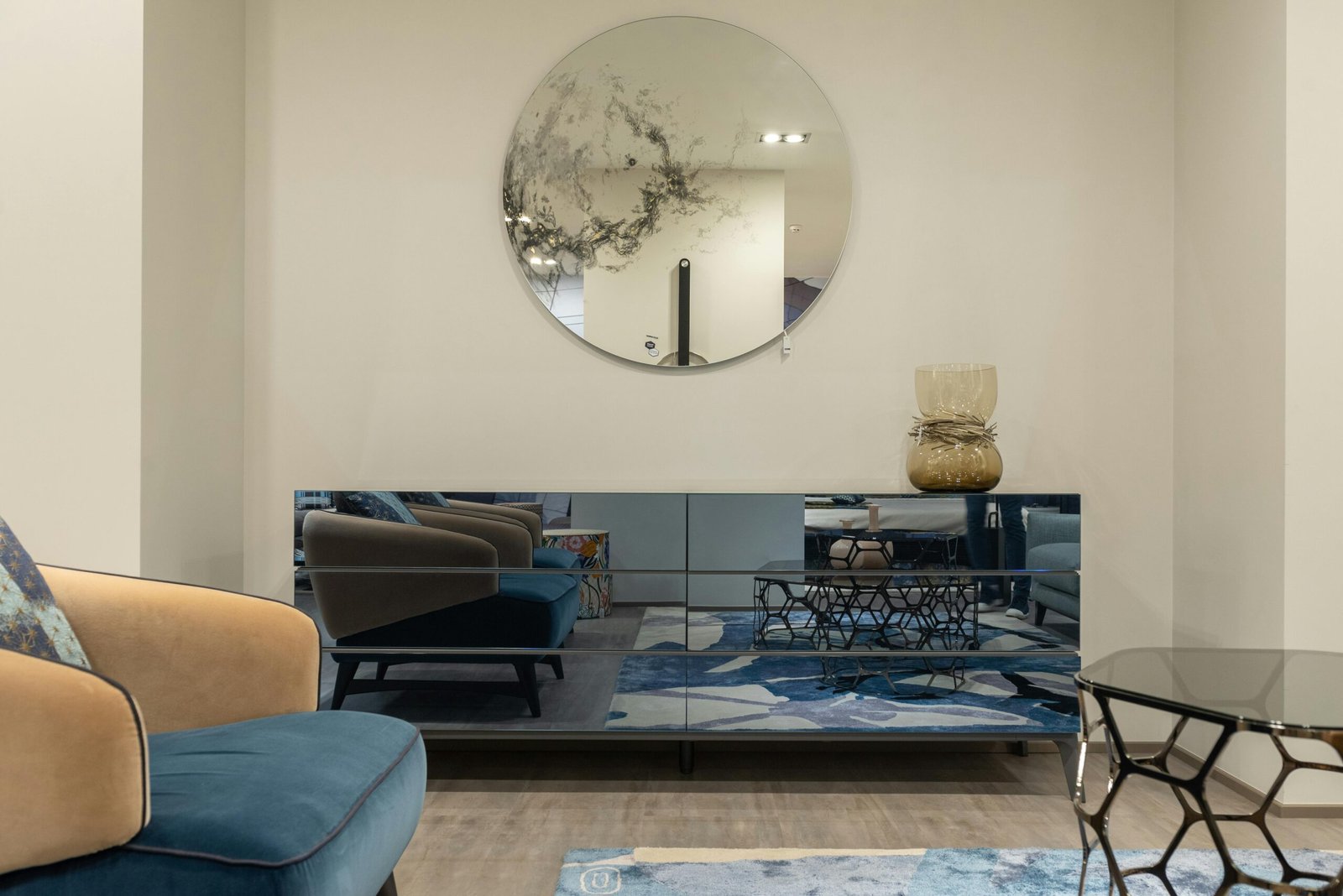
A room can have beautiful furniture and still feel “off.” Maybe it feels crowded even when it’s not full. Maybe it looks busy even when it’s clean. Maybe you keep adding decor because something feels unfinished—but each new item somehow makes it worse. Most of the time, the problem isn’t your taste. It’s the balance between furniture scale, visual weight, and how objects are arranged.
When designers combine furniture and decor successfully, the room feels intentional. It has breathing room. Your eye knows where to go. The space feels comfortable and elevated—without feeling like a catalog or a cluttered storage unit.
This guide will show you how to mix furniture and decorative objects in a way that looks cohesive and “light,” even if your space is small. You’ll learn the difference between physical size and visual weight, how to layer items without clutter, how to style surfaces with purpose, and how to create a room that looks finished without being overloaded.
The biggest misunderstanding: “Heavy” is often visual, not physical
A room can feel heavy even with small items if:
- everything is dark,
- everything is bulky,
- everything sits low and wide,
- there’s too much pattern,
- there’s no negative space,
- or objects are spread out randomly.
A room can feel light even with large furniture if:
- pieces have legs and open bases,
- colors are cohesive,
- lighting is layered,
- decor is edited,
- and the layout protects flow.
So instead of thinking “I need less stuff,” think:
I need better scale, better grouping, and better breathing room.
Step 1: Understand “visual weight” (the core concept)
Visual weight is how “heavy” something looks in a room—not how heavy it is in real life.
Things that add visual weight:
- dark colors
- bulky shapes
- thick arms on sofas
- furniture that sits directly on the floor (no legs)
- large, high-contrast patterns
- shiny clutter (lots of small reflective objects)
- too many items with strong outlines
Things that reduce visual weight:
- lighter tones (not only white—soft neutrals help)
- furniture with legs (you see floor underneath)
- open shelving used lightly
- glass or thin-profile pieces
- simple shapes
- fewer items, grouped intentionally
Once you notice visual weight, you’ll start seeing why some rooms look airy and others feel stuffed.
Step 2: Get the “big pieces” right before adding decor
Most rooms feel heavy because the furniture layout and scale aren’t working. Decor can’t fix that. It can only highlight it.
Before you style shelves or buy pillows, check these furniture basics:
Furniture checklist for a lighter room
- Is there at least one clear walking path?
- Does the sofa overpower the room?
- Are there too many seating pieces for the space?
- Are side tables and coffee tables proportional?
- Is the TV console too deep or too tall?
- Are all pieces the same “blocky” shape?
If your room feels heavy, the fastest improvement is often removing one unnecessary piece or swapping one bulky piece for a visually lighter one.
“One anchor per zone”
In most living rooms, the anchor is the sofa. In dining rooms, it’s the table. In bedrooms, it’s the bed.
If you have too many anchors competing—giant sofa, giant cabinet, giant bookshelf, giant oversized chair—the room feels crowded even if the square footage is decent.
Step 3: Use the “high-low” principle to create balance
Rooms feel heavy when everything sits at the same height. Designers create a rhythm of heights so the room feels dynamic.
Try to include:
- something low (sofa, coffee table)
- something medium (console, chair, side table)
- something tall (floor lamp, tall plant, tall bookshelf)
This height variety creates movement and prevents the “flat and dense” look.
Easy ways to add height without clutter
- a tall floor lamp next to seating
- curtains hung higher
- a tall plant in an empty corner
- a vertical art piece or stacked frames
- a tall, slim shelving unit (styled lightly)
Step 4: Limit the number of strong statements in one room
A room feels heavy when there are too many “look at me” items.
Examples of statement items:
- bold patterned rug
- bright sofa color
- dramatic curtains
- large gallery wall with many colors
- chunky sculptural coffee table
- oversized decorative vase
You can absolutely have statement pieces—but not all at once. A helpful rule is:
The “one loud, two quiet” rule
Pick:
- 1 main statement
- 2 supporting statements that are quieter
- everything else stays calm
Example:
- Main: patterned rug
- Supporting: interesting lamp + large art
- Calm: neutral sofa, simple curtains, minimal clutter
This creates a room that feels styled, not stuffed.
Step 5: Group decor objects instead of spreading them around
One reason rooms feel heavy is because decor is “peppered” across every surface. The eye doesn’t get a place to rest.
Designers group objects so they read as one intentional moment.
The easiest grouping method: the “rule of three”
Choose 3 objects with:
- different heights,
- similar palette,
- and varied texture.
Then place them together on a tray, bookshelf section, or console.
Examples:
- candle + small vase + book stack
- plant + framed photo + ceramic bowl
- sculptural object + coaster set + small dish
Grouping creates order. Order creates lightness.
Step 6: Use trays and containers to make surfaces feel calm
A coffee table can look messy with five small items scattered. The same five items can look “designer” if they’re contained.
Use:
- trays
- shallow bowls
- decorative boxes
- baskets (for shelves or under consoles)
This turns “stuff” into a styled set. It also makes cleaning easier because you can move a tray in one motion.
Step 7: Master the balance of open vs. closed storage
Open shelves are beautiful, but too much open storage can make a room feel visually busy—especially in small spaces.
Best balance for most homes
- Mostly closed storage for practical items (cables, paperwork, daily clutter)
- Some open storage for display (books, a few objects, a plant)
If your room feels heavy, you likely need more closed storage, or you need to edit what’s on display.
Shelf styling principle: leave empty space
Empty space is not wasted space. It’s what makes shelves feel intentional.
A simple way:
- never fill more than about two-thirds of a shelf
- leave at least one “breathing zone” per shelf section
Step 8: Repeat materials and finishes to create cohesion
A room looks heavy when everything is different:
- different wood tones
- random metals
- unrelated patterns
- decor in every color
Cohesion makes things feel lighter because the eye stops “processing” chaos.
Pick:
- one main wood tone (light oak, walnut, etc.)
- one metal finish (black, brass, nickel)
- one palette direction (warm or cool)
Then repeat those signals:
- black metal lamp + black frame
- wood side table + wood picture frame
- brass mirror + brass hardware
Repetition is a “professional” look—even when the items are budget-friendly.
Step 9: Use texture to add depth without adding clutter
Sometimes people add more decor because the room feels flat. But adding more objects isn’t always the solution. Adding texture often is.
Textures that add richness:
- linen curtains
- wool or textured rugs
- velvet or bouclé pillows
- knit throw blankets
- woven baskets
- matte ceramics
Texture adds warmth and interest with fewer items. It’s one of the best ways to make a room feel “finished” without feeling heavy.
Step 10: Keep patterns controlled
Patterns are beautiful, but too many patterns can create visual overload.
A safe pattern plan:
- one main pattern (rug OR curtains OR a statement chair)
- one smaller pattern (pillows)
- everything else mostly solid with texture
Also: try to keep patterns within the same palette. If the rug is warm neutrals with hints of navy, let the pillows echo those tones instead of introducing brand-new colors.
Step 11: Style the coffee table like a designer (simple formula)
Coffee tables are a common “heavy” zone because people pile everything there.
A clean, stylish coffee table usually has:
- one tray (containment)
- one vertical element (small vase or plant)
- one horizontal element (book stack)
- one functional element (coasters, small dish)
That’s it. If you add more, the table starts looking cluttered.
If you need the coffee table for real life (snacks, homework, games), keep the decor minimal and easy to move. Function comes first.
Step 12: Make sure every seat has a landing spot (without adding bulk)
Rooms feel messy when people don’t have a place to set a drink, phone, or book. But adding huge side tables can make the room heavy.
Solutions:
- slim side tables
- nesting tables
- C-tables that slide under a sofa
- small stools that double as side tables
- wall shelves near seating in tight rooms
The goal: enough surfaces to support life, but not so many that furniture dominates the room.
Step 13: Use art and wall decor to “lift” the room
When all the visual weight sits low (sofa, tables, rugs) and the walls are empty, the room can feel grounded in a heavy way.
Art helps by:
- drawing the eye upward,
- balancing the furniture,
- and adding personality without adding floor clutter.
Avoid tiny art that gets lost
A small frame on a big wall feels like a mistake. Either go bigger or group pieces into a cohesive set so the overall shape has impact.
Step 14: Use lighting to make the room feel softer and lighter
Harsh lighting can make rooms feel heavier because it creates sharp shadows and highlights clutter.
A lighter-feeling room usually has layered lighting:
- one floor lamp
- one table lamp
- optional accent light (small lamp, sconce, shelf light)
Warm, soft lighting makes furniture and decor blend more smoothly and creates depth, which feels more spacious.
Step 15: Edit decor by “impact,” not by guilt
People often keep too many decorative objects because:
- they were gifts,
- they were expensive,
- or they “might be useful someday.”
But if your goal is a lighter, calmer space, you need to choose objects that have strong impact and fit your palette.
Try this editing method:
- Gather all small decor into one place.
- Choose only the items that match your palette and style.
- Keep a smaller selection out.
- Store the rest and rotate seasonally.
Rotation keeps your home feeling fresh without permanent clutter.
Real-life examples of “heavy” vs. “balanced” combinations
Example 1: The heavy living room
- dark sofa with bulky arms
- dark rug with high contrast
- heavy curtains with strong pattern
- multiple small decor pieces everywhere
Fix:
- keep the sofa, but lighten the rug
- choose calmer curtains
- reduce small decor and group it
- add a floor lamp and a mirror to bounce light
Example 2: The “too many tables” problem
- coffee table
- two large side tables
- console table
- extra bench
- extra stool
Fix:
- remove one table
- replace a bulky side table with a slimmer option
- use a nesting table set for flexibility
Example 3: The cluttered shelf wall
- open shelves filled edge-to-edge
- many colors and small items
- no negative space
Fix:
- use baskets for storage zones
- remove half the items
- repeat a consistent palette
- leave empty space on each shelf
A simple room reset plan (you can do in one afternoon)
If your room feels heavy right now, try this:
- Remove all small decor from surfaces
- Clear the floor (anything that doesn’t belong)
- Identify the room’s “statement” (choose one)
- Group decor back in sets (rule of three + tray)
- Reduce patterns if needed (one main pattern is enough)
- Add one vertical element (lamp or tall plant)
- Check walking paths and remove any furniture that blocks flow
- Step back: if the room still feels heavy, edit one more layer
This method works because it resets the room from “objects everywhere” to “intentional choices.”
The real secret: a light room is a room with hierarchy
Rooms feel heavy when everything fights for attention. Rooms feel light when there’s a clear hierarchy:
- one focal point,
- supporting elements,
- and plenty of breathing room.
When you combine furniture and decor with intention—consistent palette, repeated materials, grouped objects, layered heights—you get a space that looks finished and feels easy to live in. You don’t need more stuff. You need better organization, better scale, and a few strong moments.

Isabella Garcia is the creator of a blog dedicated to crafts and home care, focused on making everyday life more creative, organized, and enjoyable. The blog shares practical tips, easy DIY projects, home organization ideas, and simple solutions to take better care of your living space. Whether you’re a beginner in crafting or someone looking for inspiration to improve your home routine, Isabella’s blog offers clear, useful, and hands-on content to help you create a cozy, beautiful, and well-cared-for home.