
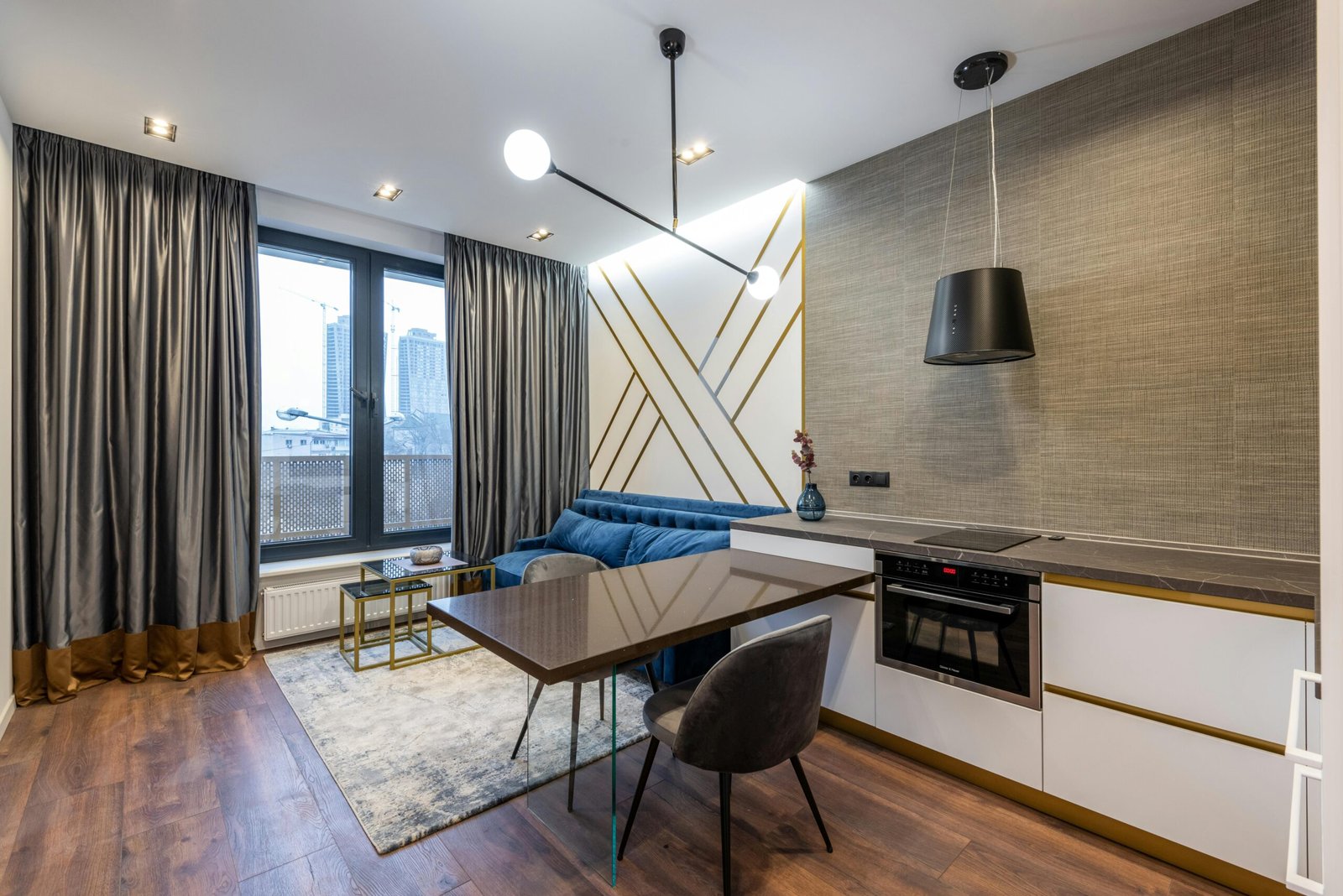
Small apartments can be incredibly stylish—but they need a different decorating strategy than large homes. When space is limited, every item has to earn its place. The goal isn’t to cram in more furniture or chase “tiny home hacks” that look good online but feel annoying in real life. The goal is to make your apartment feel open, functional, and calm—while still reflecting your personality.
This article will walk you through practical, realistic ways to decorate a small apartment so it feels bigger. You’ll learn how to choose furniture that fits, how to use light and color to expand the space visually, and how to create “zones” without walls. None of this requires renovations—just smart decisions.
Start With the #1 Rule: Space Feels Bigger When It’s Simpler
In a small apartment, clutter isn’t just clutter—it’s visual compression. The more stuff you see at once, the smaller the room feels.
That doesn’t mean you have to live like a minimalist. It means you need:
- fewer items on surfaces
- clearer floor space
- better storage
- stronger “visual breathing room”
A simple mindset shift helps: instead of decorating with more, decorate with better. Better layout, better lighting, better proportions.
Choose a Light, Cohesive Color Palette
Color is one of the fastest ways to create a bigger-feeling space. A small apartment benefits from a cohesive palette because it reduces visual breaks.
The easiest palette approach
- Base (walls + big pieces): light neutral (warm white, soft cream, light greige)
- Secondary (textiles + furniture): one or two calm tones (tan, soft gray, muted blue)
- Accent (small decor): one strong color repeated a few times (olive, navy, terracotta, black)
When your apartment has one consistent base color, your eye moves smoothly from one area to the next—making the whole place feel larger.
What to avoid in small spaces
- too many strong colors competing
- random accent colors that show up once and never again
- high-contrast paint schemes that chop the space into sections (unless you do it very intentionally)
Use Furniture That Matches the Room’s Scale
This is a major reason small apartments feel cramped: furniture is simply too bulky.
Look for “visually lighter” pieces
These features make furniture feel less heavy:
- exposed legs (so you can see floor underneath)
- slimmer arms on sofas
- open shelving instead of solid blocks
- glass or acrylic surfaces (used sparingly)
Choose multi-functional pieces
In a small apartment, pieces that do double duty are your best friends:
- storage ottoman (coffee table + storage)
- nesting tables (flexible surface space)
- sofa bed (if you host often)
- dining table that can double as desk
- bench seating with hidden storage
A helpful buying rule
Before adding a new piece, ask:
- Does it solve a real problem?
- Can it replace something else?
- Does it fit the room proportionally?
If it doesn’t check at least two of those boxes, it may become clutter fast.
Create a Layout That Improves Flow
When a small apartment feels tight, it’s often because walking paths are blocked or furniture is arranged inefficiently.
The “clear pathway” rule
You want at least one easy path through the room that doesn’t require squeezing between furniture edges.
Try these layout adjustments:
- pull furniture slightly away from tight corners
- avoid placing furniture where it creates awkward bottlenecks
- choose a smaller coffee table or a round one if space is tight
- consider a side table instead of a large coffee table if needed
Don’t push everything against the wall automatically
It sounds counterintuitive, but pressing everything to the walls can make the center feel empty and the edges feel crowded. Sometimes floating the sofa slightly (even a few inches) creates a more intentional zone.
Use Rugs to Define Zones (Even When It’s One Room)
Rugs are one of the best tools for small apartments because they define areas without walls.
Examples of zones you can create
- living zone (sofa + rug + coffee table)
- dining zone (table + rug)
- entry zone (small rug + console or hooks)
- work zone (desk area)
The apartment feels bigger when each zone has a job, because the space feels organized.
Rug sizing matters
A too-small rug makes the room feel unfinished. If you can:
- place the rug so the front legs of the sofa can sit on it
- choose a rug large enough to anchor the seating
If budget is tight, consider layering: a larger affordable neutral base rug, with a smaller patterned rug on top.
Use Mirrors the Right Way to Multiply Light
Mirrors can make a small apartment feel brighter and deeper—but only when they reflect something worth doubling.
Best mirror placements
- across from a window (to bounce natural light)
- near a lamp (to spread warm light at night)
- in the entryway to expand that first impression
- on a wall that feels narrow or closed in
Avoid reflecting clutter
If your mirror reflects a messy shelf or piles of stuff, it will make the room feel smaller. Place it where it reflects light, calm, and openness.
Upgrade Lighting: Small Space, Big Impact
Bad lighting makes small apartments feel dull and cramped. Great lighting makes them feel cozy and spacious.
Use layered lighting
Instead of relying on one overhead light, aim for:
- one floor lamp (adds height and ambient light)
- one table lamp (adds warmth at eye level)
- optional accent light (small lamp, subtle LED behind TV, etc.)
Why this works
Layered light reduces harsh shadows and adds depth—two things that help a room feel larger.
Easy lighting bonus
Use consistent bulb tone in the room (warm light in living spaces, neutral in task-heavy spaces) so the apartment feels cohesive.
Keep Window Treatments Light and Tall
Windows are your apartment’s “free square footage” for visual space. Treat them well.
Curtain rules that expand space
- hang curtain rods higher than the window frame (close to ceiling if possible)
- extend the rod wider than the window so curtains frame the view
- choose curtains that touch near the floor
This makes your walls look taller and your room look larger.
If you prefer blinds, consider adding a soft curtain layer anyway—it makes the room feel more finished and less “boxy.”
Go Vertical: Use Walls for Storage and Style
In a small apartment, you can’t always expand outward—but you can expand upward.
Vertical ideas that work
- wall shelves above a desk or sofa
- tall bookcases (not too deep) to use height
- hooks or rails in the entryway
- floating nightstands in bedrooms
- wall-mounted lighting to free side table space
Vertical storage keeps floors clearer, and clear floors make rooms feel bigger.
Make Your Decor “Intentional,” Not Random
Small spaces get overwhelmed fast. That’s why your decor should feel curated.
Choose fewer, larger decor moments
Instead of many small knickknacks:
- one large art piece
- one statement mirror
- one tall plant
- one sculptural lamp
Fewer statement pieces read as “designed.” Lots of tiny pieces read as clutter.
Use the 3-item styling method
On a surface like a console or coffee table:
- one tray or book (base)
- one tall item (lamp, vase)
- one personal item (small bowl, candle)
Leave space empty so it feels calm.
Choose Art That Expands the Space
Art can make a small apartment feel larger when it’s scaled correctly.
Common mistake
Tiny art on big walls looks lost and makes the wall feel bigger than the room.
Better approach
- one large piece
- or a gallery wall arranged as one large “shape”
Bonus trick
Art with lighter backgrounds or landscape imagery can visually open space (without feeling like a theme).
Use Plants Carefully: One Strong Plant Beats Five Tiny Ones
Plants bring life and softness, but too many small plants can create a cluttered look in a small apartment.
Better strategy
Choose one or two larger plants:
- one in a living room corner
- one near a window or entryway
Then keep the rest minimal, like one small plant on a shelf. Bigger plants create a clean statement and add height.
If you choose faux plants, fewer is better—one larger, more realistic piece looks more convincing than many small ones.
Keep Storage Beautiful (Because It Will Be Visible)
In a small apartment, storage is often on display. That means storage needs to look good.
Storage that can be decorative
- woven baskets
- matching boxes on shelves
- ottomans with hidden storage
- lidded containers for countertops
- trays for small items (keys, chargers, remotes)
A simple rule: if something must live out in the open, give it a “home” that looks intentional.
Make the Entryway Work Even if It’s Tiny
Even a small entry moment makes an apartment feel more put together.
If you have a narrow entry space, try:
- a slim console table (or a floating shelf)
- a mirror above it
- a small tray for keys
- hooks for bags/jackets
- a small rug to define the area
This creates organization and makes the home feel bigger because it reduces “stuff drift” into the living room.
Use Visual Continuity Across Rooms
Small apartments feel larger when the style is consistent.
Ways to create continuity:
- repeat the same neutral base tone
- repeat one accent color (like olive or navy)
- use similar metal finishes (like matte black or brass)
- choose one main wood tone direction
Visual continuity keeps the apartment from feeling chopped into unrelated spaces.
The “One In, One Out” Rule for Small Apartments
A practical rule that prevents clutter buildup:
If you add something new, remove something old.
This doesn’t have to be strict. But if you don’t have a rule, small spaces fill up quickly—and once they feel crowded, they feel smaller.
A Weekend Plan to Make Your Apartment Feel Bigger
If you want a simple step-by-step plan:
Day 1: Clear and reset
- Declutter surfaces and floors
- Create a home for daily items (keys, chargers, shoes)
- Remove decor that doesn’t match your palette
Day 2: Arrange and upgrade
- Rearrange layout for better flow
- Add layered lighting (at least two light sources)
- Define zones with rugs and furniture placement
- Add one statement piece (art, mirror, or plant)
Even without buying much, these steps make an apartment feel more open and “designed.”
The Final “Bigger Space” Checklist
Before you decide what to change next, check these:
- Clear walking paths (no squeezing)
- Light, cohesive palette
- Furniture scaled to the room
- Zones defined (rugs, lighting, placement)
- Layered lighting (not just overhead)
- Minimal clutter on surfaces
- More vertical storage, less floor clutter
- Fewer, larger decor statements
If you improve even half of these, your apartment will look and feel noticeably bigger.
A small apartment can absolutely feel spacious and beautiful. It’s not about having less style—it’s about using your space strategically. When every piece has purpose, every zone has clarity, and light can move freely, your home starts to feel calmer, brighter, and more comfortable—exactly what small-space decorating should achieve.

Isabella Garcia is the creator of a blog dedicated to crafts and home care, focused on making everyday life more creative, organized, and enjoyable. The blog shares practical tips, easy DIY projects, home organization ideas, and simple solutions to take better care of your living space. Whether you’re a beginner in crafting or someone looking for inspiration to improve your home routine, Isabella’s blog offers clear, useful, and hands-on content to help you create a cozy, beautiful, and well-cared-for home.