
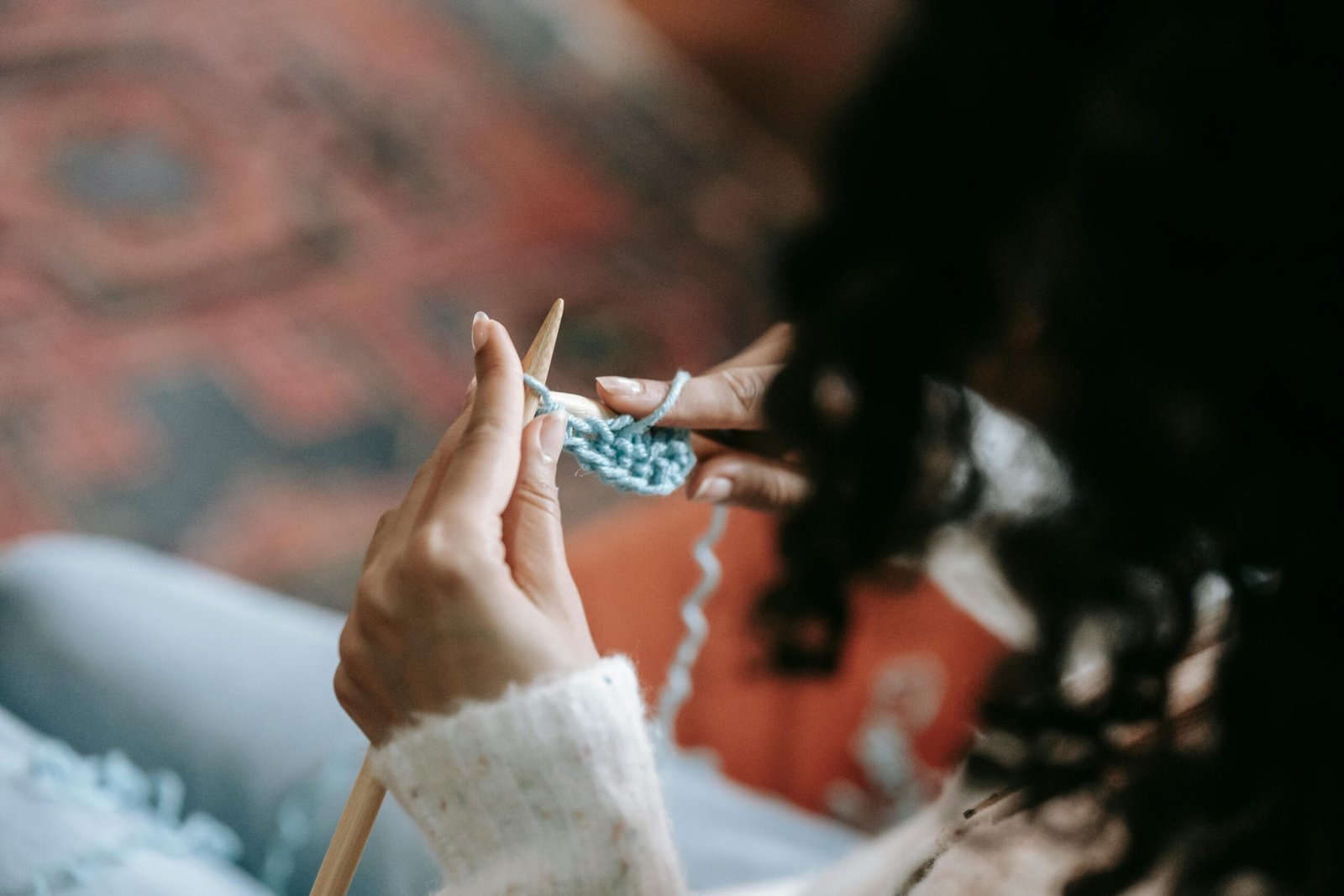
A beginner project can be beautifully stitched and still look a little “unfinished” if the finishing steps are rushed. This is one of the most common frustrations in crochet and knitting: you did the hard part—made the fabric—but the final piece doesn’t look as neat as you hoped. Edges might curl, seams might look bumpy, ends might peek out, and the shape might look slightly uneven.
Finishing is the skill set that turns “I made this” into “This looks store-quality.” The best part is that finishing doesn’t require complicated stitches. It’s a collection of small, repeatable habits: smoothing edges, adding simple borders, joining pieces cleanly, weaving ends securely, shaping the fabric, and making sure the final item feels comfortable and durable.
This guide is designed for beginners who want their crochet and knitting projects to look more polished without needing advanced patterns. You’ll learn the most useful finishing steps, the easiest border options, beginner seam choices, how to avoid curling, how to fix uneven edges, and a simple finishing checklist you can use for almost any project.
Why Finishing Makes Such a Big Difference
Finishing matters because crochet and knitting fabric is flexible. It can stretch, curl, and shift. When you add structure at the edges, secure ends properly, and shape the piece, you stabilize the fabric. That stability is what makes the item look neat.
Finishing also affects how the item wears over time:
- Ends that aren’t woven well can come loose
- Edges without structure can stretch out
- Seams that aren’t anchored properly can pop open
- Items stored or washed without shaping can lose their intended form
So finishing isn’t just for appearance. It’s also for durability.
Step One: Weave in Ends the Right Way (Every Time)
Weaving in ends is the foundation of good finishing. If ends aren’t secure, everything else is less reliable.
Beginner best practice:
- Leave tails 6–8 inches (15–20 cm)
- Use a yarn needle
- Weave in two directions
A reliable weaving method:
- Thread the tail on a yarn needle.
- Weave through 6–10 stitches along the wrong side, following the stitch path.
- Change direction and weave back through a different path.
- If yarn is slippery, change direction one more short time.
- Trim close to the fabric (without cutting into it).
Why two directions matter: a straight path can slide out over time. Changing direction creates friction and locks the tail in.
Beginner tip: weave ends into the same color area whenever possible. Dark tails woven through light sections can show through.
Step Two: Smooth the Fabric Before You Judge It
A lot of beginners judge their project while it’s still “raw”: edges curling, stitches slightly uneven from tension changes, and fabric not yet settled. Before you decide it looks messy, do these simple steps:
- Lay the piece flat on a table or bed
- Smooth it gently with your hands
- Let it rest for a few minutes
- Check whether the unevenness is mostly from the way it’s sitting
Crochet and knitting often look better once the fabric relaxes. This is especially true for basic scarves and rectangles.
Step Three: Decide If You Need Blocking (Even a Light One)
Blocking is shaping and setting your fabric so it lies flatter and looks cleaner. You don’t need fancy tools for beginner blocking.
Light blocking works for many projects:
- Dampen the item lightly (spray or gentle soak depending on fiber)
- Lay it flat on a towel
- Smooth edges and corners
- Let it dry completely
Blocking helps most with:
- curling edges (especially knitting)
- granny squares that need to be square
- lace or textured stitches that need definition
- panels that must match size before seaming
If your project looks a little wavy or uneven, blocking is often the missing step.
Edges: Why They Look Messy and How to Fix Them
Edges go messy for a few common reasons:
- inconsistent tension at the start/end of rows
- missing or adding stitches at row ends
- turning chain confusion (crochet)
- natural curl in certain stitches (knitting stockinette)
- yarn changes or joins placed on the edge
The fixes fall into two categories:
- improve edge technique (for next time)
- finish edges with structure (for this project)
Even if your edges are imperfect, a simple border or clean seam can make them look intentional.
Crochet Finishing: Simple Borders That Make Everything Look Better
Borders are one of the fastest ways to polish crochet projects. They add structure, hide small inconsistencies, and make the edges look planned.
Before adding a border:
- weave in ends first (or at least secure them)
- lightly block the piece if it’s very wavy
- decide how wide you want the border (often 1–3 rounds)
Border Option 1: Single crochet border (best beginner border)
A single crochet border is clean, simple, and works on almost anything.
How it helps:
- straightens edges
- adds firmness
- hides small edge mistakes
- gives a clean “frame”
Beginner tips for a smooth single crochet border:
- Use the same yarn as the project or a matching color.
- Keep border stitches slightly looser than your main fabric if your edges tend to tighten.
- Place 1 single crochet per stitch along the top and bottom edges.
- Along the sides (row ends), place stitches evenly—often one per row or one per ridge, depending on stitch height.
Corners:
- Work extra stitches in corners so they don’t pucker. A common approach is 3 single crochet in each corner stitch/space. This helps the border turn cleanly.
Border Option 2: Slip stitch border (thin and tidy)
Slip stitch borders make a subtle edge that doesn’t add much width.
Best for:
- light finishing when you don’t want a thicker frame
- strengthening an edge without changing the look much
Downside:
- slip stitches can tighten quickly, so keep them relaxed or your edge may pucker.
Border Option 3: “Crab stitch” (reverse single crochet) for a polished rope edge
Crab stitch looks like a twisted rope edge. It’s still beginner-friendly if you’re comfortable with single crochet, but the motion feels reversed, so it may take a few tries.
Best for:
- blankets, scarves, washcloths
- projects that need a firm, decorative edge
Beginner note: if crab stitch feels frustrating, do a single crochet border first and add crab stitch later when you’re ready.
Border Option 4: Simple shell border (decorative but still approachable)
Shell borders can look advanced even when the main project is simple.
Best for:
- baby blankets
- decorative throws
- scarves where you want a softer finish
Beginner tip: keep shells consistent at corners, and count repeats so you don’t end with an awkward partial shell.
If you’re aiming for a clean, minimalist look, stick to single crochet or slip stitch borders. If you want “wow” without advanced skills, try a simple shell border.
Crochet Corners: The Key to Borders That Lay Flat
Borders often ripple or curl at corners. Usually, it’s because the corner doesn’t have enough stitches to turn or has too many.
How to troubleshoot:
- If corners pull inward and curl: add more stitches in the corner.
- If corners flare outward: use fewer corner stitches.
A beginner-safe corner approach for single crochet borders:
- 3 single crochets in each corner space/stitch
- work one stitch per stitch along edges
- keep tension even
Once you see how the corner behaves, you can adjust in future borders.
Knitting Finishing: How to Prevent Curl and Clean Up Edges
Knitting edges behave differently than crochet. The most common knitting edge problem is curl, especially in stockinette.
Stockinette curl is normal. It happens because:
- the knit side and purl side have different tension behavior
- the fabric naturally wants to roll toward the knit side at top/bottom and toward the purl side at sides
Finishing can reduce curl, but the best long-term fix is adding structure.
Knitting fix 1: Borders that resist curl
If your project is still on the needles (or you’re planning your next one), the easiest curl prevention is to add a border stitch pattern:
- garter stitch border (knit every row or knit every round in border sections)
- seed stitch border (alternating knit/purl pattern)
- ribbing border (k1p1 or k2p2)
These textures resist curl because they balance the fabric.
Knitting fix 2: Blocking to reduce curl
Blocking can flatten stockinette temporarily or significantly, depending on fiber.
- Wool and wool blends respond beautifully to blocking.
- Acrylic can be shaped with gentle steam (careful with heat).
- Cotton can flatten but may relax again with use.
Blocking won’t always eliminate curl forever, but it often improves the look and feel.
Knitting fix 3: Seaming or adding an edge treatment after knitting
If the item is finished and curling too much:
- you can add a knitted border afterward (like picking up stitches and knitting garter stitch)
- you can add an applied i-cord edge (more advanced but very clean)
- you can add a fabric backing for certain items (like blankets) if you’re comfortable sewing
Beginners don’t need advanced edges. A garter border built into the project is usually enough for next time, and blocking helps now.
Seaming: The Finishing Skill That Makes Projects Look Professional
Seams matter most when you’re joining panels for bags, sweaters, pillows, or headbands. The seam method you choose affects:
- strength
- stretch
- bulk
- visibility
Crochet seaming methods (beginner-friendly)
- whip stitch seam (easy, visible but clean)
- slip stitch join (strong, slightly ridged)
- single crochet join (very strong, decorative ridge)
- mattress stitch seam (clean, subtle, great for a polished look)
A beginner rule:
- If you want flat and subtle: mattress stitch.
- If you want fast and sturdy: slip stitch or single crochet join.
- If you want easy sewing: whip stitch.
Knitting seaming methods (beginner-friendly)
- mattress stitch (the gold standard for invisible seams)
- whip stitch (simple but more visible)
- backstitch seam (strong, stable)
Mattress stitch is worth learning early because it creates clean garment seams and makes panels look like continuous fabric.
Beginner seam tip: seam with the same yarn used in the project if possible. It blends better and behaves similarly in stretch.
Necklines, Cuffs, and Edges That Touch Skin: Comfort Finishing
If you’re making wearables, finishing is also about comfort.
Comfort checks:
- Are yarn tails or knots rubbing the skin?
- Are seams bulky at sensitive areas (neck, underarm)?
- Does the edge feel scratchy or stiff?
Comfort upgrades:
- weave ends away from high-contact areas
- avoid large knots
- choose flatter seams for wearables (mattress stitch, flat joins)
- consider a softer border stitch (especially for necklines)
Even a perfect-looking item won’t get worn if it feels uncomfortable.
Fixing Small Imperfections Without Redoing the Whole Project
Beginners often feel like they must rip back everything to fix a slightly uneven edge or a minor mistake. Often you don’t.
Here are quick polish fixes:
- Add a border to hide slight edge inconsistencies.
- Block the piece to smooth waviness.
- Use a seam to reinforce a weak area (like a bag corner).
- If a hole appears from a join, weave the tail through that spot to close the gap.
- If a stitch looks loose, gently redistribute slack by tugging neighboring stitches rather than tightening one stitch aggressively.
Many “messy” beginner projects become surprisingly neat with a good border and proper blocking.
How to Make Projects Look Consistent in Photos (Helpful for Blog Content)
If you’re building a blog and you want your projects to look good in photos, finishing matters even more. Cameras notice uneven edges and curling more than your eyes do.
Photo-friendly finishing habits:
- block or flatten before photographing
- weave ends fully (no tails showing)
- trim fuzz and pills lightly if needed
- use a simple border to frame the project
- photograph on a clean flat background so the shape reads clearly
A basic single crochet border plus a light block can make a beginner blanket square look “published.”
A Beginner Finishing Checklist You Can Use Every Time
Use this checklist at the end of any project:
- Count and identify all yarn tails
- Weave in ends securely in two directions
- Smooth the fabric flat and check shape
- Block or lightly reshape if needed
- Inspect edges: do they need a simple border or reinforcement?
- Inspect seams: are they flat, strong, and comfortable?
- Trim tails and remove any visible fuzz
- Final look test: lay it flat and view from a distance
- Comfort test (for wearables): check seams and scratchy spots
- Care note: know how it should be washed and dried
If you do these steps, your finishing will feel systematic, not stressful.
The Takeaway: Finishing Is Where Beginner Work Becomes “Finished” Work
You don’t need advanced stitches to make projects look polished. Most of that polished look comes from finishing habits: weaving ends properly, adding simple borders, choosing the right seam method, shaping the fabric with light blocking, and paying attention to edges and comfort.
When you practice finishing on every small project, it becomes automatic. Your work starts looking cleaner, your confidence rises, and you’ll feel proud not just of what you made—but of how well you finished it.
Isabella Garcia is the creator of a blog dedicated to crafts and home care, focused on making everyday life more creative, organized, and enjoyable. The blog shares practical tips, easy DIY projects, home organization ideas, and simple solutions to take better care of your living space. Whether you’re a beginner in crafting or someone looking for inspiration to improve your home routine, Isabella’s blog offers clear, useful, and hands-on content to help you create a cozy, beautiful, and well-cared-for home.