
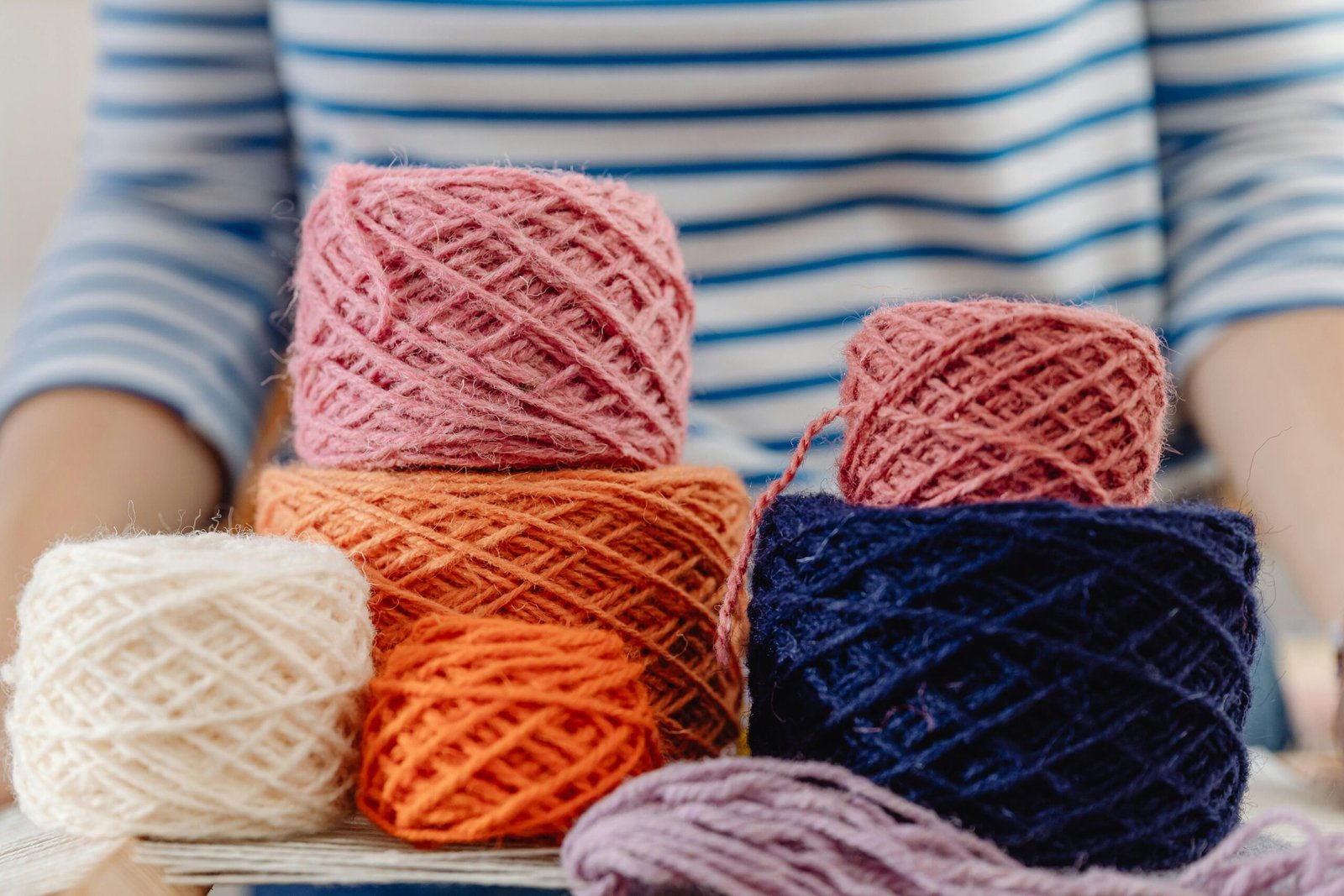
ne of the biggest “aha” moments in crochet and knitting isn’t learning a new stitch—it’s learning to read your fabric. That means looking at what you’ve already made and understanding what you see: where the stitches are, how many rows you’ve worked, whether you’re on the right track, and what went wrong when something looks off.
When you can read your work, you stop depending on memory. You stop thinking, “I think I did 12 rows?” and start knowing, “I’m on Row 12, and my last stitch is right here.” You catch mistakes early. You feel calmer when you pause and return later. And patterns become less intimidating because you can confirm what you’re doing visually.
This guide will teach you how to read crochet and knitting as a beginner in a practical, no-stress way. You’ll learn the shapes to look for, how to count rows and stitches, how to find the beginning and end of rows/rounds, and how to diagnose the most common issues by sight. You don’t need to memorize everything. You just need a few visual anchors.
What It Means to “Read Your Fabric”
Reading your fabric is the skill of recognizing:
- stitch anatomy (what the stitch looks like and where it “lives”)
- row/round boundaries
- pattern texture (what knit vs purl or sc vs dc looks like)
- the difference between normal variation and a real mistake
- where you should insert your hook/needle next
It’s like learning to read handwriting: at first, it looks like squiggles. Then your brain starts seeing letters. The same happens with stitches.
The Most Helpful Beginner Habit: Stop and Look Every Few Minutes
Before we go stitch-by-stitch, here’s a habit that makes all of this easier:
Every few minutes (or every 10–20 stitches), pause and ask:
- “Do my stitches look consistent?”
- “Am I still following the same pattern?”
- “Can I find my last stitch and my next stitch?”
This tiny pause catches errors early—when they’re easy to fix.
Crochet: How to Identify a Stitch
Most basic crochet stitches have a recognizable “top.” For many stitches (like single crochet, half double crochet, double crochet), the stitch top looks like a small “V.”
That “V” is usually what you crochet into for the next row or round.
Finding the “V” on top
When you look at the top edge of your crochet row:
- each stitch has a V-shaped pair of loops
- you typically insert your hook under both loops (unless the pattern says BLO/FLO)
If you can find those Vs, you can count stitches, find the last stitch, and keep your edges straight.
The turning chain confusion (why row ends feel tricky)
In crochet, turning chains can blend into the edge. Beginners often confuse:
- the turning chain
- the first real stitch
- the last stitch (which can hide)
To read edges better:
- look for the line of “V” tops across the row
- identify whether your turning chain counts as a stitch (patterns usually say)
- mark the first and last stitch with a stitch marker until your eyes get used to it
If you’re always unsure where the last stitch is, it’s not a “you” problem—it’s a normal beginner stage.
Crochet: How to Count Stitches in a Row
To count stitches in crochet:
- Look across the top of the row and count the V shapes (each V = one stitch).
- Ignore loose side loops and focus on the clean “tops.”
- If the pattern counts turning chains as stitches, include them as instructed.
Beginner tip: Don’t count mid-row by guessing. Physically touch each stitch top with your finger or hook tip as you count. It prevents double-counting.
Crochet: How to Count Rows
Counting crochet rows depends on the stitch pattern, but here are two beginner-friendly methods:
Method 1: Count horizontal “layers”
Many crochet fabrics show a stacked look. Each completed row creates a visible ridge or change in texture.
Method 2: Use edge “stair steps”
Along the side of a crochet rectangle, you often see little step-like shapes. Each row adds one step.
This is easier to see in taller stitches like double crochet and half double crochet than in single crochet.
Beginner advice: If you’re doing an important measurement, don’t rely on “I think it’s about 20 rows.” Count them intentionally.
Crochet: How to Read Common Crochet Stitches by Look
You don’t need to memorize every stitch. Recognize the basics you use most.
Single crochet (sc)
- fabric looks dense and sturdy
- stitches are short
- the “V” tops are close together
- row texture often looks like small, tight bumps
Half double crochet (hdc)
- taller than sc, shorter than dc
- fabric looks slightly more open than sc
- stitches form a tidy, stacked appearance
Double crochet (dc)
- fabric is taller and more open
- stitches look like taller posts
- row gaps are more visible
- great for “reading” because the structure stands out clearly
If you’re struggling to read single crochet fabric, practice reading on double crochet swatches first. The visual structure is easier for many beginners.
Crochet in the Round: How to Know Where a Round Begins
In continuous rounds (spiral), there’s no clear “end.” Reading your work depends on marking it.
The easiest system:
- mark the first stitch of the round with a locking stitch marker
- when you reach the marker, the round is complete
- move the marker to the first stitch of the next round
If you forget to move it once, you can still recover by:
- finding the last place the stitch pattern “shifted”
- counting stitches around until the increase/decrease pattern makes sense again
But the best beginner move is simply: always move the marker as soon as you reach it.
Crochet Mistakes You Can Spot by Sight
When you read crochet fabric, these visual clues become obvious.
Width changes (project gets wider or narrower)
- edges begin to slope
- top row looks longer or shorter than earlier rows
Usually caused by adding or missing stitches at row ends.
Random holes in flat fabric
- often a skipped stitch, accidental chain space, or working into the wrong place
- in dc fabric, holes show more easily
Wavy border or rippling edge
- often too many stitches along one edge
- can also be inconsistent tension
Circle that cups or ripples
- cupping: too few increases or tension too tight
- rippling: too many increases or tension too loose
If you can identify the “shape problem,” you can find the “increase problem.”
Knitting: How to Identify a Stitch
Knitting has a simpler visual language than it seems. Most beginner knitting is built from two stitch types:
- knit stitch (creates a “V” on the right side)
- purl stitch (creates a “bump” on the right side, and a “V” on the wrong side)
If you can recognize V shapes and bumps, you can read most beginner fabrics.
Knitting: The Knit Stitch (V Shapes)
On the right side of stockinette fabric:
- each knit stitch looks like a neat “V”
- Vs stack in columns
If you see clean vertical columns of Vs, you’re looking at knit stitches on the right side.
Knitting: The Purl Stitch (Bumps)
On the right side:
- purl stitches look like horizontal bumps (little ridges)
On the wrong side of stockinette: - purl stitches become Vs (because the fabric flips perspective)
This is why beginners get confused: the same stitch looks different depending on which side you’re viewing.
A simple rule:
- Right side stockinette = V side
- Wrong side stockinette = bump side
Knitting: How to Count Stitches Across
Counting knit stitches is easier when you treat it like counting columns.
For stockinette:
- count the number of V columns across the row
- each V is one stitch
For garter stitch (all knit rows):
- the fabric is ridged, and individual stitches are harder to see
- use stitch markers to divide sections (every 10 stitches) if you’re counting often
Beginner habit: If stitch count matters (like in a hat), use markers to separate groups. Counting 80 stitches by sight is possible, but counting 8 groups of 10 is easier and less error-prone.
Knitting: How to Count Rows in Stockinette
In stockinette, row counting is very beginner-friendly.
You can count:
- the stacked Vs in one column
Each V is one row (on the right side).
Pick one V column and count the Vs upward from the cast-on edge.
This method is clearer than trying to count ridges.
Knitting: How to Count Rows in Garter Stitch
Garter stitch (knit every row) creates horizontal ridges.
Key idea:
- each ridge is formed by two rows (one on each side)
So:
- 1 ridge = 2 rows
If your pattern says “work 20 rows in garter,” you should see about 10 ridges.
Beginners often count ridges as rows and end up with half the intended length. Remember: ridges are pairs.
Knitting: How to Read Ribbing (k1p1, k2p2)
Ribbing is a repeat of knit columns and purl columns.
How to read it:
- knit stitches show as V columns on the right side
- purl stitches show as bump columns on the right side
In k2p2 ribbing:
- you should see two V columns, then two bump columns, repeating
If the pattern breaks (like you see three V columns), you likely made a mistake in the repeat.
Beginner tip: Ribbing is self-correcting if you read it stitch by stitch:
- if the next stitch looks like a V, knit it
- if it looks like a bump, purl it
This is a powerful technique because it lets you recover without memorizing where you are.
Knitting Mistakes You Can Spot by Sight
Dropped stitch ladder
You’ll see a vertical gap with loose bars.
This is a “fix now” mistake. It usually gets worse if ignored.
Accidental yarn over hole
A small hole appears where there shouldn’t be one, and your stitch count increases.
This often looks like an extra loop on the needle.
Twisted stitches
A twisted stitch looks tighter and “crossed,” not like a clean V.
A few twisted stitches won’t ruin a scarf, but many can change stretch and drape.
Uneven tension stripe
Some rows look tighter or looser, creating a subtle line.
This is common in early learning. It often improves with practice and can soften with gentle blocking.
Reading Your Work While Following a Pattern
Patterns become easier when you use your fabric to confirm instructions.
Here’s a beginner method that works for both crochet and knitting:
- Read the next instruction chunk (one row/round or one repeat).
- Work only 10–20 stitches.
- Stop and compare your fabric to what should be happening.
- Continue if it matches, fix it if it doesn’t.
This prevents the classic beginner mistake: confidently doing the wrong thing for 12 inches.
How to Find Your Place After a Break
This is where reading your fabric pays off the most.
Crochet: finding your place
- find the last completed stitch (the active loop is your current position)
- find the last row/round boundary by looking at edge steps or round marker position
- count the current row’s stitches if you’re unsure
Knitting: finding your place
- identify whether you’re on the right side or wrong side (V side vs bump side)
- look at the next stitch: does it want to be knit or purl (in ribbing/seed stitch)?
- count rows if needed using Vs or ridges
A great beginner habit is writing a one-line note when you stop:
- “Stopped after Round 12, next is decrease round”
- “Stopped at Row 18, next row is purl row”
This is not cheating. It’s smart.
A Beginner Exercise to Learn Reading Fast
If you want to improve reading quickly, try this simple exercise:
Crochet exercise
- crochet a small swatch (10–12 stitches wide)
- do 2 rows sc, 2 rows hdc, 2 rows dc
- then point to each section and say what you see:
- “This looks dense and short (sc)”
- “This looks taller (hdc)”
- “These are tall posts (dc)”
Then count stitches and rows in each section.
Knitting exercise
- knit a small swatch with 10 rows garter
- then 10 rows stockinette (knit right side, purl wrong side)
- then 10 rows ribbing or seed stitch
Then identify: - where the fabric changes texture
- how many ridges in garter
- how many V rows in stockinette
- where knit columns and purl columns appear in ribbing
This “mixed fabric” swatch teaches your eyes more than doing one stitch for hours.
The Takeaway: Reading Your Work Turns Crafting Into Confidence
When you can read crochet and knitting fabric, you stop feeling like you’re guessing. You recognize where stitches are, how many rows you’ve done, whether your repeats line up, and what kind of mistake happened when something looks off. That means fewer restarts, easier pattern-following, and a calmer experience overall.
If you want one simple next step: make a small practice swatch this week and spend five minutes just looking at it—counting stitches, finding the Vs and bumps, and noticing how the texture changes. That tiny habit builds one of the most valuable beginner skills you can have.
Isabella Garcia is the creator of a blog dedicated to crafts and home care, focused on making everyday life more creative, organized, and enjoyable. The blog shares practical tips, easy DIY projects, home organization ideas, and simple solutions to take better care of your living space. Whether you’re a beginner in crafting or someone looking for inspiration to improve your home routine, Isabella’s blog offers clear, useful, and hands-on content to help you create a cozy, beautiful, and well-cared-for home.