
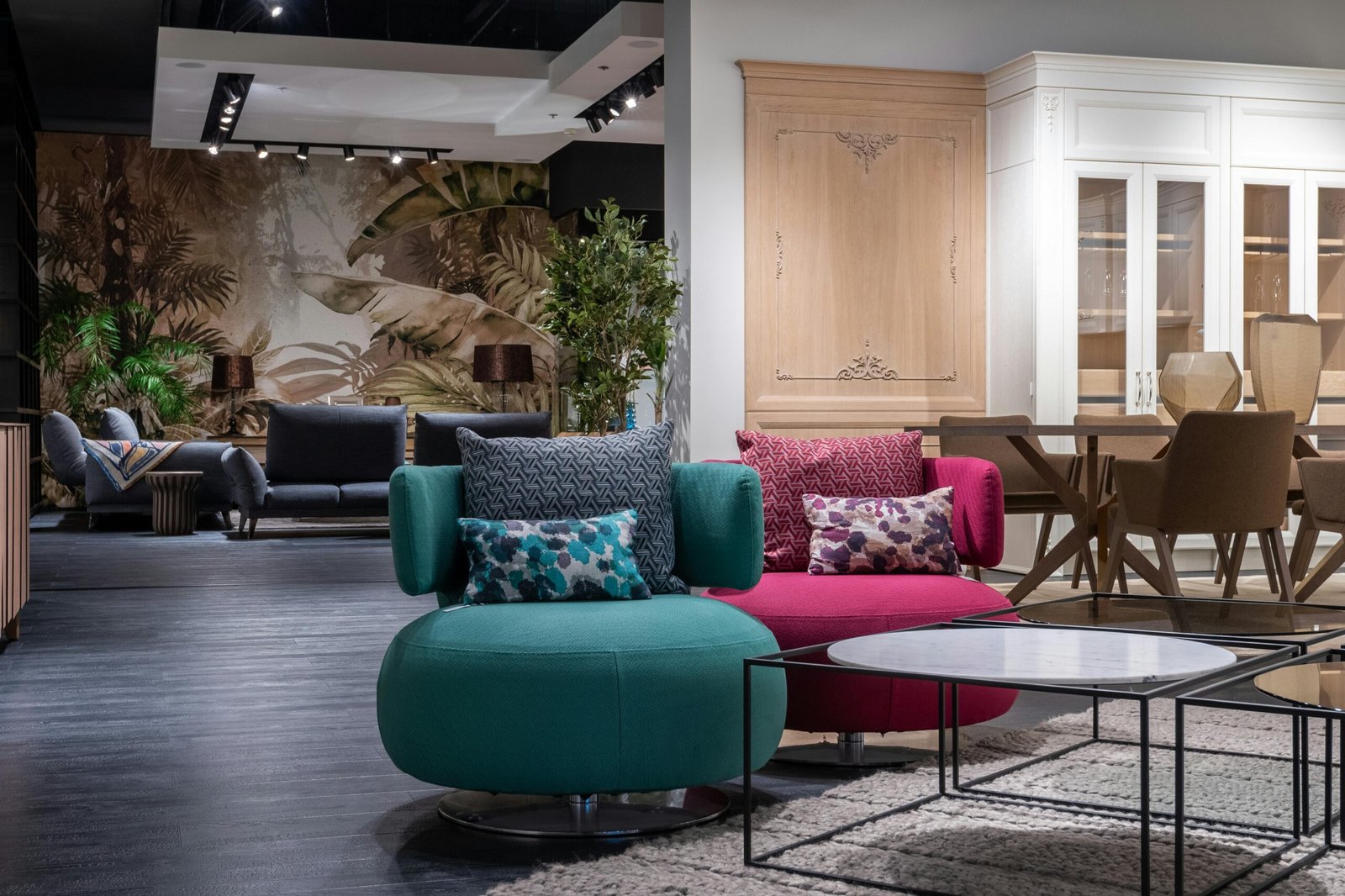
A living room can have beautiful furniture and still feel awkward. Maybe people don’t know where to sit. Maybe the TV feels too far or too close. Maybe the room looks “off” even though everything matches. Most of the time, the issue isn’t the decor—it’s the layout.
Layout is the foundation of a living room that feels comfortable and looks intentional. When the layout is right, the room feels bigger, calmer, and more welcoming. Decorating becomes easier because every piece has a reason to exist. When the layout is wrong, you can buy new pillows and art forever and still feel like something’s not working.
This guide will show you how to arrange living room furniture like a designer—without needing a huge space or expensive pieces. You’ll learn how to choose a focal point, protect walking paths, create conversation-friendly seating, position rugs correctly, handle TVs without ruining the vibe, and make your room feel finished without being crowded.
Start with the truth: a great layout is about how you live
Before moving furniture, ask how your living room is actually used:
- Is it mainly for watching TV?
- Is it for conversation and hosting?
- Is it both?
- Do you eat here sometimes?
- Do you need a work corner?
- Do kids or pets need play space?
There’s no “one perfect layout” for everyone. The best layout supports your daily life first, then looks good.
The 80/20 rule of living room layout
Design for how you use the room 80% of the time, not for the rare “perfect guest moment.”
Step 1: Identify the main focal point (the room needs one leader)
A living room feels awkward when furniture doesn’t relate to anything. Designers anchor a layout around a focal point.
Common focal points:
- TV
- fireplace
- a large window with a view
- a statement wall (art, built-in shelves)
- in some homes: the conversation zone itself (furniture facing each other)
If you have both TV and fireplace
Decide which one is primary. You can support both, but one must lead.
- If your household watches TV daily, the TV is probably the primary focal point.
- If the fireplace is used and visually dominates, it may lead—while the TV becomes secondary.
When you try to give two focal points equal power, the layout becomes indecisive.
Step 2: Protect walking paths (the fastest way to make a room feel bigger)
A room can feel cramped even with minimal furniture if the walking paths are blocked.
The “clear path” rule
Make sure you can walk from one end of the room to the other without weaving around furniture corners.
Common path problems:
- coffee table too large, blocking movement
- chairs placed where people walk
- a console or side table sticking out into a path
- furniture pushed into door swings
Quick fix
Remove one piece that interrupts flow. Many living rooms instantly feel better after removing one “extra” chair, bench, or side table that seemed useful but blocks movement.
Step 3: Choose your seating “shape” (this creates the whole layout)
Most living rooms fall into one of these basic seating arrangements:
Layout A: L-shape (sofa + sectional vibe)
Best for:
- family living rooms
- TV-focused rooms
- open-plan spaces
How it works:
- a sectional or sofa + loveseat forms an L
- chairs may be added if space allows
- keeps seating cohesive and comfortable
Watch out for:
- an L-shape that blocks walking paths
- a sectional that’s too large for the room
Layout B: Facing seating (conversation-friendly)
Best for:
- hosting
- conversation-focused living rooms
- rooms with fireplaces or beautiful views
How it works:
- sofa faces two chairs, or sofa faces another sofa
- creates a strong “conversation zone”
- feels elegant and balanced
Watch out for:
- leaving the TV without a good viewing angle (if you watch TV often)
Layout C: U-shape (very social, but needs space)
Best for:
- larger rooms
- households that host often
- cozy conversation zones
How it works:
- sofa + two chairs (or sectional + chair) creates a U
- draws people in and makes the room feel welcoming
Watch out for:
- crowding the room with too many pieces
- blocking paths around the seating area
Layout D: Small-space combo (sofa + one chair or ottoman)
Best for:
- apartments
- narrow living rooms
- multi-purpose rooms
How it works:
- one main sofa
- one flexible seat (chair, pouf, or storage ottoman)
- minimal but still intentional
Watch out for:
- trying to force too many pieces into a small room
Your goal is not to copy a layout from a photo. Your goal is to choose a seating shape that fits your room size and your daily life.
Step 4: Place the largest piece first (usually the sofa)
Your sofa is typically the anchor. It sets the scale and the direction.
Where the sofa usually works best
- facing the focal point (TV/fireplace)
- on the longest wall (often, but not always)
- positioned to protect walking paths
Mistake to avoid
Pushing the sofa against the wall automatically, without checking flow and balance.
Sometimes pulling the sofa slightly forward:
- improves comfort,
- creates space for a slim console behind it,
- and makes the room feel more intentional.
This depends on room size, but it’s worth testing.
Step 5: Set the conversation distance (comfort matters)
A living room feels uncomfortable when seating is too far apart. People shouldn’t have to shout to talk.
A helpful guideline:
- seats should feel close enough for easy conversation, not spread like islands
If your living room feels “empty” but still awkward, it may be because furniture is pushed too far apart or too far from the focal point.
Step 6: Use the rug to define the seating zone (don’t let furniture float)
The rug is not decoration only—it’s a layout tool. It defines the zone and connects furniture.
Rug placement that usually looks best
- the rug should touch the sofa and chairs (at least front legs)
- coffee table should sit on the rug
- rug centered on the seating area, not the entire room
A too-small rug makes the room feel chopped up. A correctly placed rug makes the layout look “designed.”
Step 7: Coffee table and side tables (function without blocking movement)
People need places to set drinks, phones, and books. But tables can also create clutter and block paths.
Coffee table sizing basics
- leave enough space to walk between sofa and table comfortably
- choose a table shape that fits the room flow:
- round or oval is great for small spaces and tight paths
- rectangular works well with long sofas and sectionals
- nesting tables are flexible and space-friendly
Side tables: enough, not too many
Try to give key seats a landing spot without overcrowding:
- one side table per main seat area (not necessarily every seat)
- slim tables work better in tight rooms
- C-tables can slide under sofas and save space
A layout feels more comfortable when people can set something down without stretching across the room.
Step 8: TV placement without ruining the vibe
A TV can be a focal point, but it doesn’t have to dominate the room aesthetically.
TV comfort guidelines
- place seating at a comfortable viewing distance for your room size
- center seating on the TV when possible (especially for TV-heavy homes)
- avoid placing the TV too high unless the room demands it
How to make the TV area look more intentional
- anchor it with a console that fits the TV scale
- use a simple, cohesive styling approach on the console (not clutter)
- repeat materials (wood tone, black metal, etc.) so it looks integrated
If you have a fireplace and the TV is above it, the height can be less comfortable. If that’s your situation, balance the room with:
- softer lighting,
- art and decor elsewhere,
- and comfortable seating angles.
Step 9: Add vertical balance (so the room doesn’t feel flat)
Many living rooms have lots of low furniture: sofa, coffee table, console. If the walls are empty, the room can feel bottom-heavy.
Add vertical balance with:
- tall floor lamp
- tall plant
- artwork with proper scale
- shelves styled lightly
- curtains hung high (they visually lift the room)
This makes the room feel taller and more layered.
Step 10: Decide how “open” you want the room to feel
Some people love an airy room with lots of breathing space. Others want a cozy room that feels enclosed and intimate. You can design either vibe.
For a more open feel
- fewer furniture pieces
- lighter visual weight (legs, open bases)
- calmer palette
- more negative space on surfaces
For a cozier feel
- seating grouped closer
- layered textiles (rug, pillows, throw)
- warmer lighting
- slightly deeper tones and texture
Neither is right or wrong. What matters is choosing intentionally.
Step 11: Make the layout work in awkward room shapes
Many living rooms are not perfect rectangles. Here’s how to handle common issues.
Narrow living room
- use a sofa along the long wall
- choose slimmer pieces (avoid bulky chairs)
- consider round coffee table to improve flow
- define a clear walking path on one side
Open-plan living room
- use a rug to define the living zone
- float the sofa to create boundaries
- add a console behind the sofa for structure
- keep the palette cohesive across zones
Small living room
- choose one strong sofa + one flexible seat
- use multi-purpose pieces (storage ottoman, nesting tables)
- avoid too many small decor items
- focus on lighting and rug size for “finished” look
Large living room
- create zones (conversation zone + reading zone)
- use rugs to define each zone
- avoid pushing everything to the walls (it can feel empty)
Step 12: A simple “living room layout reset” you can do today
If your living room feels off, try this practical reset:
- Clear the floor area (remove small clutter and extra chairs temporarily)
- Identify the focal point (TV/fireplace/window)
- Place the sofa facing the focal point
- Add one chair or secondary seating where it supports conversation
- Place the rug to connect furniture (front legs on)
- Add the coffee table with enough walking space
- Add side table(s) where needed for function
- Add one tall element (lamp or plant) for vertical balance
- Step back and check flow—adjust for clear walking paths
You’ll be surprised how much better the room feels with fewer pieces in the right places.
Common living room layout mistakes (and quick fixes)
Mistake 1: Furniture pushed to walls automatically
Fix: try pulling seating slightly inward to create a more intentional zone.
Mistake 2: Too many small pieces
Fix: reduce pieces and choose fewer, more functional items.
Mistake 3: No landing spots for drinks and phones
Fix: add one slim side table or nesting tables.
Mistake 4: Rug too small or placed wrong
Fix: size up or reposition so it connects furniture.
Mistake 5: No clear focal point
Fix: define one and orient seating to it.
Mistake 6: Layout blocks movement
Fix: protect one clear path through the room.
The real secret: great living rooms feel “easy”
A well-arranged living room feels easy to move through, easy to sit in, and easy to live in. It doesn’t require constant adjustment. That’s what makes it look designed. When your layout supports your life—clear focal point, protected walking paths, furniture that relates to the rug, and balanced height—everything else becomes easier: decorating, styling, and keeping the room calm.
If you want the biggest impact with the least effort, focus on these three:
- define the focal point,
- protect walking paths,
- and use the rug to connect furniture.

Isabella Garcia is the creator of a blog dedicated to crafts and home care, focused on making everyday life more creative, organized, and enjoyable. The blog shares practical tips, easy DIY projects, home organization ideas, and simple solutions to take better care of your living space. Whether you’re a beginner in crafting or someone looking for inspiration to improve your home routine, Isabella’s blog offers clear, useful, and hands-on content to help you create a cozy, beautiful, and well-cared-for home.