
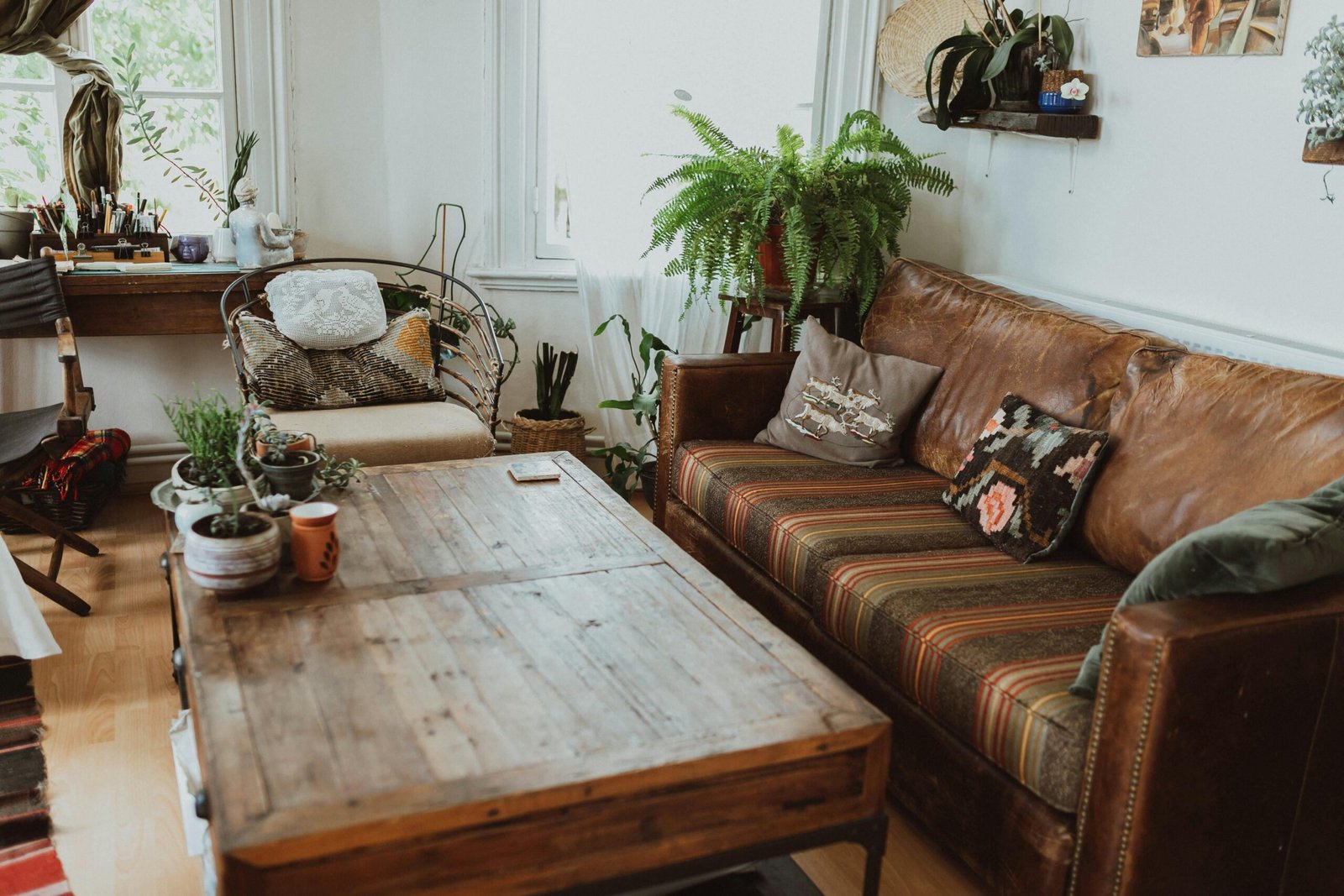
A small living room can feel cozy and charming—or cramped and frustrating. The difference usually isn’t the size of the room. It’s the decisions made inside it: furniture scale, layout, lighting, storage, and how much visual noise is happening at eye level. When a small room is overloaded with bulky pieces, dark corners, and cluttered surfaces, it shrinks. When it’s planned with intention, it can feel surprisingly open, stylish, and comfortable.
The best part is that you don’t need a renovation to make a small living room feel bigger. You need a strategy. Designers use a handful of repeatable “space-expanding” tricks: smart layout flow, fewer but better pieces, furniture with lighter visual weight, layered lighting, clear surfaces, and strong vertical lines that pull the eye upward.
This guide will show you exactly how to decorate a small living room so it feels bigger and more livable—without making it feel empty or sterile. You’ll learn how to choose the right sofa and tables, how to place furniture to protect flow, how to use rugs and curtains correctly, how to style without clutter, and how to add storage without crowding the space.
The core truth: small rooms don’t need more furniture—they need better decisions
In small living rooms, the most common mistake is trying to squeeze in “everything”:
- a large sofa + multiple chairs
- large coffee table
- oversized media console
- lots of small decor items
- shelves everywhere
- heavy curtains
- big side tables
This often creates two problems:
- There isn’t enough space for people to move comfortably.
- The room feels visually busy, so it feels smaller.
A small living room usually improves when you:
- reduce the number of pieces,
- choose lighter silhouettes,
- and focus on function and flow first.
Step 1: Choose the room’s priority (TV, conversation, or multi-use)
Small living rooms must be honest about what matters most.
Ask:
- Is this mostly a TV room?
- Is it mainly for conversation?
- Is it both?
- Do you also work or study here?
You can do multiple things in a small space, but you need a clear priority so the layout doesn’t become awkward.
A helpful rule
If you try to make a small room perfect for everything, it often becomes uncomfortable for anything. Choose one main job and support it well.
Step 2: Fix the layout first (flow makes rooms feel bigger)
Layout is the biggest “space multiplier.” A small living room feels bigger when movement is easy.
The flow test
Walk through your living room like you’re:
- coming in with groceries,
- walking to the kitchen,
- moving to sit down,
- or passing through to another room.
If you have to squeeze between furniture, the room will always feel smaller than it is.
Flow rules for small rooms
- Protect the main walkway path.
- Avoid blocking door swings.
- Leave breathing room around key zones (sofa, coffee table, TV area).
- Don’t place furniture where it “cuts” a natural path through the space.
A small room feels instantly better when flow becomes effortless.
Step 3: Choose a sofa that fits—without going too bulky
The sofa is usually the largest piece and the biggest decision.
What makes a sofa feel too big in a small room
- deep, bulky arms
- low base with no visible legs
- heavy, dark upholstery
- oversized proportions compared to the wall
What makes a sofa feel lighter (even if size is similar)
- visible legs (more floor visible = more space feeling)
- slimmer arms
- cleaner silhouette
- lighter or medium-tone upholstery
- less bulky cushions
A smart small-room sofa strategy
If you can only “invest” in one piece for a small living room, invest in a sofa that:
- fits the wall comfortably,
- feels visually light,
- and supports your real seating needs.
A too-small sofa can make the room look unfinished, but a too-bulky sofa will make the room feel cramped. The sweet spot is a sofa that feels proportional and airy.
Step 4: Decide if you really need a coffee table
Coffee tables can be helpful, but they are not always the best choice in a small room.
When a coffee table works well
- you have enough clearance to walk around it
- you need a surface for daily use
- the room can handle the footprint
When to skip it (or choose an alternative)
- the room is too tight to walk comfortably
- the table blocks the main walkway
- you constantly bump into corners
Small-space coffee table alternatives
- nesting tables (pull out when needed)
- a small round table (better flow)
- an ottoman with a tray (soft and flexible)
- a C-table (slides under the sofa)
- wall-mounted shelf near seating (if appropriate)
A small living room can feel bigger when the center is more open.
Step 5: Use the right rug strategy (rugs can make small rooms feel larger)
Many people think small rooms need small rugs. The opposite is often true.
A too-small rug can make the seating area look disconnected, which makes the room feel smaller and less intentional.
Rug tips that make a small room feel bigger
- Choose a rug that connects the main seating area.
- Let the rug reach under the front legs of the sofa (when possible).
- Avoid tiny rugs that float in the middle.
Pattern and color for small rooms
- Light and medium tones often feel more open.
- Subtle patterns and textures can add interest without shrinking the space.
- Very busy patterns can make the room feel visually crowded, especially if you have other patterns in pillows or art.
A well-chosen rug acts like a “floor foundation” that makes the room feel finished and more spacious.
Step 6: Hang curtains high and wide (the ceiling-height illusion)
This is one of the best designer tricks for small rooms.
When curtains are hung:
- too low, the room looks shorter
- too narrow, the window looks smaller
The “high and wide” approach
- hang the rod closer to the ceiling (not just above the window frame)
- extend the rod beyond the window edges
- use curtains that reach near the floor
This makes the window look larger and the ceiling feel taller—both make the room feel bigger.
Best curtain style for small living rooms
- light-filtering, neutral fabric
- linen or linen-look for soft texture
- avoid overly heavy, dark curtains unless you’re intentionally creating a moody look
Curtains are a “vertical line” tool that visually expands the room.
Step 7: Layer lighting to remove dark corners (dark corners shrink rooms)
Small rooms feel smaller when:
- lighting is harsh overhead only
- corners are dark
- the room has uneven brightness
The easy lighting plan for small living rooms
- one table lamp
- one floor lamp (or a second table lamp)
- overhead light for functional brightness only
Soft lamp lighting makes the room feel cozy and spacious because it creates depth and warmth.
Why lamps matter more than people think
When light comes from different points, the room feels layered. When light only comes from above, the room feels flat. Flat spaces feel smaller.
Step 8: Use mirrors strategically (light + depth)
Mirrors can be a cheat code in small living rooms when used correctly.
The mirror rule
Place a mirror where it reflects:
- natural light (a window),
- a bright area,
- or a calm, styled view.
Avoid placing mirrors where they reflect:
- clutter,
- messy shelves,
- or awkward tight corners.
Best mirror placements for small living rooms
- opposite a window (bounces light)
- above a console or sideboard
- on a wall that feels heavy or empty
One well-placed mirror can make a small living room feel noticeably brighter and larger.
Step 9: Choose furniture with “double function” (small rooms need efficiency)
In small living rooms, every piece should earn its footprint.
Great multi-function options:
- storage ottoman (seating + storage + surface with tray)
- bench with storage
- console table with drawers
- nesting tables
- sofa with a chaise ottoman that can move
- wall-mounted shelves (minimal and controlled)
The important caution
Multi-function doesn’t mean “more stuff.” It means one piece solves two problems so you can have fewer pieces overall.
Step 10: Use vertical space—but don’t overdo it
Vertical styling can make rooms feel taller and more expansive.
Vertical upgrades:
- curtains hung higher
- taller bookcase instead of wide low storage
- art hung at intentional height (not tiny, not scattered)
- a tall plant in a corner
- wall sconces (if possible)
The small-room danger
Too much open shelving can increase visual clutter. If you use shelves, style them minimally and contain everyday mess in baskets or closed storage.
In small spaces, closed storage often looks cleaner than open shelves.
Step 11: Reduce visual clutter (the fastest “bigger room” trick)
Nothing shrinks a small room faster than lots of small items scattered around.
Visual clutter signals:
- many small decor pieces on surfaces
- messy cables
- overflowing shelves
- too many mixed patterns
- lots of random colors
The “bigger room” styling rule
Use fewer decor items, but make them more intentional.
Better than 10 small objects:
- one larger vase
- one larger framed art piece
- one larger plant
- one tray that contains essentials
Containment is key
Contain everyday items:
- remotes in a tray or box
- blankets in a basket
- chargers in a drawer
- toys in a bin
When clutter is contained, the room looks calmer and feels bigger.
Step 12: Tighten the color palette (cohesion expands space)
Small rooms feel bigger when the palette is cohesive because the eye isn’t bouncing around.
A simple small-room palette formula
- base neutral (warm white, cream, soft greige)
- one secondary color (muted: olive, navy, charcoal, terracotta)
- one accent finish (black or brass)
- repeat a wood tone direction (light or medium)
This doesn’t mean your room must be beige. It means colors should repeat and feel intentional.
Why this works
A cohesive palette creates continuity. Continuity reduces visual breaks. Fewer visual breaks makes spaces feel larger.
Step 13: How to arrange furniture in a small living room (practical layouts)
Let’s get specific. Here are common small-room layout approaches.
Layout A: Sofa + one chair (classic small room)
- sofa on the longest wall
- one chair angled across (or in a corner)
- small coffee table or nesting tables
- rug connecting seating
- lamp on one side of seating
This layout keeps seating social without overcrowding.
Layout B: Sofa + ottoman (maximum flexibility)
- sofa
- storage ottoman (moves easily)
- no heavy coffee table
- one side table
- floor lamp in corner
This works especially well in tiny spaces because it keeps the center more open.
Layout C: Small sectional + one lightweight chair
- compact sectional (not oversized)
- round coffee table for flow
- one chair that can move when needed
This works when you need more seating but still want movement space.
Layout D: Two-seater sofa + two small chairs
- loveseat centered
- two lightweight chairs
- small round table
- rug to unify zone
This creates conversation, but only works if the chairs are light and the room has enough floor space.
Step 14: TV and media in small living rooms (without visual heaviness)
TVs can dominate small rooms. The goal is to integrate it without adding bulky furniture.
Media console tips for small rooms
- choose a console that’s not too deep
- choose closed storage to hide clutter
- keep decor minimal on top (one or two items max)
Wall mounting (if allowed)
Wall mounting can free floor space and reduce visual heaviness. If not allowed, choose a media unit that looks clean and supports storage needs.
Cable control matters
Visible cables add chaos. Containing cables is one of those small upgrades that makes a small room feel cleaner instantly.
Step 15: Small living room decor that still feels cozy (cozy ≠ clutter)
Some people fear that making a small room “bigger” means making it less cozy. Not true. Cozy comes from:
- warm lighting
- soft textiles
- comfortable seating
- a calm palette
- texture
Clutter does not equal cozy. Clutter equals stress.
Cozy without shrinking the room
- use a textured throw
- choose 2–4 pillows max in coordinated tones
- add one plant or greenery moment
- use warm lamps at night
This keeps the room inviting without adding visual noise.
Common small living room mistakes (and quick fixes)
Mistake 1: Too much furniture
Fix: remove one piece and protect flow.
Mistake 2: Rug too small
Fix: size up or reposition to connect seating.
Mistake 3: Heavy, bulky sofa
Fix: choose lighter silhouettes or add visual lightness with legs and neutral tone.
Mistake 4: Curtains hung low
Fix: hang high and wide for height illusion.
Mistake 5: Overhead light only
Fix: add a table lamp and a floor lamp.
Mistake 6: Too many small decor items
Fix: edit down and use fewer larger statement pieces.
Mistake 7: No storage plan
Fix: use baskets, bins, and closed storage to hide daily clutter.
A simple “small living room upgrade plan” (do this in steps)
If you want a realistic plan:
Step 1: Layout and flow (free)
- remove one unnecessary piece
- protect the walkway
- place sofa intentionally
Step 2: Lighting (big impact)
- add one table lamp
- add one floor lamp
Step 3: Window + rug (foundation)
- hang curtains high and wide
- use a rug that connects seating
Step 4: Storage and styling
- add one basket for blankets
- use a tray for remotes
- style with one plant and one larger art piece
Do these steps, and the room will feel bigger and more comfortable without losing warmth.
The real secret: small living rooms feel bigger when they feel calmer
A small living room doesn’t need to be filled. It needs to be planned. When you protect flow, choose lighter furniture, add warm layered lighting, use the right rug and curtain strategy, and reduce visual clutter, the room opens up. It becomes easier to relax. It becomes more comfortable to use. And it looks more “designed” even on a budget.
If you want the biggest immediate wins, focus on these three:
- Clear the center and protect walking paths
- Add layered lighting (lamps) and remove dark corners
- Use a cohesive palette and contain clutter
That’s the formula for a small living room that feels bigger, calmer, and genuinely cozy.

Isabella Garcia is the creator of a blog dedicated to crafts and home care, focused on making everyday life more creative, organized, and enjoyable. The blog shares practical tips, easy DIY projects, home organization ideas, and simple solutions to take better care of your living space. Whether you’re a beginner in crafting or someone looking for inspiration to improve your home routine, Isabella’s blog offers clear, useful, and hands-on content to help you create a cozy, beautiful, and well-cared-for home.