
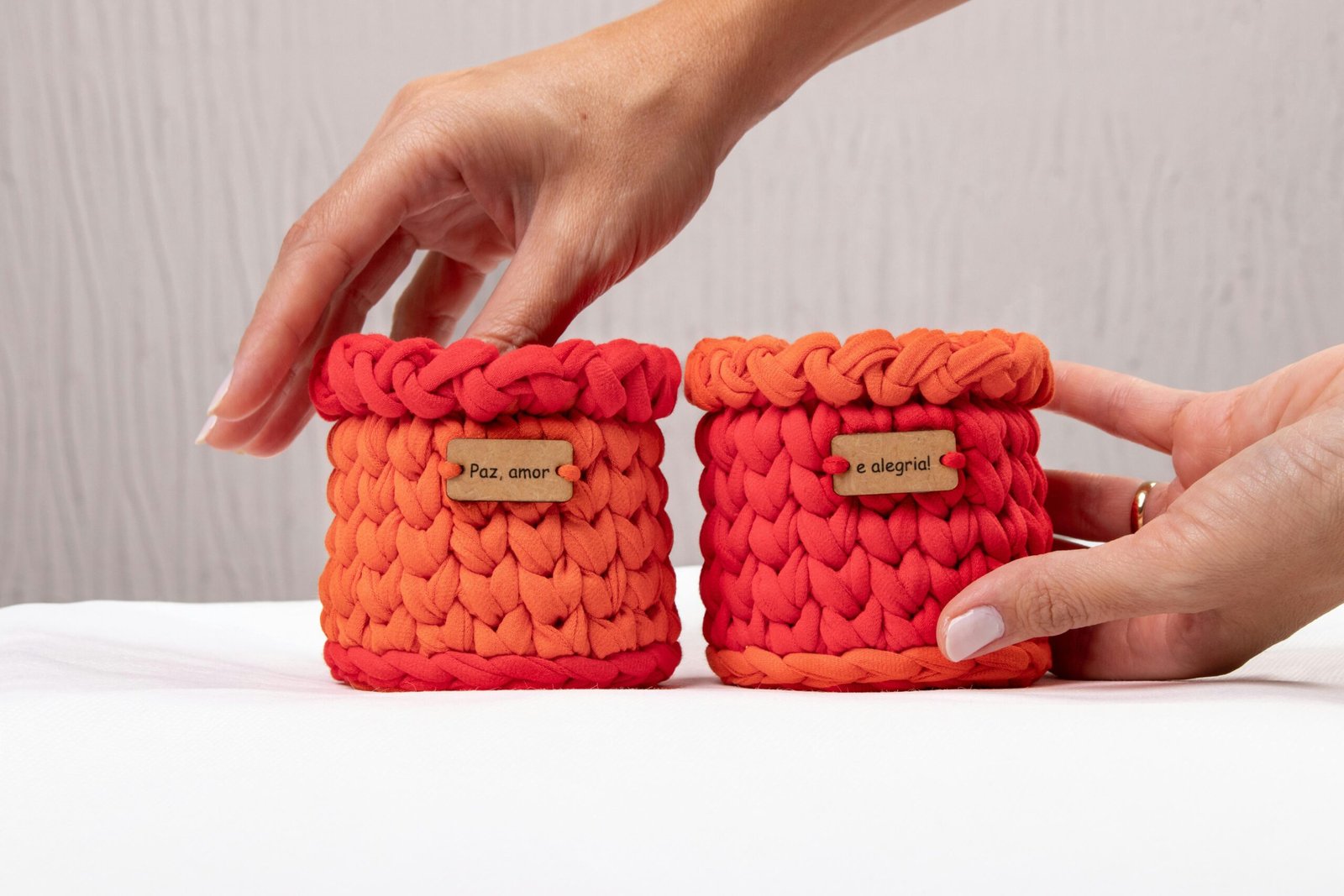
Weaving in ends is the unglamorous step that decides whether your crochet or knitting project lasts a week or lasts for years. You can stitch beautifully, but if ends are cut too short, woven in the wrong direction, or secured only with a knot, your work can loosen, unravel, or develop annoying little tails that poke out after washing.
The good news is that weaving in ends is not complicated. It’s mostly about using the right method for the fabric you made, leaving tails long enough, and understanding one key principle: ends stay secure when they change direction and follow the structure of the stitches.
This guide will teach you three beginner-friendly methods that are strong and reliable for both crochet and knitting. You’ll also learn where to hide ends so they don’t show, how to make joins look cleaner, what to do with color changes, how to reduce bulk, and the most common beginner mistakes (so you don’t accidentally sabotage a finished project).
Why Weaving in Ends Matters So Much
When you join yarn, change colors, start a new ball, or finish a project, you create yarn tails. Those tails must be secured so that:
- the fabric doesn’t unravel
- the join doesn’t loosen over time
- the item survives washing and stretching
- the inside (or back) looks neat
- the outside doesn’t show bumps or shadows
Some yarns are forgiving (wool often grips itself), and some are slippery (many acrylics and smooth cottons). But even with forgiving yarn, weaving properly is what makes your work durable.
The Golden Rules of Weaving in Ends
Before we get into methods, these rules make everything easier.
Rule 1: Leave a long enough tail
Beginner-safe tail lengths:
- 6 inches (15 cm) minimum
- 8–10 inches (20–25 cm) for slippery yarn, wearables, or frequently washed items
Short tails are the #1 reason ends pop out later.
Rule 2: Weave on the wrong side
- Crochet: weave on the back/inside whenever possible.
- Knitting: weave on the purl side (wrong side) when possible.
Rule 3: Follow the stitch path
Don’t just stab your needle through random loops. Use the structure the fabric gives you.
Rule 4: Change direction at least once
A straight-line weave can slide out. Changing direction creates friction and locks the tail in place.
If you remember one thing: weave, turn, weave again.
Choosing the Right Needle and Timing
Use a yarn needle (tapestry needle)
Pick a needle with:
- a blunt tip (so you don’t split yarn fibers too much)
- a large enough eye to thread your yarn comfortably
When should you weave ends?
You can do it:
- at the end (batch finishing)
- as you go (less overwhelming)
Beginner advice: If you get discouraged by a pile of ends, weave as you go. If you like clean workflow, save them until the end but don’t wait too long—ends are easiest to weave when you still remember what you did.
Method 1: The “Two-Direction Path” Weave (Best All-Around Method)
This is the most reliable beginner method for most projects, both crochet and knitting.
Why it works:
- it anchors the tail in two directions
- it reduces the chance of the yarn sliding out
- it works with most fibers and stitch patterns
How to do it (crochet)
- Thread the yarn tail onto a yarn needle.
- On the wrong side, weave the needle through 6–10 stitches following the stitch bodies (not just the top loops).
- Pull through gently—snug, not tight.
- Change direction: weave back through a different nearby path for 4–8 stitches.
- If the yarn is slippery, change direction a third time for a short distance.
- Trim the tail close to the fabric.
Where to weave in crochet:
- In dense stitches like single crochet, weaving is very secure because there’s lots of structure.
- In open stitches (double crochet, lace), choose paths where the tail will hide inside the stitch posts rather than crossing open holes.
How to do it (knitting)
- Thread the tail onto a yarn needle.
- On the wrong side (purl side), weave through the “purl bumps” or along the bars between stitches for 6–10 stitches.
- Pull snugly but don’t tighten the fabric.
- Change direction and weave back along a slightly different path.
- Trim close.
Beginner knitting tip: Try to keep the tail inside the “texture” of the wrong side. If you weave too close to the surface on stockinette, the tail can sometimes show through on the right side as a faint line.
Method 2: The “Split Ply and Lock” Weave (Extra Secure for Slippery Yarn)
This method is great when:
- you’re using smooth acrylic or cotton
- the item will be washed often
- you need extra security (bag handles, cuffs, edges)
- you’ve had ends pop out before
The idea:
- you weave normally, but you intentionally pass the needle through part of the yarn strand (splitting the plies slightly) once or twice. This creates a gentle “lock” without a knot.
Important beginner note: Don’t shred the yarn. A small split is enough.
How to do it (crochet)
- Weave the tail through 6–8 stitches on the wrong side.
- On one pass, insert the needle so it goes through a portion of a yarn strand in the fabric (just slightly).
- Continue weaving for a few stitches.
- Change direction and weave back again.
- Trim.
How to do it (knitting)
- Weave through several purl bumps.
- Once, guide the needle through part of a yarn strand (either the tail itself or a stitch strand) to create friction.
- Change direction and weave back.
- Trim.
Why this helps:
- Slippery yarn sometimes wants to “slide” under movement. This adds a little grip in the path.
Where to use it:
- great for ends near edges
- great for thin fabrics where ends might show if they move around
Method 3: The “Weave-As-You-Go” Trap Method (Best for Color Changes and Many Ends)
If you do stripes, granny squares, or colorwork, weaving at the end can feel overwhelming. This method reduces the end pile and keeps projects tidy.
There are two beginner-friendly versions: crochet-over-tails (crochet) and tail trapping (knitting).
Crochet: Crochet over the tails (best in dense stitches)
Best for:
- single crochet projects
- amigurumi
- sturdy items like dishcloths and bags
How to do it:
- After joining a new yarn or changing colors, lay the tail along the top of the stitches you’re about to work into.
- Crochet normally, enclosing the tail inside the stitches for 6–12 stitches.
- Check the front: if the tail shows through, stop and weave instead.
- After a few stitches, gently tug the tail to remove slack.
- You can trim later or weave the leftover tail briefly for extra security.
Beginner caution: In open stitches like double crochet, tails can show through. If you can see it from the right side, don’t crochet over it—use Method 1 instead.
Knitting: Trap the tail as you knit (simple and effective)
Best for:
- stripes
- adding new yarn at row starts
- small color changes
How it works conceptually:
- You twist the old and new yarn tails together at the join area so they anchor, then you weave later. You can also lightly “catch” the tail under a few stitches on the wrong side as you work.
A beginner-friendly way:
- When you join new yarn, leave a tail.
- Knit the next few stitches normally.
- After you’ve worked a few stitches, use the tail to weave into the wrong side for a short distance (a mini Method 1) before continuing.
This keeps ends from becoming a massive final chore and is especially helpful for striped projects.
Where to Hide Ends So They Don’t Show
Even if ends are secure, they can still look messy if they show on the right side. Placement matters.
Best hiding locations:
- along seams (inside edges that will be sewn)
- inside borders (especially crochet borders)
- in textured areas (ribbing, seed stitch, granny square clusters)
- in the same color section (especially for stripes)
- under arms or inside garment panels (but not in high-friction spots)
Hard hiding locations:
- center front of a smooth knitted scarf
- open lace holes
- high-contrast color changes (dark tail in light fabric)
If your project has a border, weave tails into the border area whenever possible. Borders are dense and hide ends beautifully.
How to Weave Ends After Color Changes (So the Old Color Doesn’t Peek Through)
Color changes create two tails: one from the old color and one from the new. The biggest beginner mistake is weaving the old color tail through the new color section where it can show through.
Better approach:
- Weave each tail into its own color area when possible.
- If you changed colors mid-row, weave the old color tail backward into the old-color stitches on the wrong side.
If the color sections are small and you can’t keep tails perfectly inside the same color, weave deeper into the stitch structure to reduce show-through.
Knots: When They Help and When They Hurt
Many beginners tie knots because they feel safe. Knots can be okay in some cases, but they often create problems.
Why knots are risky:
- they can create a bump that you feel in wearables
- they can loosen in slippery yarn
- they can show through open stitches
- they make future repairs harder
When knots might be acceptable:
- inside thick, non-wearable items like some blankets
- in seams where the knot is hidden and doesn’t touch skin
- for temporary security before weaving (but still weave afterward)
If you do tie a knot, don’t cut tails short. Knots need long tails too.
How to Trim Ends Without Causing Problems
Trimming too close is a beginner mistake, especially with slippery yarn.
Safe trimming tips:
- After weaving, stretch the fabric gently and see if the tail shifts.
- If it shifts, weave a bit more before trimming.
- Trim close, but not so close that you cut into the fabric.
A good goal is “flush with the fabric but not inside it.” If you cut so close that the tail disappears into a hole, it may pop out later.
The Most Common Beginner Weaving Mistakes
Mistake 1: Cutting tails too short
Fix: always leave 6+ inches and weave properly.
Mistake 2: Weaving in only one straight direction
Fix: weave, change direction, weave back.
Mistake 3: Pulling the tail too tight while weaving
Fix: keep tension snug but relaxed so the fabric doesn’t pucker.
Mistake 4: Weaving on the right side
Fix: always move to the wrong side unless the pattern is reversible and you’re matching the structure carefully.
Mistake 5: Weaving through open holes in lace
Fix: weave through dense areas, stitch posts, or textured sections.
Mistake 6: Weaving dark tails through light fabric (or vice versa)
Fix: weave into matching color sections or deeper into the structure.
Mistake 7: Relying only on knots
Fix: use knots only as temporary support or in hidden bulky areas; weaving is the real security.
A Simple “Weaving Plan” for Different Project Types
If you want a fast decision system, use this.
Dishcloths and blankets:
- Method 1 is usually enough
- Add Method 2 for slippery yarn or heavy washing
- Crochet over tails in dense crochet if you want fewer ends
Scarves and wearables:
- Method 1 with careful hiding (avoid scratchy areas)
- Method 2 for extra security near edges and joins
- Avoid bulky knots
Granny squares and patchwork:
- Weave ends as you go when possible
- Use Method 1 in the same color sections
- Block squares after weaving ends for best shape
Amigurumi:
- Crochet over tails when possible
- Use Method 2 for extra security in high-stress areas
- Hide ends inside the piece whenever possible
A Quick Practice Exercise That Makes You Confident
If weaving ends feels stressful, practice it on a small swatch. This removes the fear.
Practice plan:
- Crochet or knit a small 15–20 stitch swatch.
- Cut the yarn and leave a 8-inch tail.
- Weave it using Method 1.
- Tug and stretch the swatch gently.
- Repeat with Method 2 and compare security.
- Trim and examine the front side to see what shows.
After doing this once, weaving ends becomes a simple routine, not a stressful mystery.
The Takeaway: Strong Weaving Is the Difference Between “Cute” and “Durable”
Weaving in ends is the finishing skill that protects all your effort. If you leave long enough tails, weave on the wrong side, follow the stitch structure, and change direction, your ends will stay secure and your projects will look cleaner.
If you want the simplest beginner path:
- Use Method 1 for almost everything.
- Use Method 2 when yarn is slippery or the item will be washed often.
- Use Method 3 (weave as you go) when there are many ends from stripes or motifs.

Isabella Garcia is the creator of a blog dedicated to crafts and home care, focused on making everyday life more creative, organized, and enjoyable. The blog shares practical tips, easy DIY projects, home organization ideas, and simple solutions to take better care of your living space. Whether you’re a beginner in crafting or someone looking for inspiration to improve your home routine, Isabella’s blog offers clear, useful, and hands-on content to help you create a cozy, beautiful, and well-cared-for home.